How to Support Your Child With Primary Maths at Home
If your child has ever brought home maths homework that looked completely unfamiliar to you, you are not alone. Primary maths has changed considerably since most parents were at school, and the methods children use today can feel like a foreign language. Number lines, bar models, partitioning, grid multiplication: none of these were part of the curriculum twenty years ago.
The good news is that you do not need to become a maths teacher to help your child with primary maths at home. What matters most is understanding the approach their school takes, supporting it consistently, and weaving maths into the everyday moments your family already shares.
From conversations I had with parents during my time working in tutoring, the most common worry was not about maths itself. It was about doing something wrong: accidentally teaching a conflicting method and making things harder. This guide will show you exactly how to avoid that, and how to make maths at home productive, calm, and even enjoyable.
What Primary Maths Looks Like Now
The National Curriculum for Mathematics sets out what every child in England must learn at each key stage. It is structured progressively, so each year builds on the previous one. Understanding the broad shape helps you see where your child fits and what is coming next.
Key Stage 1 (Years 1–2)
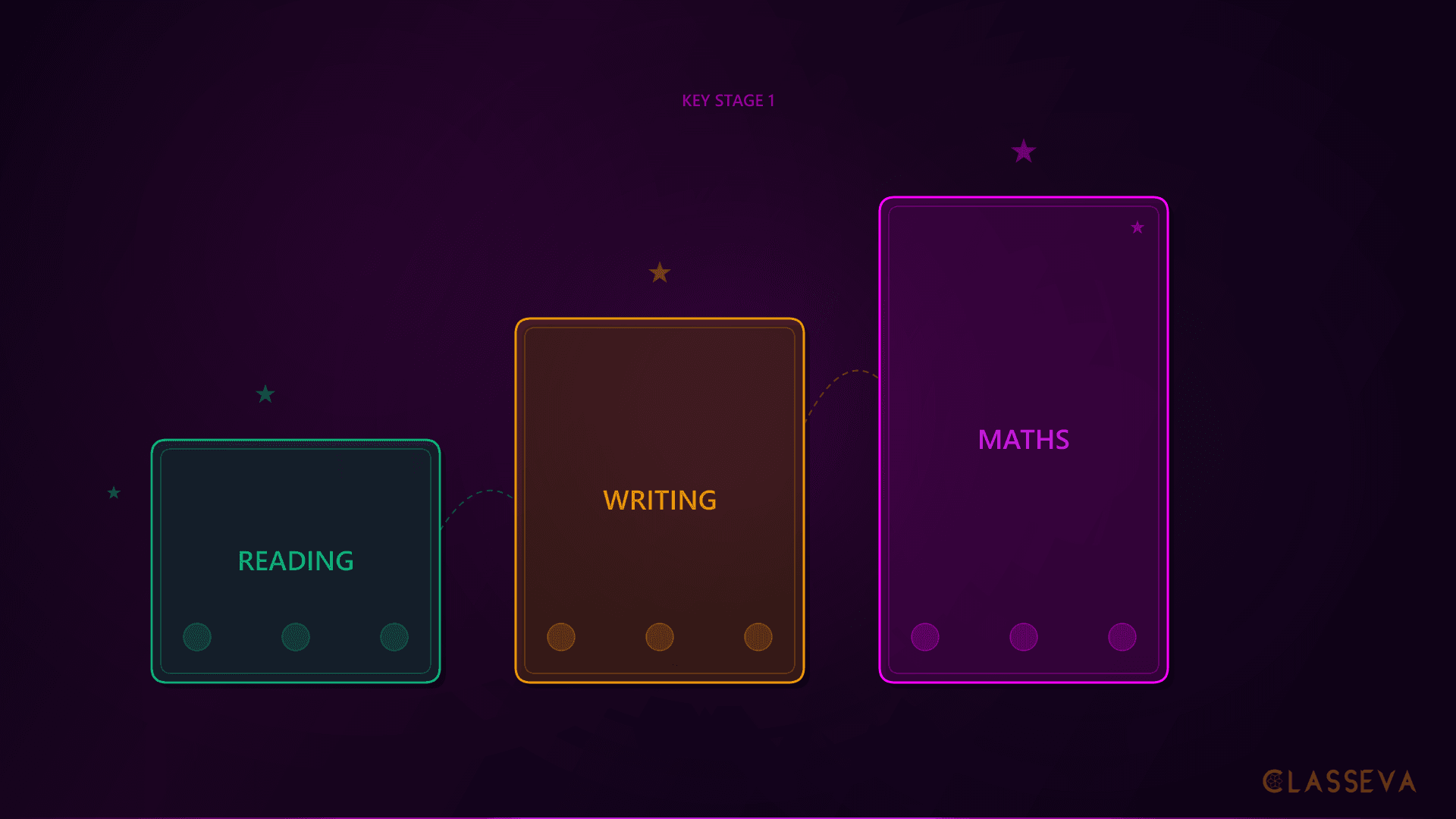
In Reception and KS1, children build the foundations. They learn number and place value (counting, reading, and writing numbers), addition and subtraction using objects and pictures, and begin multiplication through the 2, 5, and 10 times tables. Fractions are introduced as halves and quarters of shapes and quantities. Measurement covers length, weight, capacity, and time. Geometry means recognising and naming 2D and 3D shapes.
Key Stage 2 (Years 3–6)
KS2 is where the complexity increases significantly. Children work with larger numbers across all four operations, develop fluency with fractions, decimals, and percentages, and are introduced to ratio, proportion, and basic algebra in Year 6. Geometry expands to include angles, coordinates, and transformations. Statistics covers mean averages, pie charts, and line graphs.
Key Stage 1 (Years 1–2)
- •Counting, place value to 100
- •Addition and subtraction with objects
- •2, 5, and 10 times tables
- •Halves and quarters
- •Simple shapes and measurement
Key Stage 2 (Years 3–6)
- •All four operations with large numbers
- •Fractions, decimals, percentages
- •All times tables to 12 x 12 by Year 4
- •Algebra introduced in Year 6
- •Angles, coordinates, statistics
Two milestones matter enormously. By the end of Year 4, your child should have fluent recall of all times tables up to 12 x 12. By the end of Year 6, they should confidently work with fractions, decimals, and percentages, solve multi-step problems, and handle basic algebra. These are the building blocks for secondary maths, and gaps here cause real difficulty later.
Why the Methods Look Different
If you were taught to “carry the one” and line up columns, the way your child approaches the same calculation will look unfamiliar. This catches many parents off guard. But these newer methods are not experimental or trendy; they are evidence-based approaches that have been used successfully in high-performing education systems like Singapore and the Netherlands for decades.
The Key Methods Your Child Uses
| Method | What It Is | Example |
|---|---|---|
| Number line | Visual jumps along a line for addition and subtraction | 47 + 35: jump +30 to 77, then +5 to 82 |
| Partitioning | Breaking numbers into tens and units before calculating | 47 + 35 = 40 + 30 + 7 + 5 = 82 |
| Bar model | Rectangular diagrams showing relationships between numbers | A bar split into parts to show a word problem |
| Grid method | Multiplication by breaking numbers into parts | 23 x 14: multiply 20x10, 20x4, 3x10, 3x4 |
| Column method | Standard written addition/subtraction (introduced from Year 3) | Numbers lined up vertically with carrying |
| Bus stop division | Short division written above a bracket | 156 / 4 = 39 using the bus stop layout |
These methods are introduced progressively from Year 1 to Year 6.
Why Schools Teach This Way
The reason schools use these methods is straightforward: they build understanding before speed. A child who can partition 47 + 35 into 40 + 30 + 7 + 5 understands what addition actually means. A child who only memorises the column method can get the right answer but may struggle when the numbers appear in a word problem or an unfamiliar context.
Primary maths methods are not inferiorto the methods you learned at school. They are deliberately designed to build conceptual understanding before procedural fluency. Your child's school teaches these methods for a reason.
The progression is intentional. Children start with concrete objects (counters, blocks), move to pictorial representations (bar models, number lines), and finally reach abstract written methods (column addition, long division). This is called the concrete, pictorial, abstract (CPA) approach, and research from Bruner (1966) and decades of practice in Singaporean schools shows it produces deeper mathematical understanding.
How to Help Without Confusing Your Child
The single biggest mistake parents make is teaching their own method. I saw this repeatedly when working with families: a parent would sit down to help with subtraction homework, show the “borrowing” method they remembered from school, and the child would end up more confused than before. Not because either method was wrong, but because having two competing approaches for the same calculation overwhelms a child who is still building confidence.
Ask Your Child to Show You First
Before you pick up a pencil, say: “Show me how your teacher does it.” This one sentence changes everything. It puts your child in the expert role, reinforces what they learned in class, and gives you the information you need to help effectively. If they cannot explain the method, that itself tells you something useful: they may need more practice with the school approach, not a different one from you.
Research from the University of Chicago (Maloney et al., 2015) found that parental maths anxiety transfers directly to children. Even if you struggled with maths at school, try to avoid saying “I was never good at maths.” Your child picks up on these signals. Instead, frame it positively: “Let's work this out together.”
Make Maths Part of Everyday Life
The most effective maths support for primary maths tips parents can use does not look like a worksheet. It looks like cooking, shopping, and playing. Children who encounter maths in real contexts develop a much stronger sense of what numbers mean and why calculations matter.
Cooking and baking
Measuring ingredients introduces fractions, weight, and capacity naturally. Ask your child to halve or double a recipe for extra challenge.
Shopping and money
Comparing prices, calculating change, working out discounts, and budgeting pocket money all build real-world number sense.
Time and journeys
Reading analogue clocks, calculating how long until an event, and estimating journey times practise time-based maths.
Sport and games
Keeping score, working out averages, and tracking statistics during football or cricket connect maths to things your child cares about.
Games and Activities That Build Skills
Board games are an underrated tool for helping your child with maths at home UK families already own. Monopoly teaches money management, addition, and strategic thinking. Yahtzee develops probability sense and mental arithmetic. Card games like 21 (Blackjack without gambling) build quick addition skills. Dice games practise multiplication when you ask children to multiply the numbers rolled rather than add them.
For digital resources, apps like Hit the Button (free, focused on rapid recall),Prodigy (game-based maths aligned to curriculum), andMathletics (used by many schools) provide structured practice that feels like playing rather than studying. The key is choosing apps that are curriculum-aligned, not just generic number games.
Times Tables: The Foundation of Everything
Times tables fluency is not optional. It underpins virtually every area of maths your child will encounter from Year 4 onwards: fractions (finding common denominators), division (inverse multiplication), area and perimeter (length x width), and later, algebra. A child who has to stop and work out 7 x 8 every time will struggle with multi-step problems, not because they cannot do the maths, but because the cognitive load of basic recall slows everything else down.
The Year 4 Multiplication Tables Check
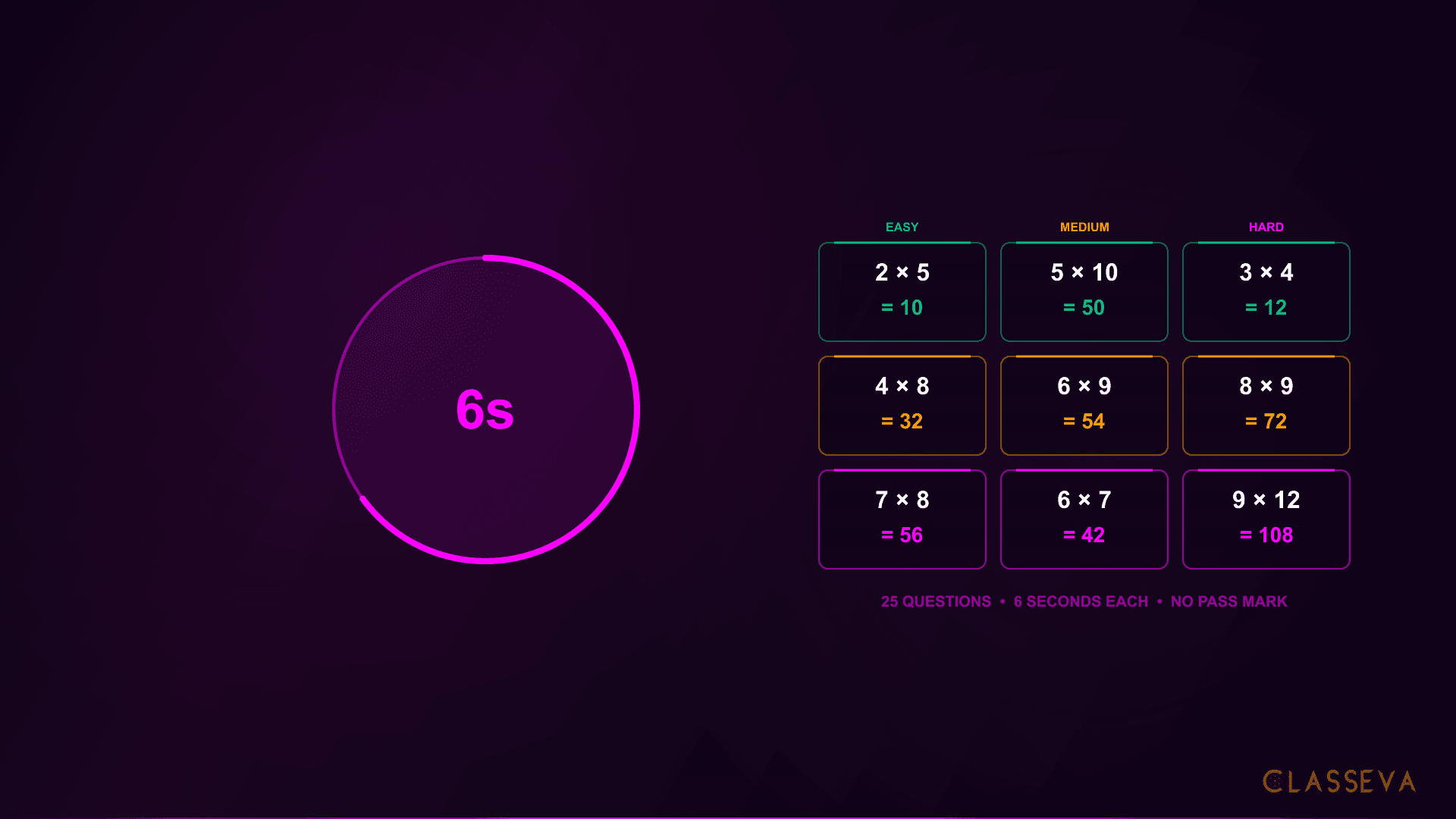
Since 2022, all Year 4 children in England take the statutory Multiplication Tables Check (MTC). It is an online, timed test: 25 questions, each with a 6-second time limit, covering all tables from 2 x 2 to 12 x 12. There is a weighting towards the 6, 7, 8, 9, and 12 times tables, which are the ones children typically find hardest.
| Detail | What to Know |
|---|---|
| Format | 25 on-screen questions, multiple choice is NOT used: children type the answer |
| Time per question | 6 seconds (3-second pause between questions) |
| Tables tested | 2x to 12x, weighted towards 6, 7, 8, 9, 12 |
| When | June of Year 4 (a 3-week window) |
| Scoring | Out of 25; results shared with parents at end of year |
Source: Standards and Testing Agency, Department for Education
Our complete guide to the Year 4 Multiplication Tables Check covers everything parents need to know about the test format, scoring, and how to prepare.
What Daily Practice Looks Like
Five minutes of daily recall practice is more effective than a 30-minute session once a week. Research on spaced repetition (Ebbinghaus, 1885; Cepeda et al., 2006) consistently shows that short, regular practice sessions produce significantly better long-term retention than massed practice. The key is recall, not recognition: your child needs to produce the answer from memory, not pick it from a list.
Times Tables Rock Stars(TTRS) is used by over 17,000 primary schools across the UK. If your child's school uses it, they will already have a login. Practising at home on the same platform reinforces what they do in class.
Other effective approaches include: calling out random questions while walking to school, challenging your child to beat their own time on a set of 20 questions, and focusing on the tables they find hardest (usually 7s, 8s, and 12s) rather than drilling the ones they already know. The goal is automatic recall, where the answer comes as naturally as reading a word.
What to Do If Your Child Is Struggling
Every child finds some part of maths difficult. That is normal and expected. The question is not whether your child will struggle, but what you do when it happens. Having supported families through exactly this situation, I can tell you the most important thing is to stay calm and avoid turning maths into a source of stress. A child who associates maths with tears and tension will avoid it, and avoidance makes gaps grow.
Talk to the Teacher First
Your child's class teacher is the first person to speak to. They can identify exactly which areas need support and advise which methods to use at home. Many schools run maths booster groups or intervention sessions for children who need extra help, and your child may already qualify. If you are not sure what to ask, try: “Which specific topics should we focus on at home, and can you show me the method you use?”
It also helps to understand whether the issue is conceptual (your child does not understand the idea behind the maths) or procedural (they understand the concept but cannot reliably carry out the method). These need different approaches. A conceptual gap needs more time with concrete objects and visual models. A procedural gap needs more practice with the specific method. For more on recognising the signs that your child is struggling at school, we have a dedicated guide.
Conceptual Gap
- •Child cannot explain what the maths means
- •Gets confused when the same idea appears in a new context
- •Needs more time with objects and pictures (CPA stages 1-2)
- •Go back to the last point of confident understanding
Procedural Gap
- •Child understands the idea but makes errors in the method
- •Can explain what to do but gets lost mid-calculation
- •Needs more practice with the specific written method
- •Focus on accuracy first, then speed
Small and Regular Beats Long and Stressful
Ten minutes of focused practice daily is far more effective than an hour-long session at the weekend. If homework is regularly causing tears or arguments, that is a sign to step back, not to push harder. Speak to the teacher about reducing the load or adjusting the difficulty. Our guide toending nightly homework battles covers this in detail.
Do not rush ahead. Teaching your child Year 6 content when they are in Year 3 can create gaps in foundational understanding. Depth matters more than speed. A child who deeply understands place value, the four operations, and fractions at their current level is far better prepared than one who can recite facts two years ahead but cannot apply them.
If your child needs additional support beyond what school provides, knowing when to get a tutorcan help you decide the right time. Whether you choose a human tutor or an AI tool like Classeva, the important thing is that the support uses the same methods your child's school teaches and targets specific gaps rather than generic maths practice.
Free Resources That Actually Help
There are hundreds of maths resources online, but not all are curriculum-aligned or suitable for primary children. These are the ones I would recommend based on quality, curriculum alignment, and the fact that they are genuinely free or have meaningful free tiers.
| Resource | What It Offers | Best For |
|---|---|---|
| White Rose Maths | Free worksheets and videos matching the scheme used by most primary schools | Following along with what your child learns in class |
| NRICH (Cambridge) | Problem-solving activities that develop mathematical thinking | Stretching children who want a challenge beyond calculations |
| Oak National Academy | Free video lessons from qualified teachers, curriculum-aligned | Catching up on a topic your child missed or found difficult |
| Times Tables Rock Stars | Gamified times tables practice used by 17,000+ schools | Daily recall practice (check if your school has logins) |
| Khan Academy Kids | Free app with personalised learning paths | Reception to Year 3 children who enjoy screen-based learning |
| Hit the Button | Quick-fire mental maths games (free on Topmarks) | Building speed and confidence with number bonds and tables |
All resources listed have free access. Some offer premium tiers but the free versions are substantial.
White Rose Mathsdeserves special mention because it is the scheme most primary schools in England use. Their free parent resources include short video explanations of each method, so you can see exactly how your child's teacher approaches a topic before helping at home. NRICH from the University of Cambridge takes a different approach, focusing on puzzles and investigations that develop problem-solving skills rather than procedural fluency.
For children approaching the Year 6 KS2 SATs maths paper, past papers become the most important resource. Our guide to helping your child revise for SATs explains how to use them effectively. And if you want to understand what the 2026 SATs involve overall, including dates, format, and how results are used, that guide covers everything parents need to know.
The most important thing you can do is not about methods or resources. It is about attitude. Praise effort, not just correct answers. Say “I can see you really thought about that” rather than only celebrating when they get it right. Children who believe that effort leads to improvement (what psychologist Carol Dweck calls a growth mindset) are more resilient when maths gets hard.
Primary maths is a marathon, not a sprint. Your child has six years to build the foundations that will carry them through secondary school and beyond. The best thing you can do is support their school, keep maths positive at home, and practise little and often. You do not need to be a maths expert. You just need to be present, patient, and willing to let your child show you how they do it.