KS2 SATs Maths: Topics, Papers, and How to Prepare
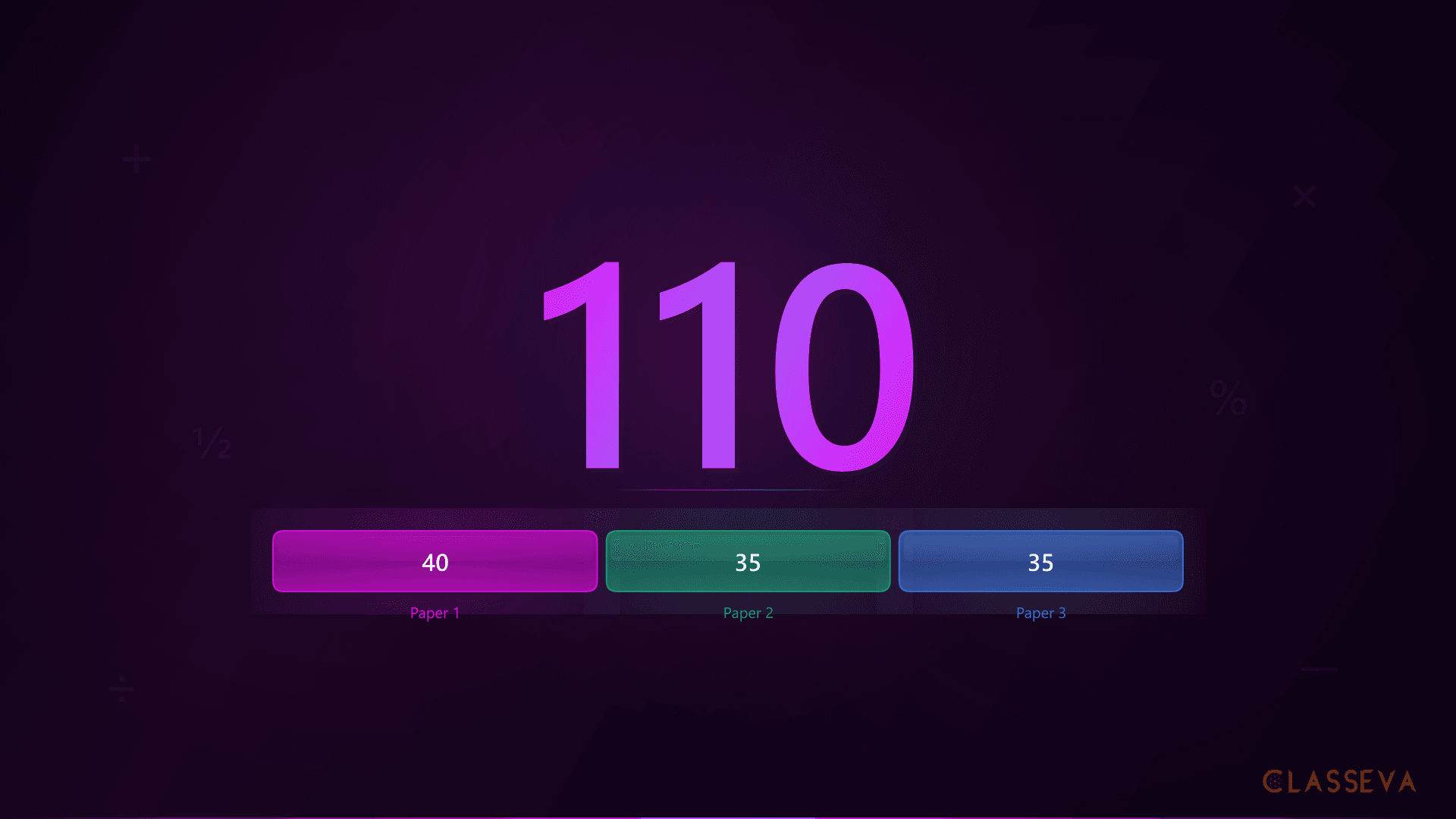
KS2 SATs maths is the subject that causes Year 6 parents the most anxiety. Three papers, 110 marks, and an arithmetic test that demands roughly one correct answer every 45 seconds. It is a lot, and the format can feel overwhelming if you do not know what to expect.
Before building Classeva, I spent time working with parents whose children were preparing for SATs. The pattern I kept seeing was the same: families would buy a stack of workbooks in January, start working through them randomly, and run out of steam by Easter. The children who actually improved had parents who understood what the test looked like and focused on the right topics. That is what this guide is for.
Below, I break down each of the three SATs maths papers, the topic weightings across a decade of past papers, and the specific preparation strategies that make the biggest difference at home.
The Three SATs Maths Papers
KS2 SATs maths is assessed across three separate papers, each testing different skills. Understanding how they differ is the first step to preparing effectively. For a broader overview of the full SATs week, see our KS2 SATs 2026 parent's guide.
Paper 1: Arithmetic
The SATs arithmetic paper is 30 minutes long, worth 40 marks, and contains approximately 36 calculation questions. There are no word problems. Every question is a pure calculation: addition, subtraction, multiplication, division, fractions, decimals, and percentages.
The pacing is tight. With 40 marks to earn in 30 minutes, children need to score at a rate of roughly one mark per minute. Most questions are worth 1 mark, but every year the paper includes two long multiplication questions (typically 3-digit by 2-digit and 4-digit by 2-digit) and two long division questions, each worth 2 marks. That is 8 guaranteed marks (20% of the paper) from just four questions.
Paper 1 is pure Number. Every mark comes from the Number strand of the curriculum, which makes it the most predictable of the three papers. A child who has strong calculation fluency and can reliably perform long multiplication and long division will pick up the majority of these marks.
Papers 2 and 3: Reasoning
The two SATs reasoning papers are each 40 minutes long and worth 35 marks. They test the full KS2 maths curriculum through problem-solving questions, multi-step word problems, and questions that require children to explain their reasoning.
Paper 1: Arithmetic
- •30 minutes, 40 marks
- •Around 36 calculation questions
- •No word problems or context
- •All Number strand content
- •Pace: 1 mark per minute
Papers 2 and 3: Reasoning
- •40 minutes each, 35 marks each
- •20 to 25 questions per paper
- •Word problems and multi-step questions
- •Full KS2 curriculum coverage
- •Includes measurement, geometry, statistics
The reasoning papers are where topics beyond Number appear. Measurement, geometry, and statistics questions make up roughly 9 to 13 marks per reasoning paper. The remaining 22 to 26 marks per paper still come from Number, Ratio, and Algebra.
One useful detail: in 2025, Paper 2 was harder than Paper 3, and Paper 2 contained only 23 questions (the fewest in five years). The number and difficulty of reasoning questions shifts year to year, so children should not panic if one paper feels harder. The scaled score system adjusts for difficulty differences.
Year 6 SATs Maths Topics and Weightings
The Year 6 SATs maths topics are drawn from the full KS2 national curriculum, covering content taught from Year 3 through Year 6. But not all areas carry equal weight. Analysis of every SATs paper from 2016 to 2025 reveals a clear pattern in how marks are distributed.
Topic Breakdown by Area
According to analysis by LbQ of all SATs papers from 2016 to 2025, Number, Ratio, and Algebra consistently account for 83 to 93 out of 110 marks (75 to 85%). That leaves just 17 to 27 marks (15 to 25%) for Measurement, Geometry, and Statistics combined.
| Topic Area | Marks Range (2016-2025) | Percentage of Total |
|---|---|---|
| Number, Ratio, and Algebra | 83-93 of 110 | 75-85% |
| Measurement, Geometry, and Statistics | 17-27 of 110 | 15-25% |
Source: LbQ analysis of KS2 SATs papers 2016-2025.
Within the Number strand, two areas dominate: calculations (the four operations with whole numbers, decimals, and fractions) and fractions, decimals, and percentages. In 2025, these two areas alone accounted for 58% of all marks across the three papers.
Paper 1 (Arithmetic) is entirely Number: all 40 marks. On the two Reasoning papers, typically 22 to 26 marks per paper come from Number, with the remaining 9 to 13 marks split across Measurement, Geometry, and Statistics. This means even the “broader” reasoning papers are dominated by Number-strand content.
The Years 3 to 5 Finding
This is one of the most important things for parents to understand about KS2 SATs maths, and it often comes as a surprise. According to analysis by Third Space Learning, 52 to 63% of SATs maths content comes from the Years 3 to 5 curriculum, not from Year 6 material.
In 2025, 58% of SATs maths marks tested Years 3 to 5 content. The pass mark was 53% (58 out of 110). This means, in theory, a child with solid Years 3 to 5 foundations could reach the expected standard without mastering every Year 6 topic.
The practical implication is significant: filling gaps from earlier years is often more valuable than pushing ahead into unfamiliar Year 6 content. If your child is shaky on Year 4 fractions or Year 5 long division, fixing those gaps will gain more marks than drilling Year 6 algebra.
This does not mean Year 6 content is unimportant. It means that a child who is behind should not panic. Strengthening earlier foundations can genuinely move the needle, especially for children who are close to the expected standard threshold.
What Topics to Prioritise
Not all Year 6 SATs maths topics carry equal weight. Based on the consistent patterns across a decade of papers, these are the areas that matter most.
Times tables and multiplication/division facts
The foundation for everything. Without instant recall of times tables, children lose time on almost every question, whether arithmetic or reasoning.
Long multiplication and long division
Worth 8 guaranteed marks every year on the Arithmetic paper. These four questions (two each) are the most predictable marks available in the entire SATs.
Fractions, decimals, and percentages
Adding, subtracting, multiplying, and dividing fractions. Converting between fractions, decimals, and percentages. One of the two highest-weighted areas in 2025.
Place value
Understanding the value of each digit in numbers up to 10 million. Ordering, comparing, and rounding. Appears in both Arithmetic and Reasoning papers.
The four operations with larger numbers
Addition and subtraction with numbers up to 7 digits. Multiplication and division beyond the times tables questions. Speed and accuracy here drive the Arithmetic paper score.
Multi-step word problems
Reasoning papers are full of these. Children need to identify which operations to use, in which order, and show their working clearly.
Long Multiplication and Division
These deserve special attention because they are the most reliable marks in the entire test. Every year since the current SATs format was introduced in 2016, the Arithmetic paper has included:
- One 3-digit by 2-digit long multiplication (2 marks)
- One 4-digit by 2-digit long multiplication (2 marks)
- Two long division questions (2 marks each)
That is 8 marks from four questions. A child who can reliably perform these methods picks up 20% of the Arithmetic paper from just four questions. The methods are entirely learnable through practice, and they do not require deep conceptual understanding. They require accuracy and a clear, consistent written method.
Long division is the method most children struggle with. If your child finds it difficult, try practising with single-digit divisors first (dividing by 6, 7, 8, 9) before moving to two-digit divisors. Getting the method solid with easier numbers builds confidence and muscle memory.
Fractions, Decimals, and Percentages
Fractions, decimals, and percentages (often abbreviated as FDP) appeared in both the Arithmetic and Reasoning papers in 2025, accounting for a significant chunk of the 58% calculation and FDP figure. On the Arithmetic paper, expect questions like:
- Adding and subtracting fractions with different denominators
- Multiplying and dividing fractions
- Finding percentages of amounts
- Converting between fractions, decimals, and percentages
On the Reasoning papers, FDP questions are typically embedded in word problems: “A shop reduces prices by 15%. If a coat cost £40, what is the new price?” Children need both the calculation skills and the ability to interpret the question.
How to Prepare for SATs Maths at Home
Knowing how to prepare for SATs maths is as important as knowing the content. The wrong approach wastes time; the right one builds confidence quickly. Here is what actually works, based on the data above and what I have seen with families.
Build Fluency First
Before anything else, make sure your child has their times tables locked in. This is not a nice-to-have. Every area of SATs maths, from long multiplication to fraction simplification to area calculations, depends on rapid recall of multiplication and division facts.
If your child hesitates on 7 x 8 or 56 ÷ 7, they will lose time on every single paper. The Arithmetic paper's pace of one mark per minute leaves no room for counting on fingers or working out basic facts from scratch.
The most common preparation mistake I see is jumping straight to SATs-style questions without checking whether basic fluency is in place. A child who does not know their times tables fluently will struggle with every topic, not just multiplication. Invest the time here first.
Practise Under Timed Conditions
The Arithmetic paper is the most time-pressured test most Year 6 children will have faced. Thirty minutes for 40 marks is genuinely fast. Children who have only ever practised without a timer often freeze on the day because the pace feels unfamiliar.
Start with generous time limits and gradually reduce them. For example, give 45 minutes for a practice Arithmetic paper first, then 40, then 35, then the real 30. This builds pace without creating panic. The official DfE practice materials are freely available and match the real test format exactly.
Use Past Papers Strategically
Past papers are the single best preparation tool. The format, question styles, and topic balance are remarkably consistent year to year. But how you use them matters.
Start with the Arithmetic paper
It is the most predictable paper and the easiest to improve on through practice. Get your child comfortable with the format and pacing before tackling reasoning.
Mark and review, do not just score
After completing a paper, go through every wrong answer. Identify whether the mistake was a calculation error, a method error, or a gap in knowledge. Each type needs a different response.
Focus on the gaps, not the score
A score of 25 out of 40 is useful information, but the 15 marks lost are where improvement lives. Group the missed questions by topic to identify patterns.
Repeat papers after a gap
Doing the same paper again two weeks later shows whether the child has actually learned from their mistakes or just memorised answers. If they make the same errors, the gap has not been filled.
The DfE publishes official practice materials including sample papers and mark schemes. Past papers from 2016 onwards are also available through the national curriculum maths programmes of study page, which includes the full specification of what children are expected to know.
A mistake I often see is parents saving every past paper for the final two weeks before SATs. By then, there is no time to act on what the papers reveal. Use at least one or two papers early (February or March) as a diagnostic tool. Save two or three for the final fortnight as realistic practice runs.
Maths is the SATs subject where targeted preparation makes the biggest difference. The test is predictable, the topic weightings are stable, and the highest-value marks (long multiplication, long division, FDP) are entirely learnable through practice. Start with fluency, focus on the topics that carry the most marks, and use past papers to guide your child's preparation rather than guessing what might come up.