KS2 SATs 2026: A Complete Parent’s Guide
If your child is in Year 6, you have probably heard the word “SATs” floating around the school gate since September. Maybe your child came home talking about practice papers, or their teacher mentioned “SATs week” at parents' evening. Either way, you likely have questions.
KS2 SATs 2026take place from 11 to 14 May. They cover reading, grammar, punctuation, spelling, and maths across six papers. Your child's results will arrive before the end of the summer term as scaled scores between 80 and 120, with 100 being the expected standard.
Before building Classeva, I spent time working in the tutoring industry, and one thing that struck me was how many parents of Year 6 children felt blindsided by SATs. They remembered nothing like this from their own primary school days, and the information from schools was often vague or arrived too late. This guide gives you everything in one place so you can support your child calmly and confidently.
What Are KS2 SATs?
KS2 SATs are national curriculum tests taken by all Year 6 pupils (aged 10-11) in England at the end of Key Stage 2. They assess whether children have reached the expected standard in reading, grammar, punctuation, spelling, and maths before they move to secondary school.
The tests have been in their current format (scaled scores, new-style papers) since May 2016. They were cancelled in 2020 and 2021 due to COVID-19, but returned in 2022 and have run every year since. Papers are externally marked, meaning your child's own teacher does not score them.
This is the part most schools do not make clear: KS2 SATs are primarily a measure of school performance. The results feed into school league tables and Ofsted inspection data. They are a snapshot of where your child is academically, but they do not determine your child's secondary school place, set their future trajectory, or go on any permanent record beyond Year 7 transition.
What Subjects Are Tested?
Your child sits written papers in three subjects across the week:
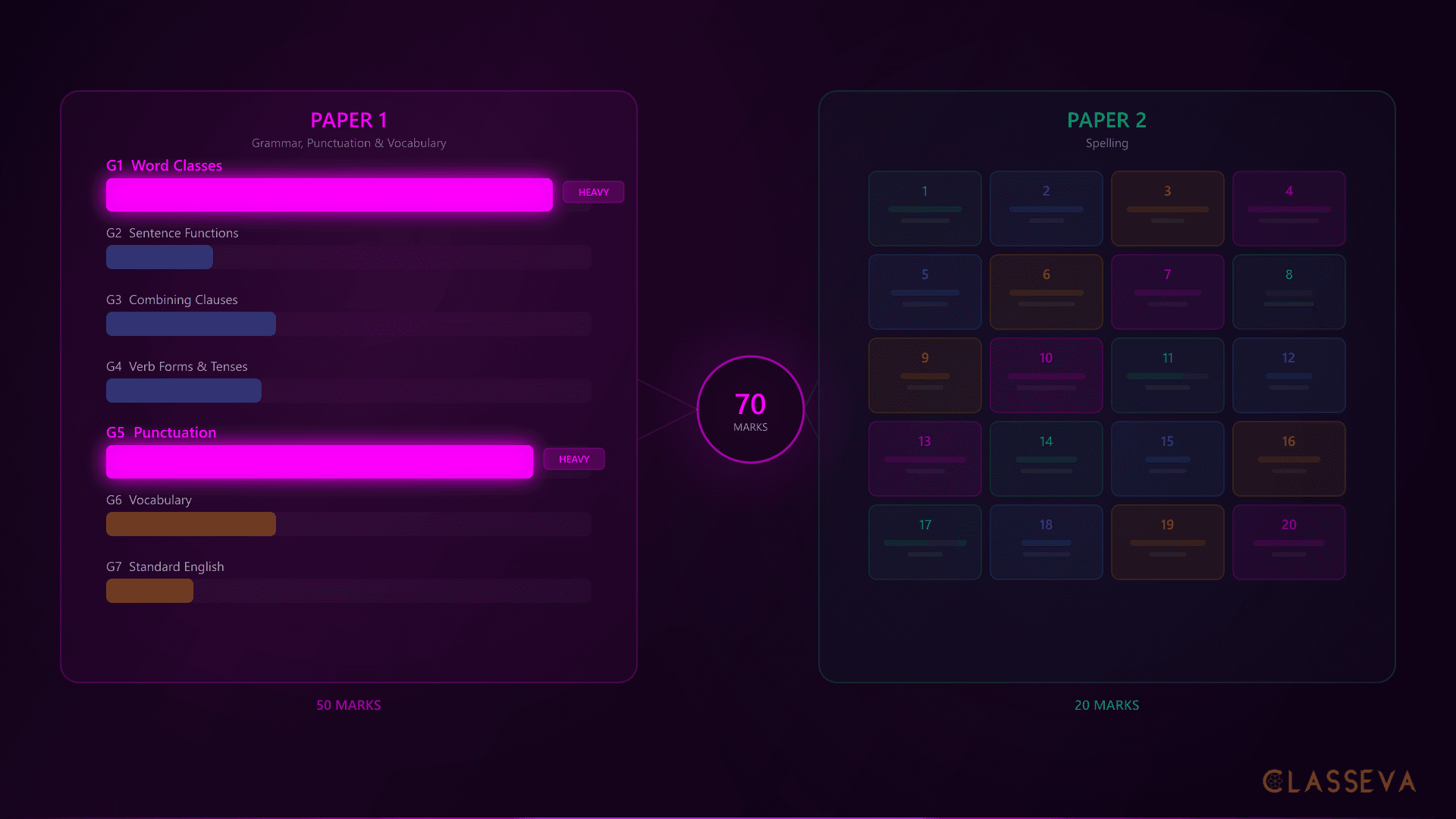
Grammar, Punctuation and Spelling (GPS)
- •Paper 1: short-answer grammar and punctuation questions (45 min, 50 marks)
- •Paper 2: spelling test read aloud by the teacher (approx. 15 min, 20 marks)
- •Total: 70 marks across both papers
English Reading
- •Single paper with three texts of increasing difficulty
- •1 hour, 50 marks
- •Mix of retrieval, inference, and vocabulary questions
Maths
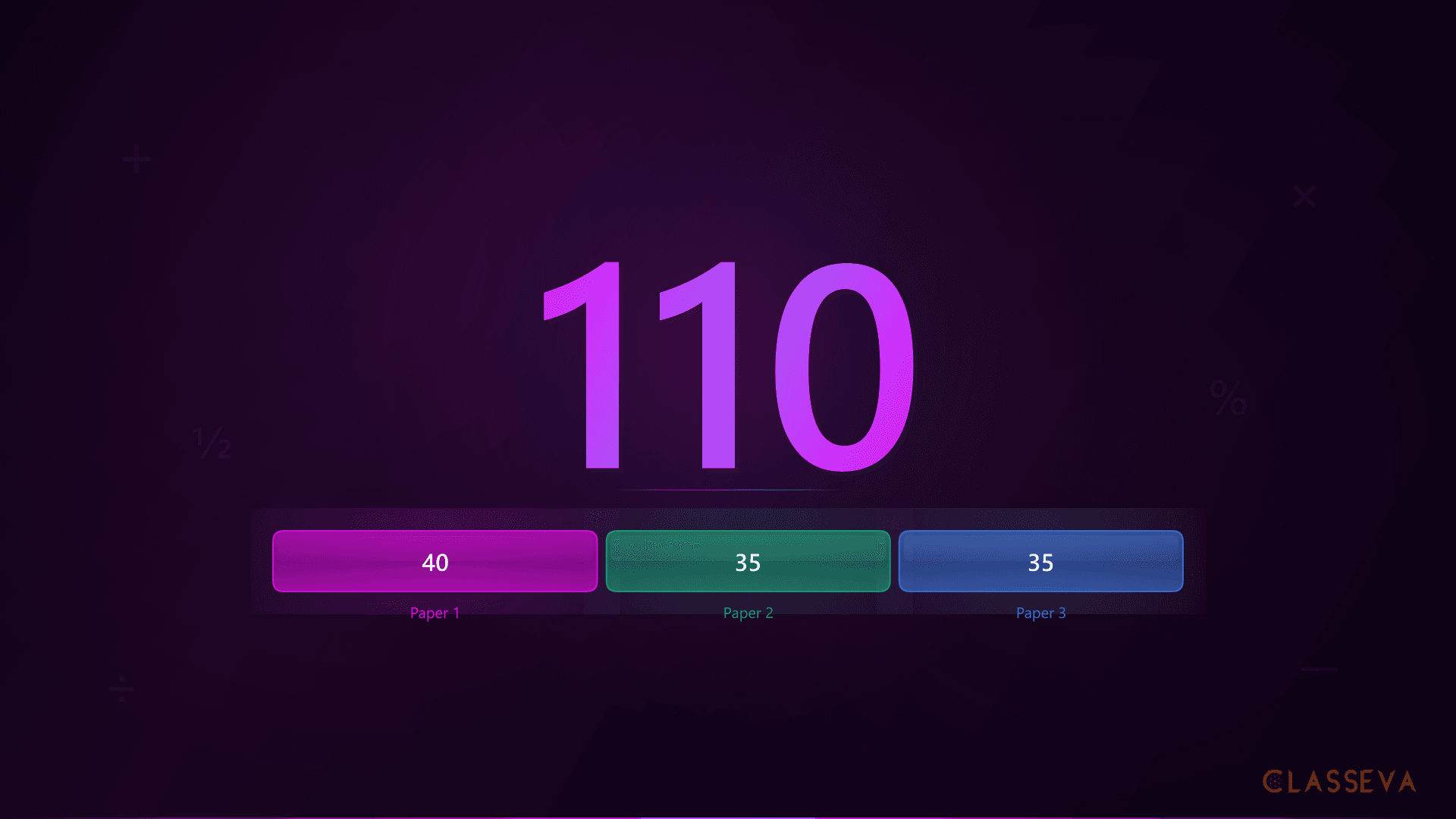
- •Paper 1: arithmetic (30 min, 40 marks)
- •Paper 2: reasoning (40 min, 35 marks)
- •Paper 3: reasoning (40 min, 35 marks)
- •Total: 110 marks across three papers
What Is Not Tested
There are no written tests for English writing, science, or spoken language at KS2. Writing is assessed through teacher assessment based on work your child produces throughout the year. Science is also teacher-assessed, with a small sample of schools selected for external science sampling each year. This surprises many parents who assume SATs cover every subject.
SATs 2026 Timetable: The Confirmed Dates
The Department for Education has confirmed that Year 6 SATs 2026 will take place during the week of 11 May. Here is the full day-by-day schedule.
Day-by-Day Breakdown
| Day | Date | Paper | Duration | Marks |
|---|---|---|---|---|
| Monday | 11 May | GPS Paper 1: questions | 45 minutes | 50 |
| Monday | 11 May | GPS Paper 2: spelling | ~15 minutes | 20 |
| Tuesday | 12 May | English Reading | 1 hour | 50 |
| Wednesday | 13 May | Maths Paper 1: arithmetic | 30 minutes | 40 |
| Wednesday | 13 May | Maths Paper 2: reasoning | 40 minutes | 35 |
| Thursday | 14 May | Maths Paper 3: reasoning | 40 minutes | 35 |
Source: GOV.UK Primary assessments: future dates
Schools handle the logistics, but knowing the exact dates helps you plan at home. Avoid scheduling dentist appointments, family trips, or late nights during SATs week. If your child is ill on a test day, the school may be able to use the “timetable variation” window to administer the paper slightly later, but this is at the school's discretion.
How SATs Scaled Scores Work
Your child does not receive a percentage or a letter grade from SATs. Instead, their raw marks are converted into a scaled score between 80 and 120. This conversion exists because paper difficulty varies slightly from year to year: a scaled score of 100 represents the same standard regardless of which year the test was taken.
The three key thresholds parents need to understand:
Below 100
- •Working towards the expected standard
- •Does NOT mean your child has "failed"
- •The secondary school is informed for support planning
100-109
- •Meeting the expected standard
- •Your child is working at the level expected for their age
- •This is where most pupils who pass fall
110-120
- •Working at greater depth (higher standard)
- •Strong grasp of the curriculum
- •May be placed in higher sets at secondary school
What Raw Score Is Needed for 100?
The raw mark needed for a scaled score of 100 changes every year because it depends on paper difficulty. In 2025, the thresholds were:
| Subject | Total Marks | Raw Score for 100 (2025) | Percentage Equivalent |
|---|---|---|---|
| Maths | 110 | 58 | 53% |
| Reading | 50 | 28 | 56% |
| GPS | 70 | 35 | 50% |
Source: GOV.UK Understanding scaled scores at key stage 2 (2025 thresholds)
Notice that your child does not need to score 70% or 80% to meet the expected standard. In 2025, a child needed just 53% in maths, 56% in reading, and 50% in GPS to reach the expected standard of 100. These thresholds shift annually, but they are consistently lower than most parents assume.
When Do Parents Get Results?
Schools receive SATs results online from Tuesday 7 July 2026. Parents receive their child's results before the end of the summer term, usually within a week or two of the school receiving them. Your child's report will include their scaled score for each subject and whether they met the expected standard.
National Results: What to Expect in 2026
Looking at the 2025 national results gives you a realistic sense of where most Year 6 pupils end up. In 2025, 62% of pupils met the expected standard in reading, writing, and maths combined (up from 61% in 2024, but still below the 65% achieved in 2019 before COVID disrupted schooling).
| Subject | % Meeting Expected Standard (2025) |
|---|---|
| Science (teacher-assessed) | 82% |
| Reading | 75% |
| Maths | 74% |
| GPS | 73% |
| Writing (teacher-assessed) | 72% |
| Reading + Writing + Maths combined | 62% |
Source: DfE Key stage 2 attainment, Academic year 2024/25 Revised
Two things stand out from these numbers. First, the combined figure (62%) is much lower than any individual subject because a child must meet the standard in all three areas. A child who scores well in reading and maths but falls short in writing will not be counted in the combined figure. Second, girls outperform boys in every subject except maths, where boys hold a narrow 1 percentage point lead.
If roughly 25% of children nationally do not meet the expected standard in reading, and 26% in maths, your child is far from alone if they find these tests challenging. The expected standard is exactly that: a standard, not a bare minimum. Many children score below 100 and go on to thrive at secondary school.
Myths Parents Should Ignore About KS2 SATs
SATs generate more parental anxiety than almost any other primary school event. Much of that anxiety comes from misunderstandings that circulate on WhatsApp groups and school-gate conversations. Here are the facts.
There Is No Pass or Fail
KS2 SATs do not have a pass mark or a fail grade.A scaled score of 100 is called “the expected standard”, but scoring below it does not mean your child has failed. It means they are “working towards” the expected standard in that subject. They still move to secondary school. They still continue their education. No doors close because of a Year 6 SATs result.
This is fundamentally different from GCSEs, where grade 4 in English and maths is a genuine threshold that affects post-16 options. At KS2, the score is informational. It helps the secondary school understand where your child is so they can provide appropriate support or challenge from day one.
SATs Do Not Affect Secondary School Admissions
This is perhaps the biggest misconception. SATs results play no role in determining which secondary school your child attends. Secondary admissions in England are based on criteria like catchment area, sibling priority, faith criteria, or (for grammar schools) the 11-plus exam. SATs results arrive in July, months after secondary school places have been allocated in March.
What does happen is that your child's SATs results are shared with their secondary school. The school uses this data for setting and grouping purposes: deciding which maths set or English group your child joins in Year 7. But this initial setting is not permanent. Most schools reassess within the first term based on classroom performance.
The language you use at home matters enormously. Talking about “passing” or “failing” SATs creates unnecessary pressure and is factually wrong. Instead, frame it as: “These tests show your teachers what you know so your new school can help you in the best way.”
How to Support Your Child at Home
The most helpful thing you can do as a parent is lower the emotional temperature around SATs while keeping the academic preparation steady. Children pick up on parental anxiety, and if you treat SATs as a crisis, your child will experience them as one.
During my time working in tutoring, the Year 6 parents who got the best outcomes were the ones who understood something crucial: SATs are a measure of what your child already knows after seven years of primary education. They are not something you can cram for in a few weekends. Consistent, low-pressure practice over the spring term is far more effective than an intense burst in the final week.
Practical Strategies for Home
Use past papers for familiarity, not drilling
Past SATs papers are freely available on GOV.UK. Working through one paper per week from February onwards helps your child get used to question formats, timing, and the style of language used. The goal is comfort, not perfection.
Focus on weak spots, not strengths
If your child already handles arithmetic confidently, do not spend most of the time on arithmetic. Identify the areas they find genuinely difficult (often reasoning questions in maths, inference in reading, or tricky spelling patterns in GPS) and focus there.
Keep sessions short
For a 10-year-old, 20 to 30 minutes of focused practice is more productive than an hour of distracted revision. Short sessions maintain concentration and reduce resentment. Twice a week is a good rhythm for most families.
Read together regularly
The reading paper tests comprehension, inference, and vocabulary in context. The single best preparation is regular reading of a variety of texts: fiction, non-fiction, newspapers, magazines. Discuss what you read together. Ask your child what they think a character was feeling and why.
Practise mental arithmetic daily
Quick-fire times tables, doubling and halving, and simple mental calculations build the fluency your child needs for the arithmetic paper. Five minutes over breakfast or in the car adds up significantly over a term.
Talk to your child about what SATs actually are and what happens with the results. Most Year 6 anxiety comes from not understanding the purpose of the tests. When children know that SATs are about showing the school what they have learned (not about passing or failing), the pressure drops dramatically. If your child needs extra support in any subject, Classeva's KS2 tutoring covers the full Year 6 curriculum and adapts to their individual pace.
What to Do During SATs Week
SATs week itself should feel as normal as possible. The school will handle the testing environment: your job is to handle everything around it.
Ensure good sleep
A well-rested child performs better than one who stayed up late revising. Aim for a consistent 9:00pm bedtime during SATs week, with screens off by 8:30pm.
Eat a proper breakfast
A solid breakfast (porridge, toast, eggs) provides steady energy. Sugary cereals cause a spike and crash that hits mid-morning, right when your child is sitting a paper.
No last-minute cramming
Do not go through revision notes on the morning of a test. This increases anxiety without improving performance. Instead, chat about something unrelated on the way to school.
Celebrate the end of each day
After each paper, let your child decompress. Do not ask "How did it go?" in a worried tone. Instead, say "Well done for getting through it" and move on to something enjoyable.
If your child is already working with Classeva, our AI tutor can continue to support their learning across all KS2 subjects right up until SATs week and beyond into their transition to secondary school.
After SATs are over, the rest of the summer term is often the best part of Year 6. Schools typically focus on transition activities, performances, residential trips, and preparing children socially and emotionally for secondary school. The academic pressure lifts, and your child gets to enjoy their final weeks of primary school.
When results arrive, review them calmly with your child. If they met the expected standard, that is genuinely good news. If they scored below 100 in one or more subjects, that is useful information for the secondary school to provide targeted support in Year 7. Either way, SATs are the end of a chapter, not the beginning of a problem.
KS2 SATs measure one moment in your child's education. They do not predict GCSE results, A-level outcomes, or career success. The GOV.UK parent information page confirms that SATs are designed to assess school performance, not to label individual children. Keep that perspective, and help your child keep it too.