ACT Scholarship Benchmarks by State 2026
Cross a single ACT composite line and a state can hand you four years of tuition. Miss it by one point and the same state pays nothing extra, regardless of GPA, essays, or activities. ACT scholarship benchmarks sit scattered across a dozen state grant agencies, each with its own tiers, deadlines, and concordance tables, which is why most families never see the full map until after the scores are locked.
What Are ACT Scholarship Benchmarks?
ACT scholarship benchmarks are the fixed composite-score cutoffs that state-funded merit programs use to award tuition dollars. These act score scholarships name a number, say a 25 ACT, and every applicant who meets or beats it qualifies for that tier while everyone below it does not. The award amount attaches to the tier, not to the exact score, so a 25 and a 30 earn identical money until the 30 clears a higher named threshold.
These programs run on state budgets, not college endowments, which separates them from the institutional merit aid you find at private universities. For a parallel on the institutional side, the merit-based scholarships colleges guide covers schools like Vanderbilt and the University of Alabama that court top scorers directly. State programs differ in one structural way: they pay at public colleges inside the state, and they publish their cutoffs in law.
Why These Thresholds Work as Cliffs
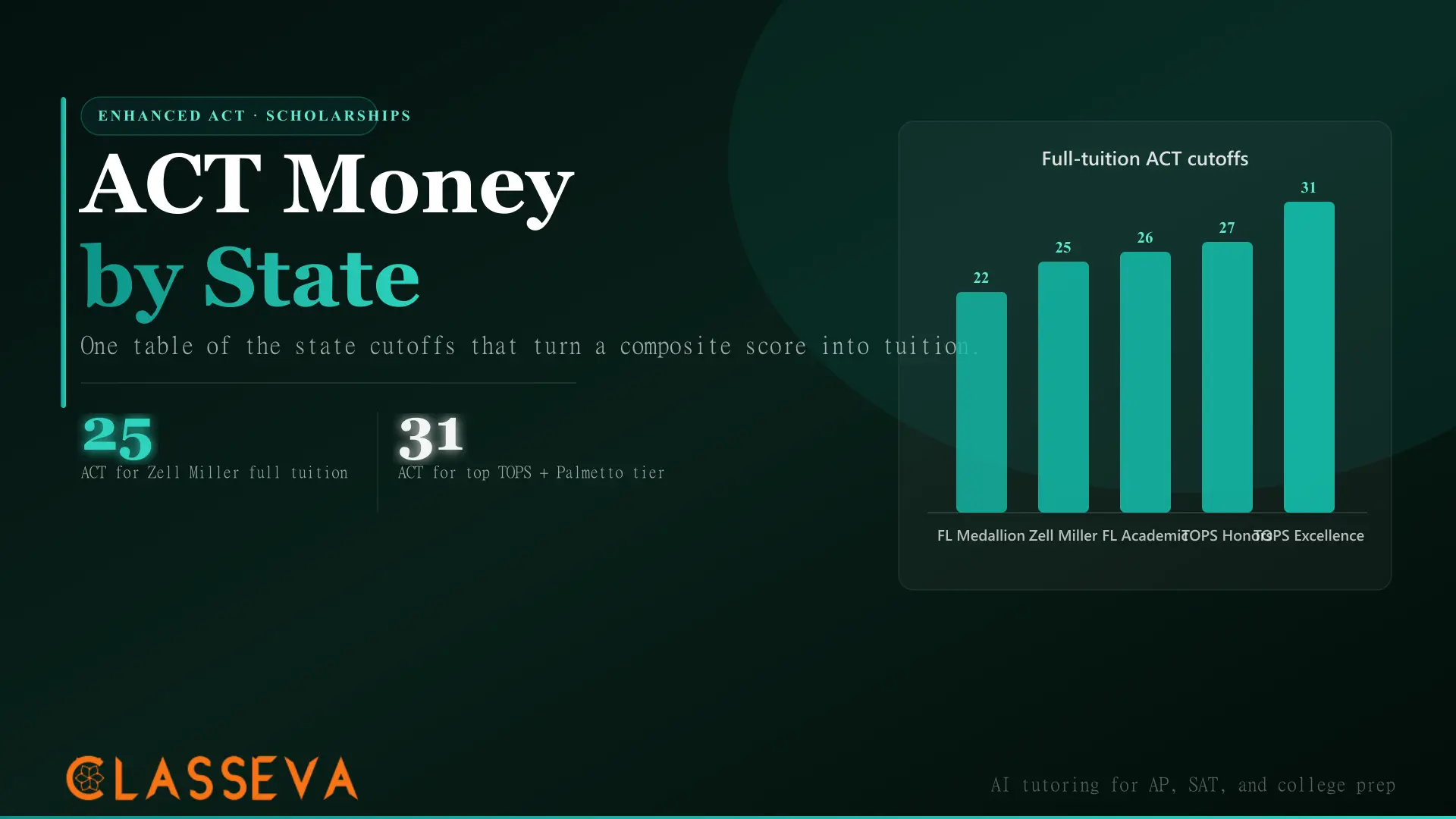
The money moves in steps, not a smooth curve. Inside Florida Bright Futures, a 22 ACT earns the Medallion award and a 26 earns the larger Academic award. A student scoring 25 collects the same dollars as a student scoring 22, because both sit in the Medallion band. The jump from 25 to 26 pays more than the jump from 18 to 25 combined, since only the 26 crosses into the Academic tier.
This cliff structure changes how a retake decision works. If your practice score sits one or two points under a named cutoff, a single additional test can be worth tens of thousands of dollars. If it sits comfortably inside a tier with the next cutoff far above, another attempt buys nothing on the state side. Knowing exactly where the lines fall turns a vague goal into a precise target.
ACT Scholarship Benchmarks by State: The Comparison Table
The table below compiles the major state programs that tie ACT scores to award money, with each tier, its composite cutoff, the paired GPA floor, and what the award covers. Treat the cutoffs as starting points to confirm: state legislatures adjust them, and several pin the floor to a moving state-average score.
| State Program | Tier | ACT Cutoff | GPA Floor | What It Covers |
|---|---|---|---|---|
| Florida Bright Futures | Medallion (FMS) | 22 | 3.0 weighted | 75% of tuition (public) |
| Florida Bright Futures | Academic (FAS) | 26 | 3.5 weighted | 100% of tuition (public) |
| Georgia HOPE | HOPE Scholarship | None (GPA path) | 3.0 | Most of public tuition |
| Georgia Zell Miller | Zell Miller | 25 | 3.7 | 100% of public tuition |
| Louisiana TOPS | Opportunity | 20 (state avg, never lower) | 2.5 core | Public tuition |
| Louisiana TOPS | Performance | 23 [VERIFY] | 3.0 core | Tuition + $400 stipend |
| Louisiana TOPS | Honors | 27 [VERIFY] | 3.0 core | Tuition + $800 stipend |
| Louisiana TOPS | Excellence | 31 | 3.5 core | Tuition + $3,200 stipend |
| Oklahoma Promise | OHLAP | None (income + GPA) | 2.5 curriculum | Public tuition (income-gated) |
| South Carolina Palmetto Fellows | Tier 1 | 25 | 3.5 + top 6% | Up to $6,700/yr |
| South Carolina Palmetto Fellows | Tier 2 | 31 | 4.0 | Up to $6,700/yr |
Major state ACT scholarship benchmarks. [VERIFY: all cutoffs against each state grant agency's current handbook; TOPS Performance and Honors ACT thresholds change with the state-average pin and legislative updates.]
How to Read the Table
Find your home state, then read up the tier column to the next cutoff above your current practice score. That single state scholarship act score is your target, the precise number a retake has to clear. The GPA floor column matters as much as the ACT column: every program pairs the two, and a qualifying score with a short GPA forfeits the award. Three rows are highlighted because they mark the full-tuition lines families most often aim for: Florida Academic, Zell Miller, and TOPS Excellence.
State programs revise thresholds through legislation. Georgia dropped the Zell Miller ACT requirement from 26 to 25 effective January 2024. Florida tightened Bright Futures eligibility for the Class of 2026. Always confirm the current number on the official state agency page before you treat a target as fixed, because a cutoff printed two years ago may no longer apply to your graduating class.
Florida Bright Futures ACT Requirements
The act bright futures threshold splits into two awards. Florida Medallion Scholars (FMS) requires a 22 ACT composite and a 3.0 weighted GPA, covering 75% of tuition at a Florida public college. Florida Academic Scholars (FAS) requires a 26 ACT and a 3.5 weighted GPA, covering 100% of tuition. Both also require community service hours and the Florida Financial Aid Application by the post-graduation deadline.
FAS vs FMS: The Two Tiers
The four-point gap between the Medallion 22 and the Academic 26 represents a quarter of tuition every year. Across a four-year degree at a school like the University of Florida, that gap runs into five figures. A Florida junior sitting at a 24 ACT faces a clear math problem: two more points convert a 75% award into a 100% award, which makes a targeted retake one of the highest-return hours of test prep available to that student.
Florida publishes the official numbers and the full handbook at the Florida Bright Futures program site. The state revised eligibility for the Class of 2026, so a Florida sophomore should read the current handbook rather than rely on an older sibling's experience. The service-hour and application deadlines trip up more students than the test cutoff does, because a qualifying score means nothing if the application closes unsubmitted.
Every named tier asks for two numbers at once: a composite cutoff and a GPA floor. Clearing one without the other leaves a student in the lower tier or out entirely, which is the single most common way qualified applicants lose money they had effectively earned. The grid below shows why both axes matter.
Georgia HOPE and Zell Miller ACT Score
The georgia hope scholarship act structure rewards two different students. HOPE itself asks for no ACT score; a 3.0 high school GPA qualifies a student for an award covering most public tuition. Zell Miller, the full-tuition program, requires a 25 ACT composite and a 3.7 GPA. The test score is the dividing line between most of tuition and all of it.
The 25 ACT Jump From HOPE to Full Tuition
Georgia lowered the Zell Miller ACT requirement to 25 effective January 1, 2024, down from the prior 26. That one-point reduction widened the pool of students who can reach full tuition. The SAT concordance sits at roughly 1200 across Evidence-Based Reading and Writing plus Math in a single sitting. Valedictorians and salutatorians qualify automatically, with no test score required at all.
The renewal rules separate the two awards as sharply as the entry rules do. HOPE recipients hold the award with a 3.0 college GPA; Zell Miller recipients need a 3.3. A student who clears the 25 ACT but lands a 3.1 freshman GPA drops from Zell Miller to HOPE, trading full tuition for partial. Georgia publishes both the entry and renewal rules through the Georgia Student Finance Commission, the agency that administers the lottery-funded programs.
Georgia HOPE Scholarship
- •No ACT requirement; qualifies on a 3.0 high school GPA
- •Covers most public tuition, not all
- •Renews with a 3.0 college GPA
- •Broadest eligibility of the two awards
- •Lottery-funded through the state
Georgia Zell Miller Scholarship
- •Requires a 25 ACT composite (or 1200 SAT) plus a 3.7 GPA
- •Covers 100% of public tuition
- •Renews with a higher 3.3 college GPA
- •Valedictorians and salutatorians qualify automatically
- •ACT cutoff dropped from 26 to 25 in January 2024
Louisiana TOPS ACT Award Tiers
The Taylor Opportunity Program for Students (TOPS) runs the most granular tier ladder of any state program, with four merit levels stacked by ACT score. Opportunity pays public tuition at an ACT equal to the prior-year state average (never below 20). Performance and Honors add cash stipends at higher cutoffs. Excellence, the top tier, requires a 31 ACT and a 3.5 core GPA.
The Opportunity floor is a moving target by design. Louisiana pins it to the previous year's statewide average ACT, so the minimum drifts year to year but never drops under 20. The Excellence tier sits at the opposite end: the state confirms a 31 ACT and a 3.5 TOPS core-curriculum GPA on its official TOPS Excellence page. The Performance and Honors cutoffs between them shift with legislative updates, so verify those two before relying on them.
Oklahoma Promise and Income-Gated Programs
Oklahoma Promise breaks the merit-only pattern by gating on family income instead of a high test score. Families with one or two children qualify only if parent adjusted gross income stays at or below $60,000 at application, and the program asks for a 2.5 GPA across a 17-course required curriculum rather than a top ACT result. The award covers public-college tuition for students who sign up early, typically in 8th through 10th grade.
The income ceiling reshapes who the program serves. Where Zell Miller and Palmetto Fellows chase the highest scorers regardless of wealth, Oklahoma Promise targets students from lower- and middle-income households and asks them to hold a solid GPA and clean record through graduation. Oklahoma publishes the full eligibility checklist and deadlines at the Oklahoma Promise student requirements page. The model resembles a state-run version of need-based aid, layered with behavioral conditions on attendance and conduct.
Students sometimes skip Oklahoma Promise because their ACT already clears a merit bar elsewhere, missing that this program rewards income eligibility and early enrollment over a high score. A family near the income ceiling with a strong GPA can stack this award against other aid. Read each program's gating rule first: a few blend merit and need, and the blend changes who should apply.
South Carolina Palmetto Fellows and LIFE
South Carolina runs a two-test-tier merit program plus a GPA-only backstop. Palmetto Fellows, the flagship award, qualifies students two ways: a 25 ACT with a 3.5 GPA and top-6% class rank, or a 31 ACT with a 4.0 GPA. The award reaches up to roughly $6,700 per year. Below it, the LIFE Scholarship covers students who graduate with a 3.0 GPA, giving score-light students a path that does not vanish at the cutoff.
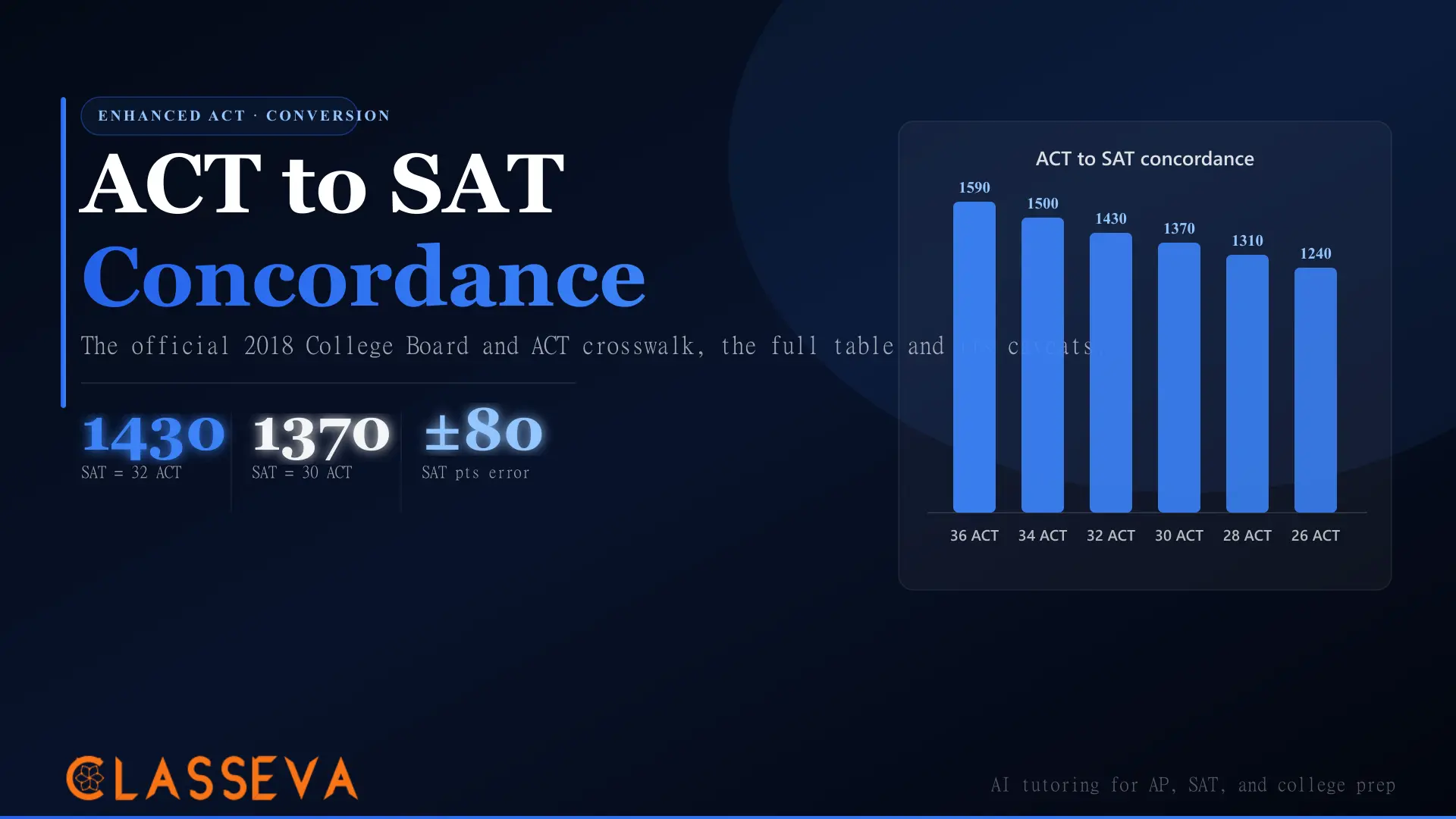
The two qualifying routes into Palmetto Fellows let students trade rank for score. A student outside the top 6% can still win the award with a 31 ACT and a 4.0 GPA, while a student inside the top 6% needs only a 25. South Carolina names the June national test date of senior year as the deadline to lock the score, and the College Board concordance maps the 25 ACT to a 1200 SAT and the 31 ACT to a 1400 SAT. Confirm current figures with the South Carolina Commission on Higher Education before treating any number as final.
Which ACT Score Gets You a Full Ride?
A 25 to 31 ACT unlocks full-tuition state awards in most of the programs that offer them. A 25 reaches Georgia Zell Miller (full public tuition) and the first Palmetto Fellows tier. A 26 reaches Florida Academic (100% tuition). A 31 reaches Louisiana TOPS Excellence and the top Palmetto Fellows tier. Below a 22, named ACT-based full-ride tiers thin out, and GPA-path or income-based programs become the realistic route.
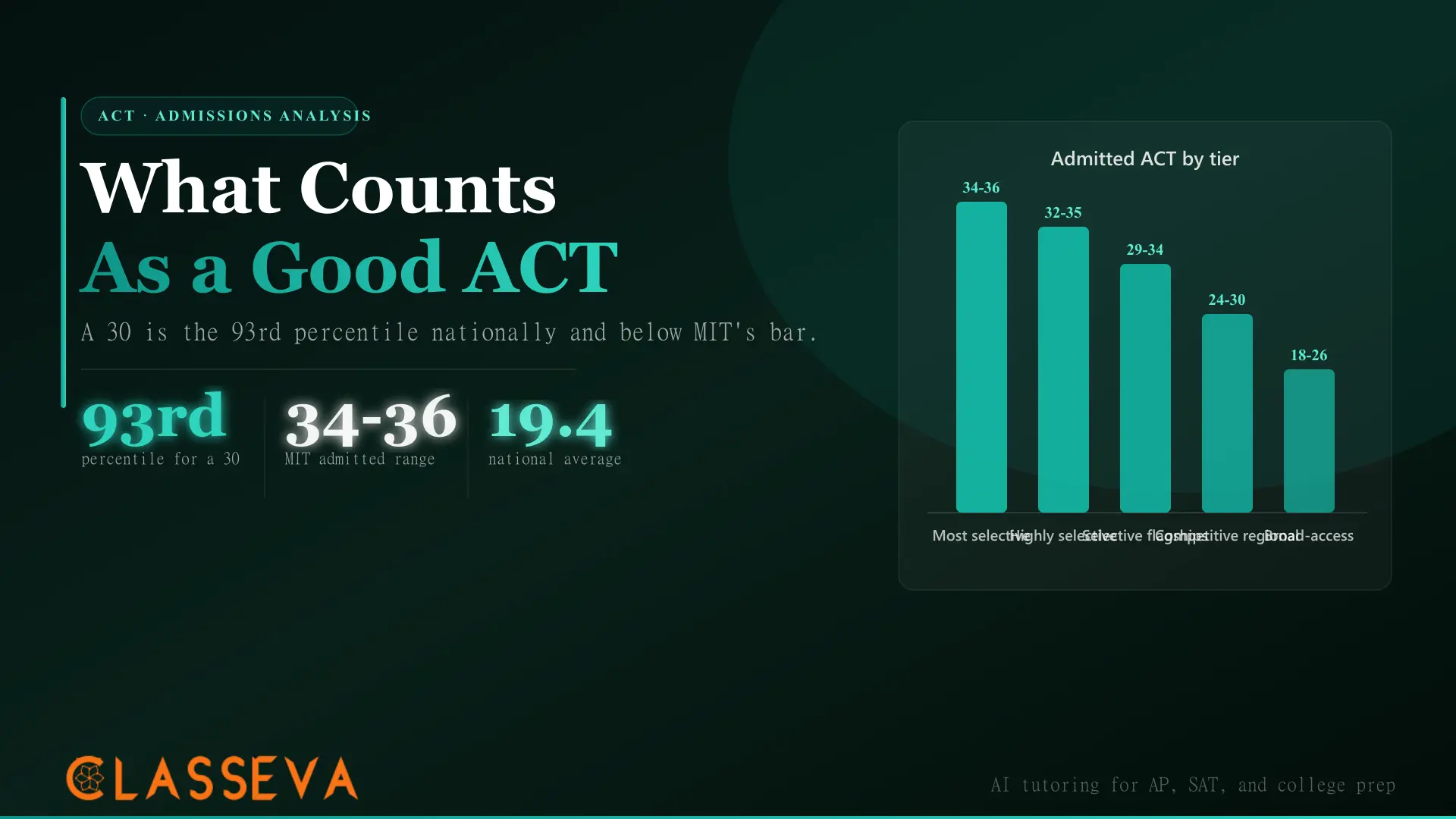
An act score full ride almost always pairs the score with a GPA floor between 3.5 and 4.0. The score opens the tier; the GPA keeps it open through college renewal. Students weighing whether to chase a higher composite should read the good ACT score guide for context on how these state cutoffs compare to admissions percentiles, since a scholarship cutoff and an admissions target are not the same number.
How to Qualify: A Junior-Year Action Plan
Qualifying starts with one number, not a vague ambition. Pull your home-state program, find the nearest cutoff above your baseline practice score, and make that exact composite the target. The plan below moves a junior from scattered prep to a locked qualifying score before the senior-year deadline closes the window.
- Map your state's tiers first. List every named award and its ACT cutoff and GPA floor. A Louisiana student aiming for Honors needs a different score than one aiming for Opportunity, and the gap defines the prep target.
- Take a full timed diagnostic. A real baseline tells you how many points sit between you and the next cutoff. Two points and twelve points call for different timelines.
- Protect the GPA in parallel. A 25 ACT means nothing for Zell Miller without the 3.7 GPA. Treat the GPA floor as a co-requirement, not a footnote.
- Plan the test calendar around the June deadline. Most programs require the qualifying score by the June national administration of senior year. Sit the first attempt by fall so a retake stays available.
- Use the score-section strengths of the Enhanced ACT. The 2026 format makes Science optional and trims the Math answer choices. Review the Enhanced ACT 2026 changes so your prep matches the test you will actually sit.
- File the financial-aid application on time. Florida's FFAA and Oklahoma's enrollment form carry hard deadlines. A qualifying score does not pay out if the paperwork closes unsubmitted.
If a diagnostic lands one or two points under a named cutoff, a single focused retake is often the highest-return decision in the entire college-cost equation. Two points that move a Florida 24 to a 26 convert a 75% Bright Futures award into 100%. That is a quarter of tuition per year for a few weeks of targeted practice on your weakest section.
Estimate Your Scholarship Odds
Before you set a target score, it helps to see how your full profile, GPA, test results, and intended programs, maps to scholarship probability. The estimator below models your odds across merit awards so you can decide which state cutoffs are within reach and how hard to push for the next tier.
Scholarship Probability Estimator
Enter your GPA, ACT or SAT score, and target schools to estimate your odds across merit scholarships and see which state cutoffs are within reach.
Pair the estimate with one more comparison. Students deciding between leaning on a state merit award and pursuing military-funded tuition should weigh the ROTC programs college scholarships path, which can stack differently against state aid depending on the school. If you tested with the SAT and want to read your result against these ACT cutoffs, run an ACT to SAT score conversion to find your concorded composite.
Key Takeaways
- State ACT scholarship benchmarks are cliffs, not slopes. Award value holds flat inside a tier and jumps at named cutoffs, so the point that crosses a line carries all the value.
- The full-ride band sits between a 25 and a 31 ACT. A 25 reaches Zell Miller and Palmetto Fellows tier one, a 26 reaches Florida Academic, and a 31 reaches TOPS Excellence and Palmetto Fellows tier two.
- Every program pairs the ACT cutoff with a GPA floor. Floors run from 3.0 (HOPE) to 3.7 (Zell Miller) to 4.0 (Palmetto Fellows tier two), and a qualifying score with a short GPA forfeits the award.
- The tests are interchangeable. Each program publishes an SAT concordance, so you qualify by hitting the named number on whichever test fits you.
- Most programs ignore income; a few do not. Bright Futures, HOPE, Zell Miller, TOPS, and Palmetto Fellows are pure merit, while Oklahoma Promise gates on family income near $60,000 and a 2.5 curriculum GPA.
- Cutoffs change by legislation. Georgia dropped Zell Miller from a 26 to a 25 in 2024 and Florida tightened Bright Futures for the Class of 2026, so confirm the current number for your graduating class.
- One targeted retake can pay for a year. Moving a score two points across a named threshold can convert a partial award into a full one, the highest-return hours in the college-cost equation.