Understanding Your Child’s School Report: A Parent’s Guide
School reports land in your inbox or book bag and you have about ten minutes before the conversation turns to “so, how did it go?” The problem is that understanding school report language as a parent is harder than it should be. The grades look different from what you remember, the comments feel coded, and it is rarely clear whether you should be celebrating or picking up the phone to the school.
During my time working in the tutoring industry, one of the first things I would ask new parents was whether they had their child's most recent school report to hand. Roughly half the time, they did not. And of those who did, most had only skimmed it. Not because they did not care, but because they genuinely did not know what the grades and comments meant in practical terms. This guide changes that.
What School Reports Actually Tell You
A school report is a snapshot, not a verdict. It captures your child's performance and behaviour at a specific point in the year, written by teachers who see them for a few hours each week. That context matters, because a single report should never trigger panic or complacency on its own.
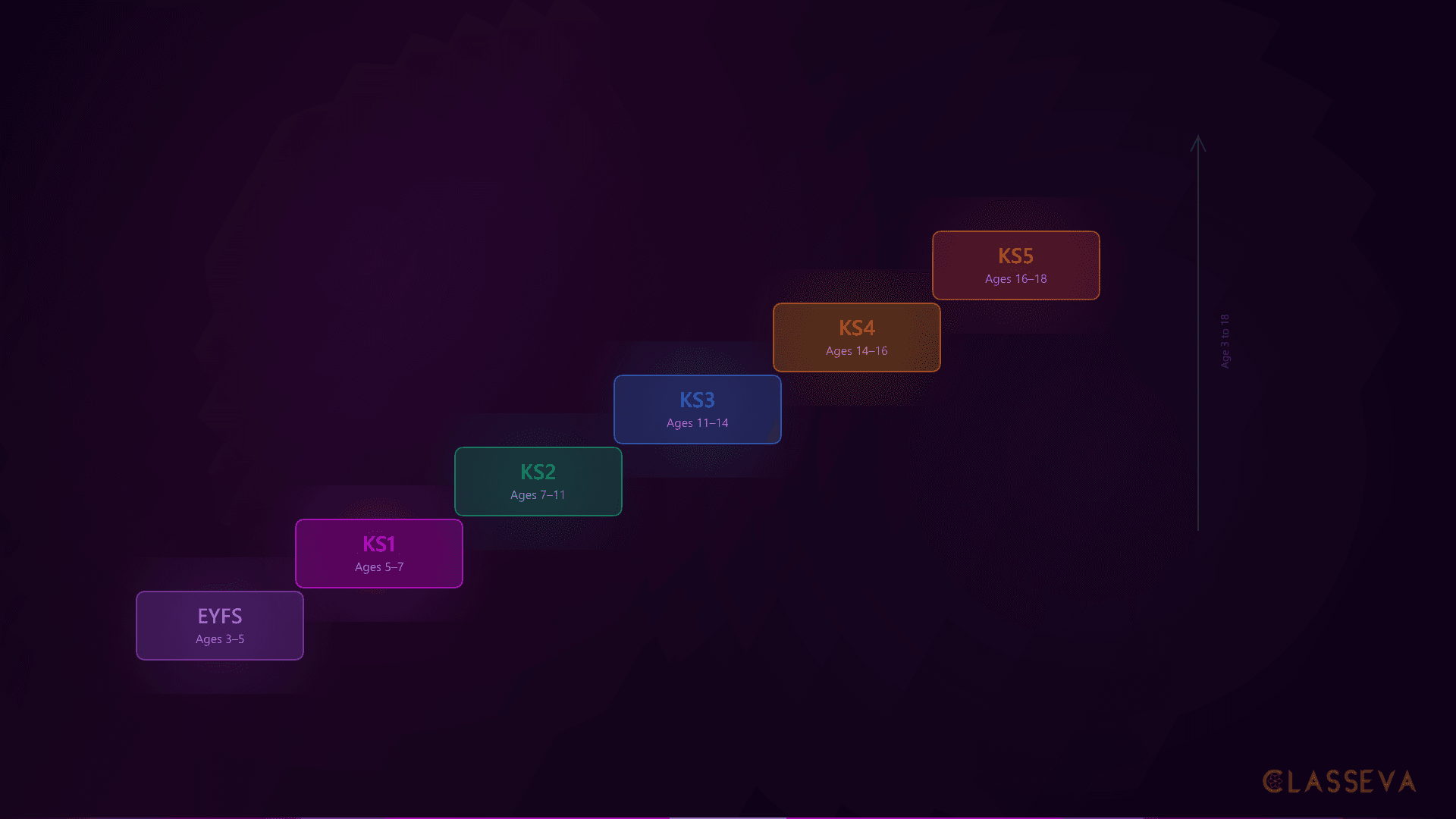
Reports typically cover three things: academic attainment (how well your child is performing against expectations), effort and engagement (how hard they are working), and personal development (behaviour, social skills, and attitude). The problem is that every school formats these differently, and the grading systems change depending on the Key Stage.
Read the report three times. First, scan the grades for anything that jumps out. Second, read every teacher comment carefully. Third, look for patterns across subjects. A child who has low effort in three subjects is telling you something different from a child who is struggling in one specific area.
Primary School Reports (KS1 and KS2)
Primary school reports are the most straightforward to read, but the terminology still catches parents off guard. At Key Stage 1(Years 1 and 2), your child's report will use teacher assessment language rather than numerical grades. Since 2023, formal KS1 SATs were replaced by teacher assessments, so reports describe your child's level using one of three terms.
| Assessment Term | What It Means |
|---|---|
| Working towards expected standard | Below the level expected for their age. May need additional support. |
| Working at expected standard | Meeting what the curriculum expects. On track for their age group. |
| Working at greater depth | Exceeding expectations. Demonstrating deeper understanding and independent thinking. |
Primary school teacher assessment descriptors used in KS1 and KS2 reports
In Years 3 to 5, the same language continues in termly reports. The core subjects (English, Maths, Science) get the most detailed comments, while broader curriculum subjects like Art, Music, and PE tend to receive shorter summaries focused on participation and attitude.
Year 1 also includes the phonics screening check, a national test of early reading ability. Your child's report will note whether they met the expected standard (a score of 32 out of 40 or above). If they did not, they will retake it in Year 2.
SATs Scaled Scores in Year 6
In Year 6, your child sits KS2 SATs in English Reading, English Grammar, Punctuation and Spelling (GPS), and Maths. These are nationally standardised tests, and the results appear on the end-of-year report as scaled scores rather than descriptive terms.
The scaled score system is designed so that 100 always represents the expected standard, regardless of how hard the test was in any given year. A score of 105 means your child is comfortably above expectations. A score of 95 means they are below, but only marginally. The raw marks needed for each scaled score change every year, which is why the Department for Education uses scaling rather than raw percentages.
SATs results are used by secondary schools for setting and streaming in Year 7. They do not appear on any certificate your child will ever show an employer or university. A disappointing SATs result is a data point, not a destiny.
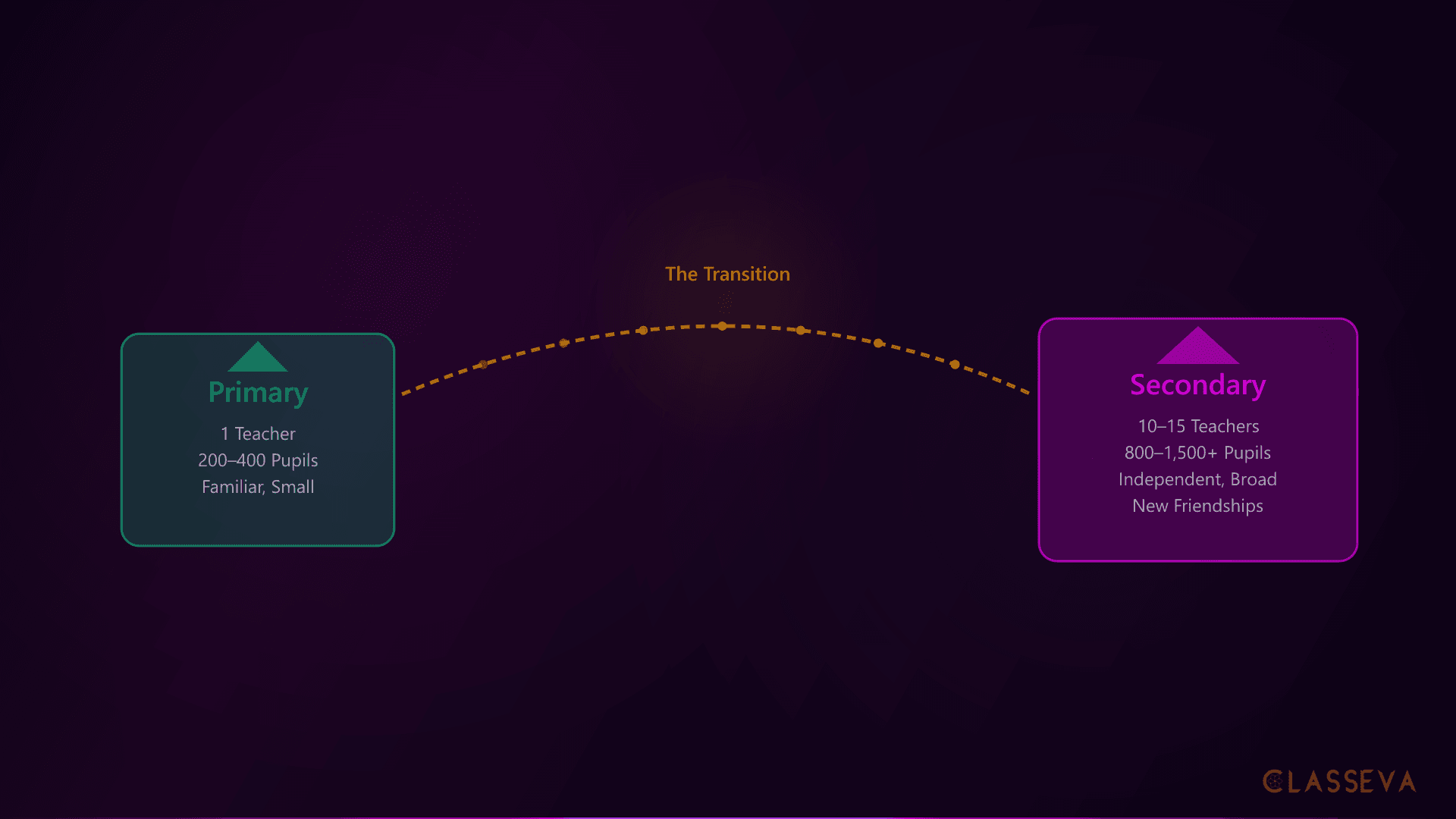
Secondary School Reports: KS3 (Years 7 to 9)
This is where school reports become confusing for parents, because there is no national standard for KS3 reporting. When the old National Curriculum levels (Level 3a, 4b, 5c) were scrapped in 2014, every school was left to create its own system. A decade later, the result is a patchwork of different approaches.
Some schools use numbered grades that mirror the GCSE 9 to 1 scale, giving you an early sense of where your child sits. Others use descriptive levels (developing, secure, mastering) or their own bespoke systems. A few still use “flight paths”, which are essentially predicted GCSE grades based on current trajectory.
If your child's KS3 report shows a grade of “4”, do not assume it means the same as a GCSE grade 4. Some schools use an internal 1 to 9 scale where 4 represents “developing” rather than the GCSE standard pass threshold. Always check your school's grading key, which is usually included with the report or available on their website.
Regardless of the grading system, most KS3 reports include two things that are genuinely useful: an attainment indicator (how well your child is performing) and a separate effort grade (how hard they are working). These two numbers, read together, give you a far clearer picture than either one alone.
Flight Paths and Target Grades
Many secondary schools set target grades from Year 7, often derived from your child's KS2 SATs results using statistical prediction tools like Fischer Family Trust (FFT) or ALPS. These targets represent what a student with similar prior attainment typically achieves at GCSE, and they can be useful benchmarks.
The risk is that targets become ceilings. If your child has a target of grade 5 and they are achieving grade 5, the report might say “on track”. But a child with the capability for a grade 7 might be coasting to their target rather than being pushed. This is exactly the kind of insight that understanding how KS3 works helps you spot early.
GCSE Reports: KS4 (Years 10 and 11)
Once your child enters Year 10, school reports shift to the GCSE 9 to 1 grading system. This is the most standardised reporting you will encounter, and it introduces three distinct types of grade that parents frequently mix up.
Current vs Target vs Predicted Grades
Current Grade
- •What your child would achieve if they sat the exam today
- •Based on classwork, homework, and assessments completed so far
- •Will naturally be lower in Year 10 than Year 11 (they have not covered all content yet)
Target Grade
- •What the school expects your child to achieve based on prior data
- •Usually derived from KS2 SATs scores via FFT or ALPS
- •Represents a statistically likely outcome, not a guarantee
The third grade you may see is the predicted grade, which is the teacher's professional judgement of what your child will actually achieve in the final exam. This sits between the current and target grades. It accounts for factors that data cannot capture: how quickly your child is improving, whether they respond well to exam conditions, and how engaged they are in lessons.
Arrive with your child's report and ask one specific question per subject: “What is the single most important thing my child could do between now and the next report to close the gap between their current and target grade?” This forces a concrete, actionable answer.
Mock exam results may appear on reports separately or alongside termly grades. Mocks are particularly important in Year 11 because they are the closest simulation of real exam conditions your child will experience. A large gap between mock results and target grades is worth discussing with the school immediately, not waiting for the next parents' evening.
Sixth Form Reports: KS5 (Years 12 and 13)
At sixth form, reports use A* to E grades for A-Levels. These are the grades parents typically remember from their own education, though the content and difficulty have changed significantly. Reports at this stage carry particular weight because they directly inform UCAS applications and university offers.
Your child's sixth form report may also reference ALPS scores(A-Level Performance System). ALPS is a value-added measure that compares your child's current performance to national expectations based on their average GCSE score. An ALPS score of 1 to 3 means they are performing above what would be expected. A score of 7 to 9 means they are underperforming relative to their GCSE results.
It is important to understand that UCAS predicted grades are separate from report grades. Predicted grades are the grades your child's teachers submit to universities as part of the UCAS application. They may be higher than the current working grade on a report because they account for expected improvement. If your child's report grade is a C but their UCAS prediction is a B, that means the teacher believes they can reach a B by exam time. For more on how A-Levels work in detail, see our dedicated guide.
Decoding Teacher Language
Teacher comments are the most valuable part of any school report, but they are also the hardest to interpret. Teachers write hundreds of comments per reporting cycle and are trained to frame feedback constructively. The result is that genuinely important messages can be buried in diplomatic language.
| What the Report Says | What It Usually Means |
|---|---|
| A pleasure to teach | Well-behaved, engaged, and contributing positively in class |
| Could achieve more with greater effort | Capable but not working hard enough. A polite warning. |
| Needs to participate more in class | Too quiet or disengaged. Ask whether they feel confident. |
| Works well independently | Gets on with tasks but may need to develop collaborative skills. |
| Has found some topics challenging | Struggling with specific content. Ask which topics. |
| Needs to manage time more effectively | Missing deadlines, rushing work, or poorly organised. |
| Is making expected progress | On track for their target. Neutral, not a cause for celebration. |
| Shows potential but needs more consistency | Capable of better work but performance fluctuates. |
Common teacher report phrases and their practical meaning for parents
Praise That Hints at Problems
One thing I learned from talking to teachers during my time in the tutoring industry is that positive-sounding comments sometimes carry subtle warnings. “Works well when focused” implies they are frequently not focused. “Enjoys the social aspects of the subject” may mean they talk more than they work. “Has a mature approach to learning” is genuinely positive, but “needs to develop a more mature approach” is a significant concern about behaviour or attitude.
The most useful approach is to look for what the comment does notsay. If a teacher comments on behaviour and effort but says nothing about academic progress, that silence can be as telling as any grade. If every subject mentions “effort” positively except one, that one exception deserves a follow-up conversation.
Effort vs Attainment: Why Both Matter
Most parents look straight at the attainment grades and stop there. That is understandable, because grades are the currency of the education system. But effort grades are at least as important, because effort is entirely within your child's control, while attainment is influenced by factors they cannot change, including natural ability, learning differences, and the quality of teaching they receive.
A child with high effort and low attainment is working hard but needs support. Perhaps they are struggling with specific concepts, need a different revision approach, or have an unidentified learning difficulty. This profile deserves empathy and practical help, not pressure to “try harder” when they are already trying.
A child with low effort and high attainment is a different challenge entirely.
The Coasting Problem
From all the families I worked with during my years in tutoring, the students who worried me most were not the ones getting low grades. It was the bright students getting comfortable grades without really working for them. These are the Year 9 and Year 10 students who cruise through on natural ability, never developing the revision habits and work ethic they will desperately need when content becomes harder.
The coasting problem is invisible on most school reports because the grades look perfectly fine. A string of 6s and 7s in Year 10 with low effort grades might seem acceptable, but it often masks a student who could achieve 8s and 9s with genuine engagement. Worse, the habits they form during the coasting years (leaving revision until the last minute, not engaging with feedback, doing the minimum) become entrenched by Year 11.
A struggling student knows they need help. A coasting student does not believe anything needs to change, because they are passing. This makes the coasting profile harder to address, and it is one of the main reasons to pay close attention to effort grades on reports, particularly in Years 9 and 10.
What to Do After Reading the Report
The value of a school report is not in reading it. It is in what you do next. Too many reports get glanced at, discussed for five minutes over dinner, and then forgotten until the next one arrives. Treating each report as a checkpoint rather than a formality makes a genuine difference to how effectively you can support your child through school.
Read the report with your child
Go through it together, subject by subject. Ask your child to explain each comment in their own words. This gives you insight into whether they are self-aware about their strengths and weaknesses, and it opens a conversation that feels collaborative rather than judgemental.
Separate effort from attainment
For each subject, note whether effort and attainment match. High effort with low attainment needs support. Low effort with high attainment needs a different conversation. Low effort with low attainment needs urgent attention.
Identify patterns across subjects
A dip in one subject is usually about that specific subject. Low effort across three or four subjects suggests something broader: stress, social problems, disengagement, or personal issues that have nothing to do with any individual class.
Prepare questions for parents' evening
Use the report to write down one specific question per subject. Generic questions like "how is my child doing?" get generic answers. Specific questions like "the report mentions managing time better, what does that look like in your lessons?" get useful answers.
Track trends over time
Keep every report. When the next one arrives, compare it against the last. One dip is rarely concerning. Two consecutive dips in the same subject is a pattern that deserves action. Improvement, even small, is worth recognising and celebrating.
When to Contact the School
Do not wait for parents' evening if you have concerns. Email the head of year or form tutor within a week of receiving the report. Schools expect and welcome this. Ask straightforward questions: “I noticed the effort grade in Maths has dropped from an A to a C since last term. Can you tell me what you've observed in class?”
Contact the school immediately if you see any of these on a report:
- A sudden drop in grades across multiple subjects (not just one)
- Effort grades of D or E (or equivalent) in any subject
- Teacher comments mentioning behavioural concerns or consistent missed deadlines
- Any reference to your child being withdrawn, isolated, or disengaged
School reports are reference documents beyond just this term. They are useful when your child is choosing GCSE options, applying to sixth form, writing personal statements, and preparing for university interviews. Past reports provide evidence of sustained effort and progress that no single grade can capture.
For a broader understanding of how the UK education system is structured across Key Stages and what your child experiences at each phase, our comprehensive guide covers the full journey from Reception to sixth form.
School reports are not judgements on your parenting. They are tools. The parents who get the most value from them are the ones who read them carefully, discuss them openly with their child, and use them to ask better questions at parents' evening. That simple routine, repeated across every report, makes a bigger difference than any single grade ever will.