The Jump from Primary to Secondary School
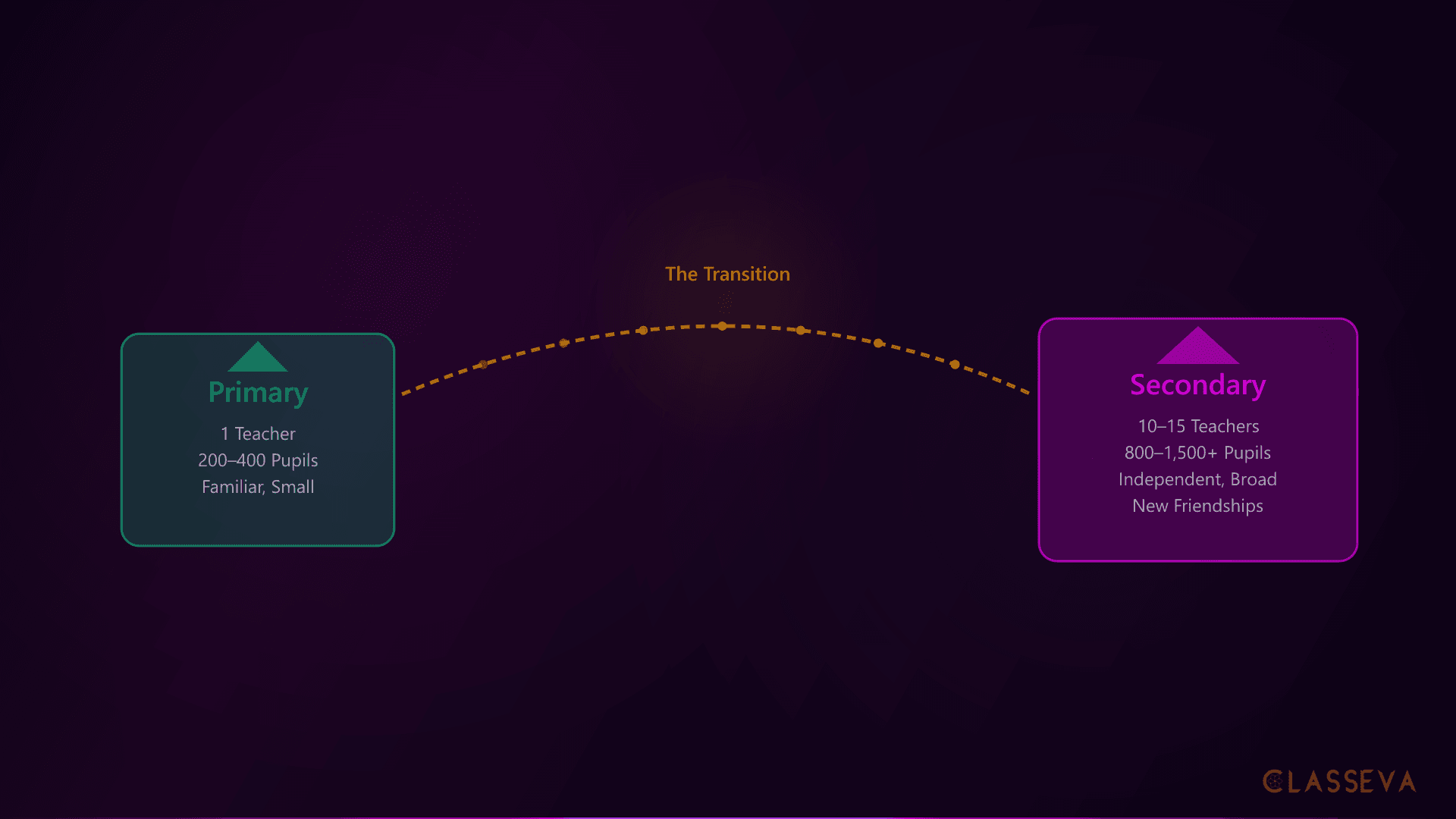
The primary to secondary school transitionis one of the biggest shifts in your child's education. In the space of a single summer, they go from being the oldest in a school of a few hundred to the youngest in a building that might hold over a thousand students. They swap one class teacher who knows them inside out for ten or more subject specialists. And they are expected to navigate a completely different daily routine with a level of independence most 11-year-olds have never needed.
Having spent time working with families through the tutoring industry, the pattern I noticed was clear: the children who coped best with secondary school were not necessarily the most academic. They were the ones whose parents had prepared them practically and emotionally, well before September arrived. A child who has practised the bus route, knows how to read a timetable, and has talked through “what if” scenarios with a parent is in a completely different position to one who turns up on day one without that groundwork.
This guide covers the full preparation timeline, from researching schools in Year 5 through to the practical steps you should take in the summer before Year 7. If you are looking for advice on helping your child settle in after they have started, see our Year 7 Transition guide.
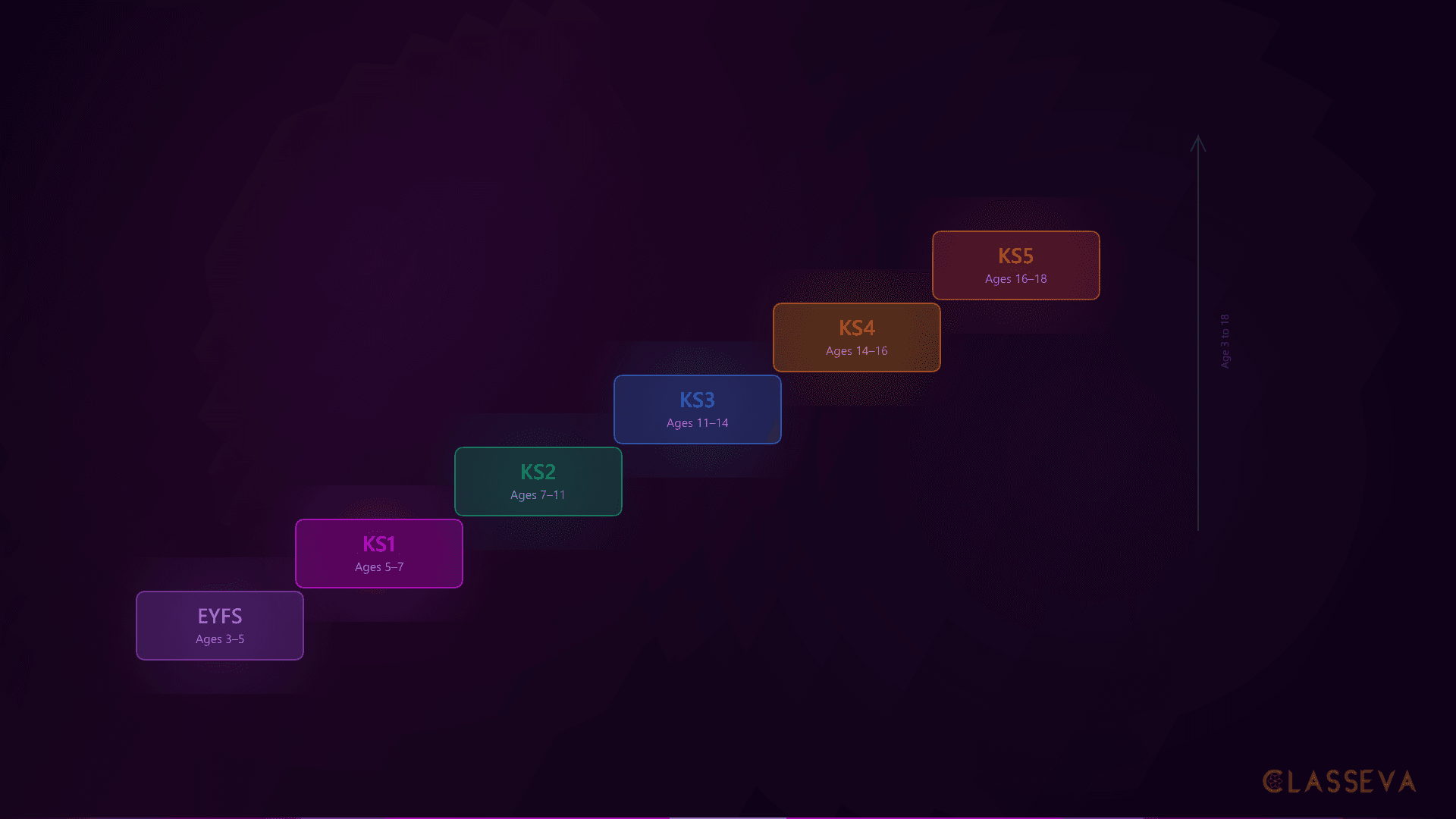
The Full Timeline: Year 5 to Year 7
The primary to secondary school process in the UK follows a structured timeline. Knowing the key dates takes the guesswork out of it and ensures you never miss a deadline.
Year 5: The Research Phase
Most parents do not realise how early the process starts. In Year 5, when your child is 9 or 10, you should begin attending secondary school open evenings. These are typically held in September and October, a full year before the application deadline.
If you are considering a grammar school, this is also when you need to decide whether your child will sit the 11+ exam. Grammar school entrance exams usually take place in September of Year 6, which means preparation often begins during Year 5. Independent school entrance exams follow a similar timeline, with tests in January of Year 6.
Open evenings are designed to impress. If possible, also visit during a normal school day. Call the school office and ask whether they offer daytime tours for prospective parents. You will learn far more from seeing lessons in progress and corridors between periods than from a polished evening presentation.
Year 6: Applications and Offers
The national deadline for secondary school applications in England is 31 October. You apply through your local authority's online admissions portal. Most local authorities allow you to list three to six schools in order of preference.
1 March is National Offer Day. This is when you find out which school your child has been offered. If it is not your first choice, you have the right to appeal. Every school must provide an appeals process. You can also ask to be placed on the waiting list for your preferred school, and many families do gain places this way before September.
Between May and July, your child sits their KS2 SATs, attends transition or induction days at their new school, and begins to mentally prepare for the change ahead.
Summer Before Year 7
The summer holidays are your most valuable preparation window. This is not about academic cramming. It is about practical readiness: making sure your child feels confident about the logistics of their new daily routine. We cover this in detail in the preparation checklist below.
Choosing the Right School
Choosing a secondary school is one of those decisions that feels enormous because, in many ways, it is. Your child will spend five to seven years there. But from talking with hundreds of parents during my time in education, the families who made the best choices were the ones who focused on practical fit rather than reputation or league tables.
What to Look for Beyond Ofsted
Ofsted reports matter, but they are a snapshot taken on a handful of days. A school rated “Good” can be absolutely right for your child. A school rated “Outstanding” can be completely wrong. Here is what to actually assess:
| Factor | Why It Matters | How to Check |
|---|---|---|
| Pastoral care | How the school supports struggling students | Ask about the form tutor system and pastoral team |
| Communication | How you stay informed as a parent | Ask how homework is set and how parents are contacted |
| KS3 curriculum breadth | Whether your child gets a full education before GCSEs | Ask if they teach a broad Year 7-9 curriculum or fast-track to GCSEs |
| Setting policy | How ability grouping works in core subjects | Ask when and how students are placed into sets |
| Behaviour policy | The discipline approach and culture | Read the behaviour policy on the school website |
| Extracurricular offer | Clubs, sports, music, drama beyond lessons | Ask for the enrichment timetable |
Key factors to evaluate when choosing a secondary school
Talk to current parents whenever possible. Not the parent ambassadors at open evening, but parents you know from the community, local social media groups, or your child's primary school. Ask them about the reality: how does the school handle problems? How much homework is set? Is communication prompt and clear?
The Journey Question
Distance matters more than many parents expect. A secondary school that involves a 45-minute commute each way is exhausting for an 11-year-old, especially in the dark winter months. That is 90 minutes of travel before your child even starts homework.
Choosing a school based purely on reputation while ignoring the commute. An excellent school 40 minutes away can leave your child tired, disconnected from local friends, and unable to attend after-school clubs. A good school nearby is often the better choice for overall wellbeing.
The Academic Jump
The academic shift from primary to secondary is significant, and understanding what changes from primary to secondary helps you prepare your child for it rather than letting it catch them off guard.
From One Teacher to Fifteen
At primary school, your child has one class teacher who teaches almost everything and knows them as a whole person: their strengths, their struggles, their friendship group, their mood on a Monday morning. At secondary school, they will have 10 to 15 different teachers, each responsible for one subject.
This means no single teacher has the full picture of your child. If they are having a bad week, it is less likely to be noticed unless you or your child communicates it. This is one of the reasons the form tutor role exists in secondary schools: they are meant to be the consistent adult who checks in with your child regularly.
Primary School (KS2)
- •One class teacher for most subjects
- •Same classroom all day
- •Teacher knows your child well
- •Small school of 200 to 400 pupils
- •Homework: 30 to 60 minutes
Secondary School (KS3)
- •10 to 15 subject teachers
- •Moving between classrooms every hour
- •Form tutor as main point of contact
- •Larger school of 800 to 1,500+ pupils
- •Homework: 1 to 2 hours across subjects
Homework and Independent Learning
At primary school, homework is typically set by one teacher, due the same day each week, and often checked in class. At secondary, homework comes from multiple subjects, is set and tracked through digital platforms, and arrives at different times throughout the week. Your child needs to manage deadlines across subjects without anyone reminding them.
Most secondary schools now use digital homework platforms such as Satchel One or Google Classroom. Getting access to these platforms before September means you can monitor homework without having to ask your child every evening.
Setting and streaming also begins at secondary school. Many schools group students by ability in Maths, English, and Science from Year 7, often using KS2 SATs results as the starting point. This can be motivating for some children and unsettling for others, so it is worth asking the school how they approach it and how fluid their sets are.
The Social and Emotional Jump
The academic changes are obvious. The social and emotional shift is harder to see but often has more impact on how your child experiences the transition.
New Friendships and Older Students
Your child may arrive at secondary school knowing nobody. Even if a few friends from primary come along, they might be placed in different form groups or sets. Building new friendships while navigating an unfamiliar environment is socially demanding, and most children find the first few weeks tiring because of it.
There is also the reality of being the youngest in a school that includes sixth formers. At primary, your child was the most senior. At secondary, they share corridors with 17 and 18-year-olds. This can feel intimidating, though most secondary schools deliberately keep Year 7 areas separate in the early weeks.
Social media adds another layer. By Year 7, many children have phones and social media accounts. Group chats, online friendships, and digital dynamics become part of school life in a way that did not exist at primary. Having open conversations about online behaviour before September is more useful than trying to introduce rules once problems have already appeared.
The Transition Is Hard for Parents Too
This is something very few guides mention, but from speaking with parents over the years, it is real: many parents find this transition harder than their child does.
At primary school, you probably knew the teacher by name, had conversations at the school gate, and felt closely connected to your child's daily experience. Secondary school changes that completely. Communication becomes formal: parents' evenings twice a year, emails to a general address, and homework platforms instead of handwritten notes.
Trust the school's transition programme. Secondary schools do this every September with 150 to 300 new Year 7 students. They have pastoral teams, buddy systems, and induction activities specifically designed to help children settle in. Your child is not being thrown in without support.
Practical Preparation Checklist
The single most effective thing you can do to ease the primary to secondary school transition is prepare your child practically. Reassurance helps, but concrete preparation builds genuine confidence. Here is what to prioritise in the weeks before September.
Practise the journey to school
Do this multiple times, at the actual time they will be travelling. If they are taking a bus, practise the bus route. If walking, walk the exact route. Familiarity with the journey removes one of the biggest sources of first-day anxiety.
Get uniform and equipment early
Buy uniform well before the last week of August. Label everything with their name. Make sure they know how to tie their tie if the school requires one. Pack their bag together the night before the first day.
Practise the locker combination
This sounds trivial, but struggling with a locker in a busy corridor while older students push past is a genuine source of Year 7 anxiety. If the school assigns lockers, practise the combination until it is automatic.
Make sure they can read a timetable
Secondary timetables are far more complex than primary. Ensure your child can read which lesson they have, in which room, with which teacher. Practise with a printed copy before term starts.
Read the school welcome pack together
Most schools send a welcome pack or summer project. Go through it together. It often contains the school map, key staff names, term dates, and expectations for the first week.
Talk through practical scenarios
Ask your child: "What would you do if you could not find your classroom?" or "Who would you talk to if you were worried about something?" Having thought through these situations in advance makes them far less scary in the moment.
Connect with other families
A familiar face on day one makes a huge difference. Use local social media groups, primary school WhatsApp groups, or the school's own transition events to help your child meet at least one other new starter before September.
Conversations That Help
The conversations you have during the summer shape how your child approaches this change. Avoid constant reassurance (“You'll be fine, don't worry!”) which can inadvertently signal that there is something to worry about. Instead, be matter-of-fact and curious.
Ask them what they are most looking forward to. Ask what they are least sure about. Share your own memories of starting a new school if you have them. Acknowledge that everyone feels nervous, including the teachers on their first day at a new school. Normalising the feeling is more helpful than dismissing it.
After the first few days of term, avoid asking “How was school?” which almost always gets a one-word answer. Try specific questions instead: “What was the best thing that happened today?” or “Did anyone in your form group make you laugh?” Specifics invite real conversation.
Connecting with Other Families
One observation from working with families through the tutoring industry: the parents who felt most confident about the transition were those who had built connections with other families going to the same school. Whether through a primary school cluster, a local community group, or the school's own events, knowing other parents gives you a support network for the practical questions that come up in the first weeks. (“Is there PE tomorrow? What platform is the homework on?”)
For your child, arriving on day one knowing even one other person transforms the experience. Young Minds highlights peer connection as one of the most important protective factors for children during school transitions.
What Happens Next
The preparation phase ends and the settling-in phase begins. If you have followed the steps in this guide, your child will start Year 7 with the practical confidence that comes from knowing their journey, their timetable, and their emergency plan. That is more than most 11-year-olds have, and it matters.
Once term starts, the focus shifts. For detailed advice on helping your child settle in during the first term, dealing with the “Year 7 dip”, and spotting signs of struggle, see our dedicated guides.
For a broader understanding of how secondary school fits into the UK education system, including what happens during Key Stage 3 and beyond, our parent guides cover each stage in detail. And if your child needs a little extra academic support during the transition, Classeva's AI tutoring is available whenever they need it, covering every subject at the level they are working at.
The jump from primary to secondary school is big, but it is also a well-trodden path. Thousands of children make it successfully every September. Your job is not to make the anxiety disappear. It is to make sure your child has the practical tools and emotional confidence to handle it. Preparation beats reassurance every time.