What Are A-Levels? Everything Parents Need to Know
If your child is in Year 10 or 11, you have probably heard A-Levels mentioned constantly: by teachers, by other parents, and by your child themselves. But the system has changed significantly since most parents went through it. The AS/A2 split you remember? Gone. January exams? Scrapped. Modular resits? No longer an option.
During my time working in tutoring, the question I fielded most from parents of Year 11 students was not about GCSEs. It was about what comes next. They wanted a clear, honest explanation of how A-Levels actually work now, not the version they remembered from the 1990s or 2000s. This guide is exactly that.
What Are A-Levels?
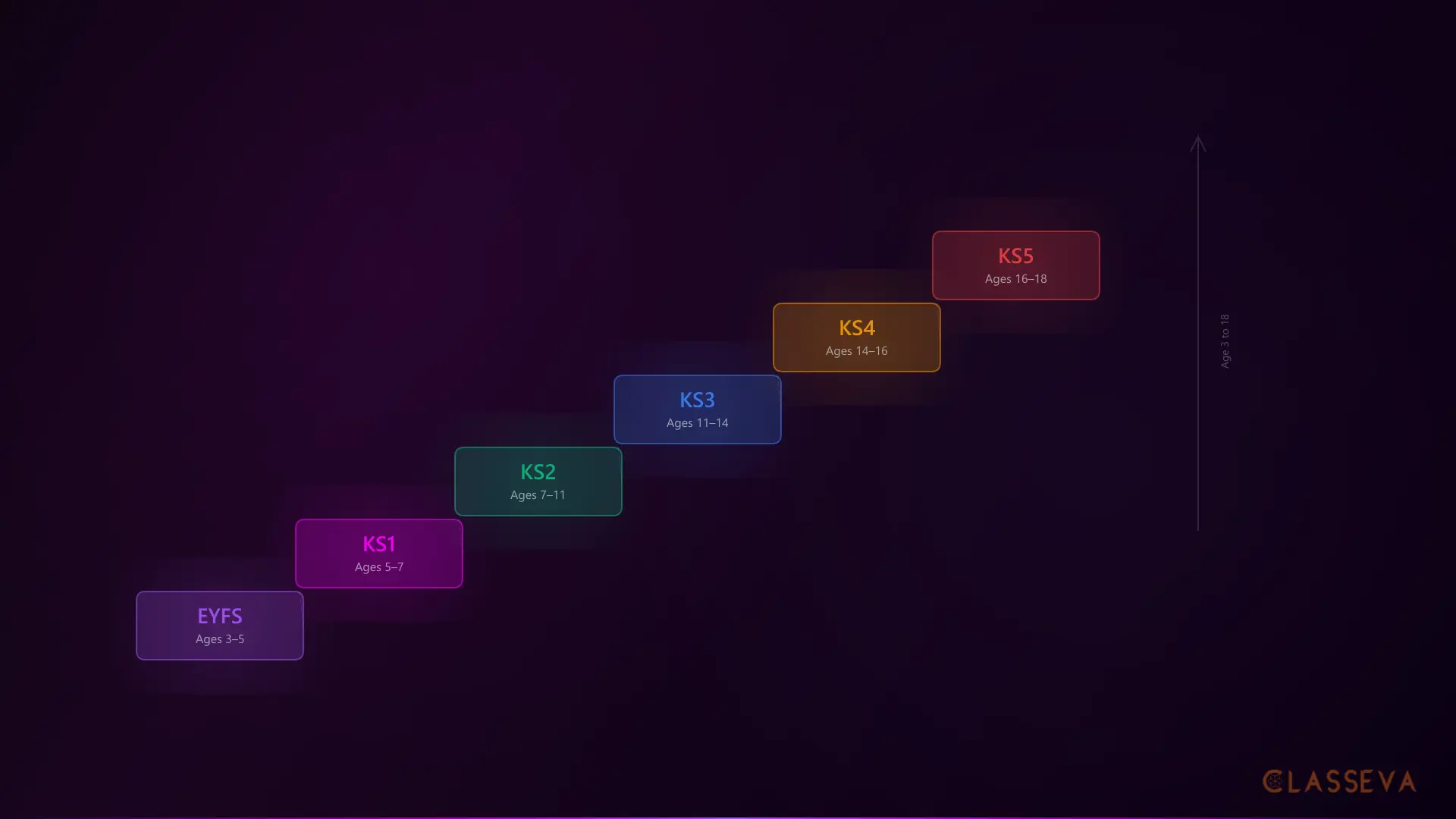
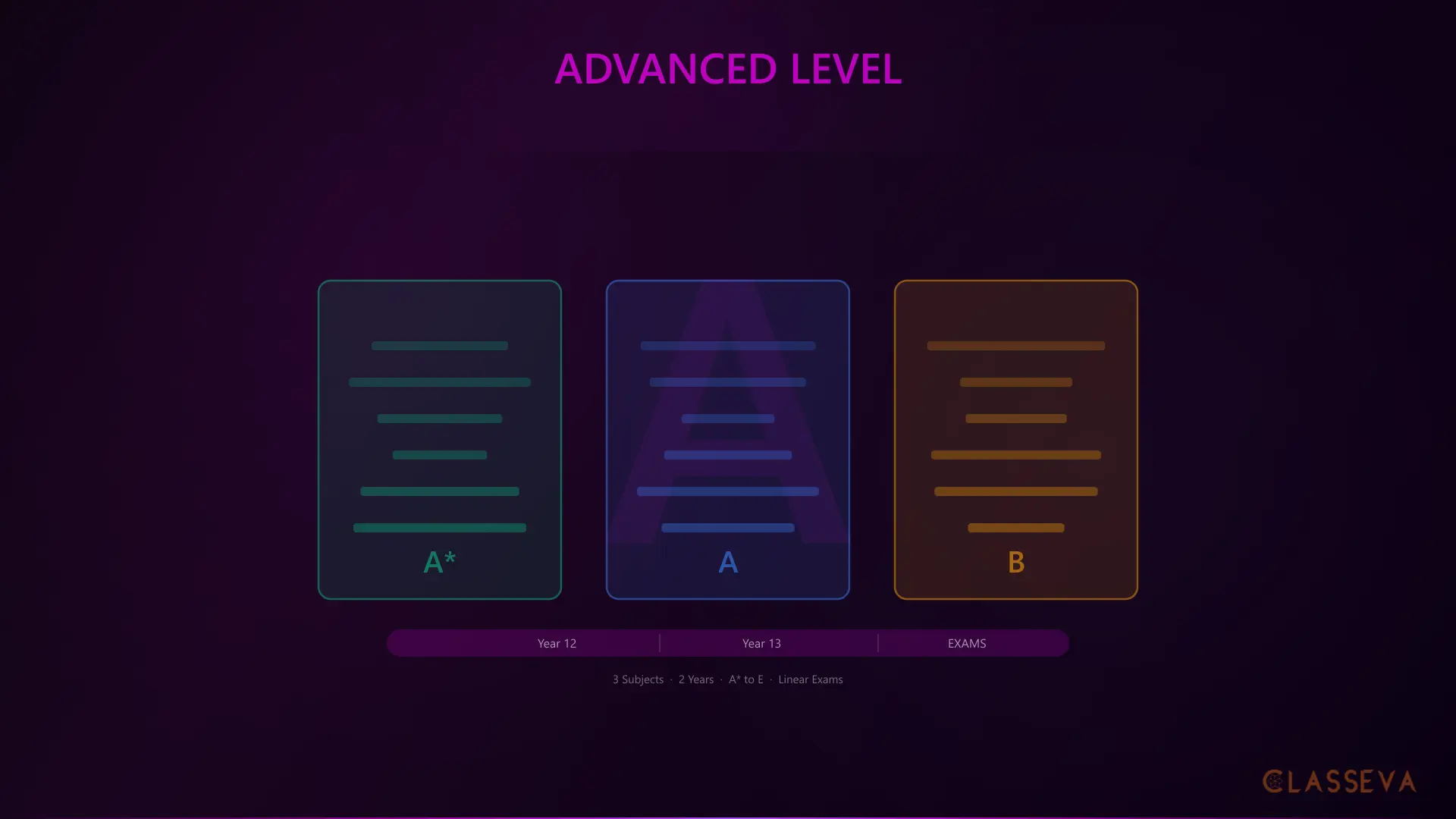
A-Levels (Advanced Level qualifications) are two-year academic courses studied at ages 16 to 18 in England, Wales, and Northern Ireland. They are the primary route to UK universities and the most widely recognised post-GCSE qualification. Students choose their A-Level subjects at the end of Year 11, begin studying them in Year 12 (lower sixth), and sit all their exams in the summer of Year 13 (upper sixth).
Over 85 A-Level subjects exist, though most schools and sixth form colleges offer between 15 and 30. The three main exam boards are AQA, Edexcel (Pearson), and OCR. Your child's school chooses which board to use for each subject, and while the curriculum content is broadly similar across boards, the exam format and style of questions can differ.
How Many A-Levels Do Students Take?
Most students take three A-Levels. Some ambitious students start Year 12 with four subjects and drop one at the end of the year, continuing with three into Year 13. This is a common and perfectly sensible strategy, as it gives your child a term or two to discover which subjects they enjoy at A-Level depth before committing.
Cambridge explicitly states that taking four A-Levels does not give applicants an advantage. Three strong grades will always beat four mediocre ones. The only exception is Further Maths, which some universities require as a fourth subject for maths-heavy courses.
Many students also take the EPQ (Extended Project Qualification) alongside their three A-Levels. The EPQ is a research-based project worth half an A-Level. Some universities make reduced offers to students with an EPQ, so it is worth considering.
AS Levels: The Big Change Parents Miss
If you took A-Levels before 2015, you probably sat AS exams at the end of Year 12, and those marks counted for roughly half of your final A-Level grade. This no longer happens. Since the 2015 to 2017 reforms, AS Levels are completely standalone qualifications. They do not feed into the full A-Level grade at all.
This means the full A-Level is now a linear qualification: all exams are taken in May and June of Year 13, and the entire two years of work are assessed in those few weeks. Some schools still offer AS exams as a standalone measure of Year 12 progress, but most have stopped because the grades carry no weight for university offers.
How the A-Level Grading System Works
Unlike GCSEs, which use the 9 to 1 number scale, A-Levels use letter grades from A* (the highest) to E (the lowest pass). A grade of U (Ungraded) means the student did not meet the minimum standard and has effectively failed.
| Grade | Meaning | UCAS Points |
|---|---|---|
| A* | Exceptional (top tier nationally) | 56 |
| A | Excellent understanding of the specification | 48 |
| B | Strong knowledge with real depth | 40 |
| C | Competent understanding of most content | 32 |
| D | Some understanding with noticeable gaps | 24 |
| E | Basic understanding (minimum pass) | 16 |
| U | Ungraded (below minimum standard) | 0 |
A-Level grades and UCAS tariff points (Source: UCAS)
UCAS Tariff Points
Every A-Level grade carries UCAS tariff points, which universities can use when making offers. An A* is worth 56 points, and three A*s give 168 points in total. However, most competitive universities make offers in grade terms (such as AAB or A*AA) rather than asking for a points total. Tariff points matter more for universities that use points-based offers, which tends to be mid-range institutions.
A*: The Extra Hurdle
The A* grade was introduced in 2010 to distinguish the very top performers. Here is the part that catches students off guard: earning an A* requires meeting two separate thresholds. Your child must achieve an overall A-grade mark across all papers, and hit a higher threshold specifically on the A2 (Year 13) papers. This means a student could score brilliantly on one paper but miss A* because of a weaker performance on another.
In 2025, 4,043 students achieved three A* grades nationally. That is roughly 0.5% of all A-Level students. An A* is genuinely exceptional, not just “a good A.”
How A-Level Exams Work
Every A-Level exam is sat in the May to June window of Year 13. There are no January sittings, no mid-year modules, and no option to bank results from Year 12. Two years of work are assessed in a concentrated period of roughly six weeks.
Each subject typically has two or three exam papers, each lasting between 90 minutes and two and a half hours. The exact number and format depend on the subject and exam board. For example, AQA A-Level Maths has three papers (two pure and one applied), while AQA English Literature has two papers plus a coursework element.
Exam-Only vs Coursework Subjects
100% Exam
- •Maths, Further Maths
- •All three Sciences (Biology, Chemistry, Physics)
- •History, Geography, Economics
- •Everything assessed in summer exams
Includes Coursework/NEA
- •Art and Design (up to 60% portfolio)
- •Computer Science (20% programming project)
- •D&T, Drama, Music, PE
- •EPQ (100% independent research)
Subjects with coursework give your child an opportunity to build marks over time rather than relying entirely on exam-day performance. If your child tends to underperform in timed conditions, subjects with a coursework component can provide a useful buffer.
Grade Boundaries Shift Every Year
There is no fixed percentage that guarantees a particular grade. A-Level grade boundaries are set after all papers have been marked, through a process called awarding. If the paper was harder than usual, boundaries drop. If it was easier, they rise. This means your child cannot know their grade from a raw percentage until results day.
If your child comes out of an exam saying it was “impossible,” do not panic. Difficult papers typically produce lower grade boundaries, so a seemingly poor performance may still convert to a strong grade.
What Changed Since You Did A-Levels
The 2015 reforms were the biggest shake-up to A-Levels in decades. If you sat your own A-Levels before this date, the system your child is going through is fundamentally different. Here are the five key changes.
Many parents assume their child will sit AS exams at the end of Year 12 that “count towards the final A-Level.” This has not been the case since the 2015 reforms. If your child's school does offer AS exams, those results are completely separate from the A-Level grade.
Entry Requirements for Sixth Form
To study A-Levels, students need to meet their school or college's entry requirements. These vary by institution, but the typical baseline is five GCSEs at grade 4 or 5, including English and Maths. If you want the full picture on GCSE grades for sixth form entry, our detailed guide covers this thoroughly.
GCSE Requirements for Specific Subjects
Beyond the general requirement, most sixth forms require a grade 6 or 7 at GCSE in the subject (or a related subject) your child wants to take at A-Level. Some demanding subjects set higher bars.
| A-Level Subject | Typical GCSE Requirement |
|---|---|
| Maths | Grade 7 in GCSE Maths (some accept 6) |
| Further Maths | Grade 8 or 9 in GCSE Maths |
| Physics | Grade 6 in GCSE Physics/Combined Science + Grade 6 Maths |
| Chemistry | Grade 6 in GCSE Chemistry/Combined Science |
| Biology | Grade 6 in GCSE Biology/Combined Science |
| English Literature | Grade 6 in GCSE English Literature |
| History | Grade 6 in GCSE History (some accept English 6) |
| New subject (e.g. Psychology) | Grade 5 in English and/or Maths; no prior GCSE needed |
Indicative requirements; always check with the specific institution
Students who did not achieve a grade 4 in GCSE English or Maths must continue studying those subjects alongside their A-Levels until they pass. This is a legal requirement, not a school policy.
Key Dates for 2026
For families planning around the 2026 A-Level exam timetable, here are the dates that matter most.
| Event | Date |
|---|---|
| A-Level exams begin | Monday 11 May 2026 |
| A-Level exams end | Tuesday 23 June 2026 |
| Contingency day (students must be available) | Wednesday 24 June 2026 |
| UCAS Clearing opens | Thursday 2 July 2026 |
| A-Level Results Day | Thursday 13 August 2026 |
| UCAS Clearing closes | Monday 19 October 2026 |
Key A-Level dates for the 2025/26 academic year
Students must remain available on the contingency day (24 June 2026). If a national disruption prevents an exam from going ahead, it will be rescheduled to this date. Do not book holidays until after this date.
What Happens After A-Levels
A-Levels open up several pathways. University is the most common destination, but it is not the only valuable option. Having worked with families at every stage of this decision, the most important thing I can tell you is this: the right pathway depends entirely on your child, not on what their school or friends assume they should do.
University Through UCAS
Most A-Level students apply to university through UCAS during Year 13. Applications are submitted by January of Year 13 (October for Oxford, Cambridge, and most Medicine courses). Students can list up to five university choices.
Subject choice at A-Level matters for some university courses. Medicine requires Chemistry, Engineering requires Maths and usually Physics, and some top universities still value the traditional “facilitating” subjects more highly. For most degrees, however, any combination of three A-Levels will be accepted. The Russell Group's Informed Choices guide is the best free resource for checking which subjects specific courses prefer.
Alternatives to University
University is not the only valuable route after A-Levels. Several alternatives are growing in quality and prestige, and for some students they are genuinely the better choice.
Degree apprenticeships
Combine university-level study with paid work. Your child earns a full degree without tuition fees. Competition is fierce, with some programmes as selective as top universities.
Gap year
Defer university for a year of travel, work, or volunteering. Most universities are happy to defer. A gap year with purpose (not just travelling) can strengthen personal statements and maturity.
Direct employment
Some careers accept A-Levels directly, including the civil service, police, banking, and many technology companies. School leaver programmes at firms like PwC and Deloitte offer structured career paths.
Foundation years
For students who want to change direction or missed standard entry requirements, a foundation year at university provides an additional year of preparation before the full degree course.
Practical Advice for Parents
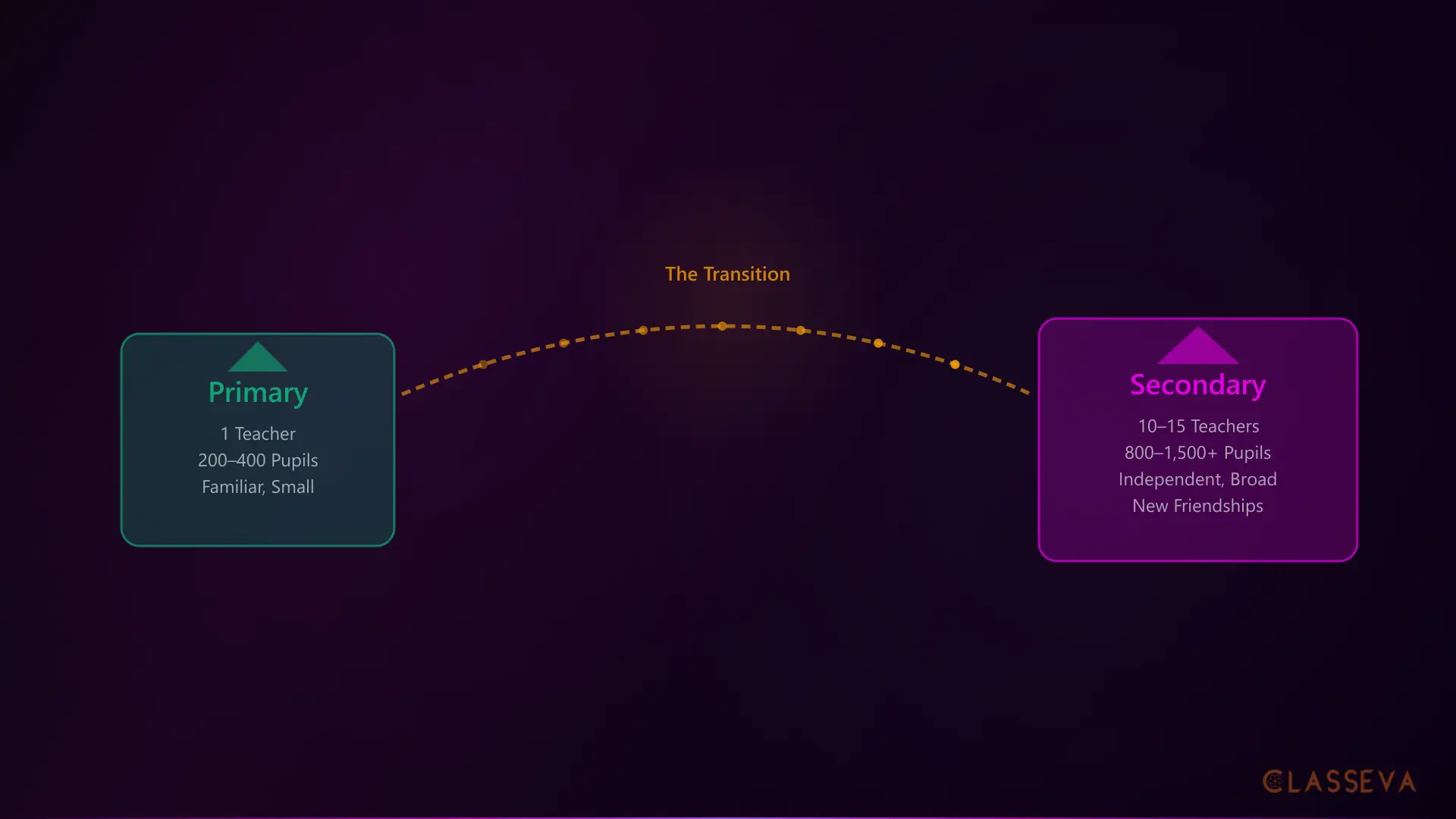
The transition from GCSE to A-Level is the biggest academic step in the UK system. At GCSE, students study 8 to 10 subjects with content designed for the full ability range. At A-Level, they study just three subjects in far greater depth. The pace is faster, the reading load heavier, and the expectation of independent study is a genuine culture shock for many students.
From working with hundreds of families going through this transition, here are the things that actually make a difference.
Support subject choices early
Encourage your child to research entry requirements for courses or careers they are considering before locking in A-Level choices. Our guide on how to choose A-Level subjects covers this in depth.
Expect Year 12 to feel overwhelming
Almost every student finds the first half-term of Year 12 difficult. The jump in complexity is real. If your child is struggling in October, that does not mean they have chosen the wrong subjects. Give it until Christmas before making changes.
Independent study is not optional
A-Level teachers expect students to do significant work outside lessons: reading ahead, practising past paper questions, consolidating notes. If your child only studies during class time, they will fall behind.
Know the exam board and specification
Ask which exam board your child is following for each subject. This tells you exactly which topics will be examined, how many papers there are, and what the exam format looks like. It takes the guesswork out of revision.
Use A-Level results day wisely
If results are not what your child hoped for, do not make rushed decisions. UCAS Clearing opens before results day and offers genuine opportunities. Schools can also request remarks if grades are borderline.
If your child is heading towards A-Levels and you want to explore their subject options or understand whether A-Levels or BTECs are the better fit, we have detailed guides for both.
Ask your child's school for a copy of the A-Level specification for each subject. It is a freely available document that tells you exactly what content will be examined. Most parents have never seen one, but it is the single most useful document for understanding what your child is actually learning.
A-Levels are demanding, but they are also a genuine opportunity for young people to study subjects they are passionate about in real depth. The parents who navigate this period best are the ones who understand the system clearly, set realistic expectations, and know where to get help when it is needed. If your child could benefit from structured, specification-aligned support, Classeva's free AI tutoring sessions cover every A-Level subject and exam board.