How to Write a Personal Statement for University
The personal statementis the part of the UCAS application that causes the most stress for families. Your child's predicted grades and GCSE results are fixed by the time they apply. Their personal statement is the only section they can directly control, rewrite, and improve. For competitive courses, it is often the difference between receiving an interview and being filtered out.
One thing I consistently heard from parents during my time in tutoring was confusion about what the personal statement is actually for. Many assumed it was a creative essay. Others thought it was a CV in prose form. In reality, it is a structured argument: here is why I want to study this subject, here is the evidence that I am prepared, and here is why I will thrive at university. Getting that framing right changes everything.
This university personal statement guide covers the new 2026 UCAS format, what admissions tutors genuinely look for, the six most common mistakes, a practical brainstorming framework, and exactly how you as a parent can help without overstepping.
Why the Personal Statement Matters More Than Parents Think
For courses like Medicine, Dentistry, Law, and Veterinary Science, the personal statement is a formal part of the selection process. Admissions tutors use it alongside predicted grades and aptitude test scores to decide who receives an interview. A weak statement can disqualify a student with outstanding grades. A strong one can secure an interview for a student whose grades are on the borderline.
Even for less competitive courses, the personal statement matters. If a course receives more applications than places, tutors use the statement to distinguish between candidates with identical predicted grades. Your child's personal statement is their only chance to speak directly to the people making the decision.
What Changed in the 2026 Cycle
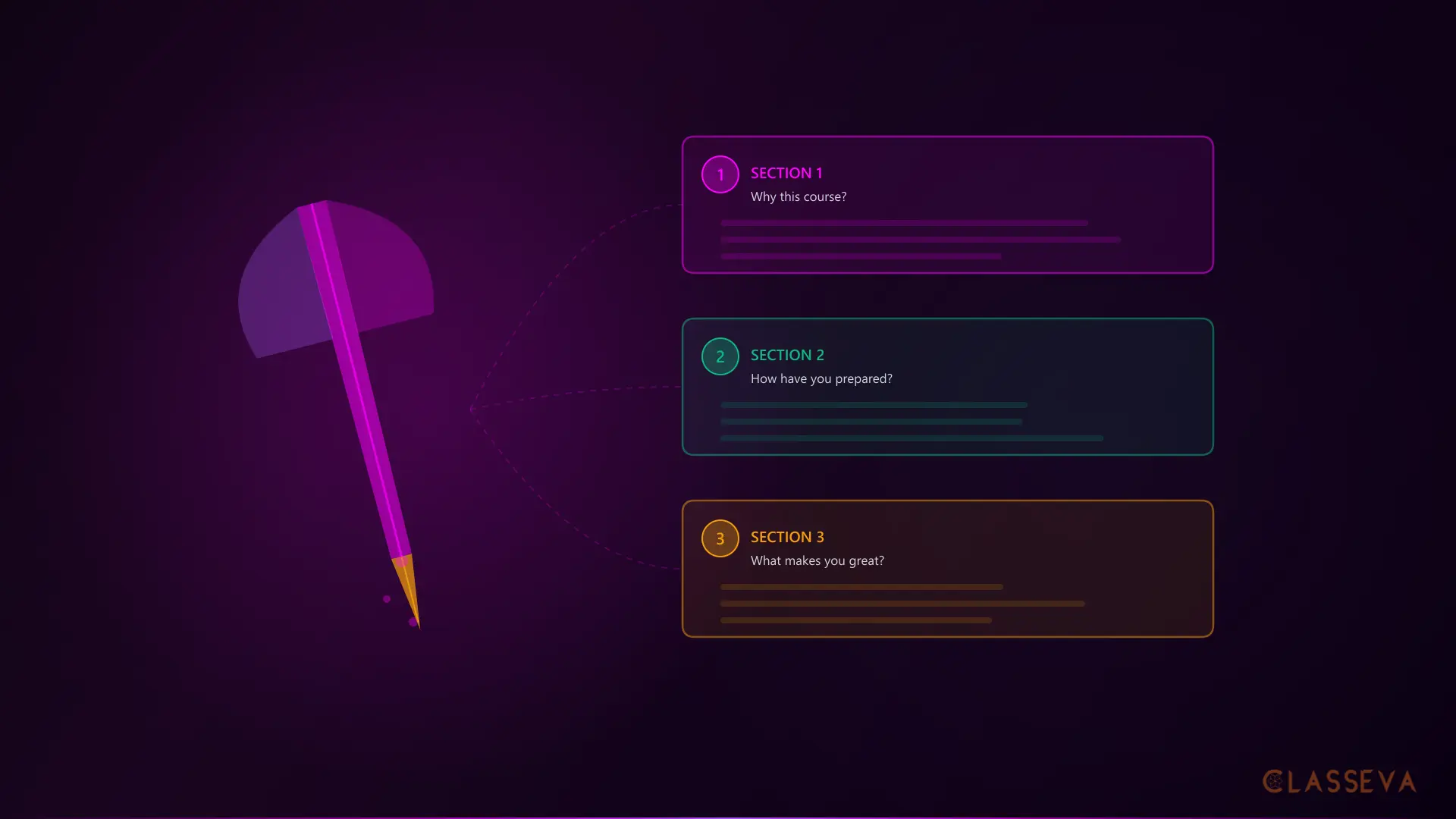
From the 2026 entry cycle, UCAS replaced the old free-text personal statement with three structured sections. Previously, students had a single 4,000-character text box and complete freedom over what to write. Many students found this blank page paralysing, and the lack of structure meant that students with better guidance (typically those at independent schools or with private tutors) produced significantly stronger statements.
The personal statement is now divided into three guided sections: (1) why you want to study the course, (2) how your experiences have prepared you, and (3) what else makes you a great student. The overall character count remains similar, but the structure helps every student cover what matters.
The new format is designed to level the playing field. By telling students exactly what each section should address, UCAS has made it harder for well-resourced applicants to gain an unfair advantage through polished but vague prose. For parents, this is good news: the structure itself becomes a guide.
What Admissions Tutors Actually Look For
Admissions tutors read hundreds, sometimes thousands, of personal statements each cycle. They are not looking for perfect prose or literary flair. They are looking for evidence. Specifically:
| What They Want | What This Means in Practice |
|---|---|
| Genuine subject interest | Specific examples of engagement beyond the classroom: books read, lectures attended, problems explored |
| Academic engagement | Evidence your child has gone beyond the A-Level syllabus: wider reading, online courses, relevant projects |
| Relevant experience | Work experience, volunteering, or activities that connect to the course (essential for vocational degrees) |
| Self-awareness | Understanding what the course involves and an honest explanation of why it suits them |
| Transferable skills | Teamwork, communication, problem-solving, time management, demonstrated through real examples |
| Authenticity | A statement that sounds like a 17 or 18 year old, not a polished corporate brochure |
What university admissions tutors prioritise when reading personal statements
The last point deserves emphasis. Tutors can immediately tell when a statement has been written by a parent, a private tutor, or an AI tool. The voice changes. The vocabulary shifts. The insights become generic rather than personal. Authenticity is not a bonus; it is a baseline requirement.
The New Three-Section Format
Understanding each section's purpose is essential for writing a strong personal statement. The three sections are not three separate essays; they are three parts of a single argument. Together, they should build a coherent picture of a student who understands the subject, has actively prepared for it, and will contribute positively to university life.
Section 1: Why Do You Want to Study This Course?
This section asks your child to demonstrate genuine motivation. Admissions tutors want to see that the student has thought deeply about why this specific subject at degree level, not just that they enjoyed it at A-Level.
The strongest responses are specific. Rather than “I have always been fascinated by Biology,” a compelling answer might explain how a particular topic in their A-Level course led them to read a specific paper or book, which raised a question they want to explore further at university. The key is a chain of genuine curiosity, not a declaration of passion.
Ask your child to read their Section 1 aloud. If you could swap in any other subject name and the paragraph would still make sense, it is too generic. A strong Section 1 could only be about the subject your child is applying for.
For students applying to vocational courses like Medicine, Dentistry, or Veterinary Science, this section should also show awareness of what the career involves day to day. Admissions tutors want evidence that the student has a realistic understanding, not a romanticised idea formed entirely from television.
Section 2: How Have Your Experiences Helped You Prepare?
Section 2 is where your child connects what they have done to what they want to study. This is not a list of achievements. It is a series of reflective examples that demonstrate preparation, skill development, and intellectual growth.
Weak Approach
- •Lists activities without explaining relevance
- •"I did work experience at a law firm"
- •Mentions Duke of Edinburgh without connecting it to the course
- •Includes every extracurricular from Year 7 onwards
Strong Approach
- •Explains what was learned and how it connects to the degree
- •"Observing case preparation showed me how statute and precedent interact in practice"
- •Links specific DofE challenges to skills the course requires
- •Selects 3 to 4 relevant experiences and explores them in depth
The experiences that matter most depend on the course. For competitive vocational degrees, relevant work experience or volunteering is expected, not optional. For academic subjects like History or English Literature, wider reading and independent research projects carry more weight.
If your child is unsure which A-Level subjects best prepare them for specific degrees, our guide to choosing A-Level subjects covers the requirements for the most popular university courses.
Section 3: What Else Makes You a Great Student?
The third section is where many students struggle because it feels the most open-ended. Universities want to know that your child will cope with the academic demands of a degree, contribute to the student community, and handle the independence of living away from home.
Strong responses connect personal qualities to university life. Rather than stating “I am resilient,” your child might describe a specific challenge they overcame and explain how the experience taught them to manage setbacks independently. The structure is always: quality, evidence, connection to university.
| Quality | Evidence Example | University Connection |
|---|---|---|
| Analytical thinking | Extended project on climate policy | Prepared for independent research and dissertation work |
| Teamwork | Captain of school debating team | Ready for group seminars and collaborative projects |
| Resilience | Balanced part-time job with A-Level revision | Able to manage competing demands at university |
| Communication | Mentored Year 7 students in maths | Confident presenting ideas in tutorials and lectures |
| Independence | Completed online university course during summer | Self-directed learner who thrives without constant supervision |
How to structure Section 3: link a personal quality to evidence, then connect it to university
Activities like sport, music, Duke of Edinburgh, student leadership, and community volunteering all work well here, provided your child explains what they gained rather than simply listing participation.
Six Mistakes That Weaken a Personal Statement
Having seen the personal statements of students I worked with over several years, the same errors appeared again and again. These are not minor style issues; each one can actively harm an application.
The Cliché Opening
“From a young age, I have always been passionate about...” is the single most common opening line in UCAS personal statements. Admissions tutors at competitive universities have reported reading this phrase dozens of times per day during application season. It tells them nothing specific about your child and immediately signals a statement that has not been carefully crafted.
A better opening is specific and immediate. “When I read about the discovery of CRISPR-Cas9, I spent the next two weeks reading everything I could find about gene editing” is more compelling than any generic declaration of passion because it is concrete, personal, and demonstrates genuine engagement.
Listing Without Reflecting
The second most common mistake is treating the personal statement like a CV. “I achieved a gold award in Duke of Edinburgh, I am a prefect, I play in the school orchestra, and I volunteer at a care home” tells an admissions tutor that your child is busy, but not what they have learned, how they have grown, or why any of it is relevant to the course they want to study.
Every experience mentioned in the personal statement should answer the question: “So what?” If your child cannot explain what they learned from an activity or how it connects to their application, it should not be included. Three well-explored experiences beat ten briefly mentioned ones.
The remaining four mistakes are equally damaging. Mentioning universities by name reveals your child's preferences to all five choices. Including irrelevant hobbies wastes precious character count. Having someone else write it risks plagiarism detection and produces an inauthentic voice. And leaving it to the last minute means no time for the multiple revisions that transform a good statement into a strong one.
How to Brainstorm Before Writing
The blank page is the biggest obstacle. Most students sit down to write their personal statement with only a vague sense of what they want to say. The result is usually a stilted first paragraph followed by an hour of staring at the screen. A structured brainstorming session before any writing begins makes the entire process faster and produces a stronger result.
The Experience Audit
Before your child writes a single word of their personal statement, they should create a comprehensive list of everything they have done that could be relevant. This is where personal statement help from parents is genuinely valuable: you remember things your teenager has forgotten.
List every subject-related activity
Books, articles, documentaries, podcasts, online courses, lectures, competitions, projects, and anything else related to the subject they want to study.
List all work experience and volunteering
Paid work, unpaid placements, shadowing, charity work, and community involvement. Include everything, even if it seems tangential.
List skills and personal qualities with evidence
For each quality (resilience, teamwork, leadership, independence), write down a specific situation where they demonstrated it.
Identify the strongest three to four items
From the full list, select the experiences that are most relevant to the course and most interesting to write about. These will form the core of the statement.
This exercise typically takes 30 to 45 minutes and produces far more material than the personal statement can use. That is the point. Having too much to choose from is significantly better than scraping for content.
Connecting Experiences to the Course
Once the experience audit is complete, the next step is connecting each selected experience to the course. For every item, your child should answer three questions:
What did I do?
- •The specific activity, event, or experience
- •When and where it happened
- •What was involved day to day
What did I learn?
- •A skill, insight, or change in perspective
- •Something unexpected that challenged assumptions
- •How it deepened understanding of the subject
Why does it matter for this course?
- •How this experience prepares them for degree-level study
- •What it reveals about their suitability
- •How it connects to specific course content
If your child is exploring which career path suits them best, our guide to finding the right career for your child provides a framework for connecting interests and strengths to specific degree and career options.
How Parents Can Help (and How They Should Not)
The personal statement sits in an awkward space for parents. You want to help, and your input genuinely matters at certain stages. But the line between helpful support and harmful interference is narrower than most parents realise.
| Do This | Not This |
|---|---|
| Help brainstorm forgotten experiences and achievements | Write any part of the statement yourself |
| Ask them to read drafts aloud to check it sounds like them | Impose your idea of what sounds impressive |
| Proofread for spelling and grammar errors | Rewrite sentences to match your own writing style |
| Encourage starting early (summer before Year 13) | Cause stress by constantly asking for progress updates |
| Suggest they get feedback from their subject teacher | Compare their statement to examples found online |
The line between helpful support and harmful interference
The Parent Proofreading Trap
The most common way parents inadvertently damage a personal statement is through well-intentioned proofreading that becomes rewriting. You read a sentence that feels clunky, so you suggest a “better” phrasing. Then another. Then you tighten a paragraph. Before long, the statement reads like it was written by a 45-year-old professional, not a 17-year-old student.
After proofreading, read the statement one more time and ask: does this sound like my child talking about something they care about? If it sounds more polished than their normal speech, too much editing has occurred. Admissions tutors prefer an authentic voice with minor imperfections over corporate prose that clearly was not written by the applicant.
Your role as a parent is to be a sounding board and a safety net, not a ghostwriter. The most helpful thing you can do is ask questions that help your child think more deeply: “What specifically did you learn from that work experience?” or “Why does that topic interest you more than the others?” These questions generate the raw material. The writing itself must come from your child.
The Personal Statement Timeline
The UCAS personal statement deadline depends on the course. For Medicine, Dentistry, Veterinary Science, and all Oxford and Cambridge applications, the UCAS deadline is mid-October. For most other courses, the equal consideration deadline is the end of January. Working backwards from these dates, here is when each stage should happen.
Summer Before Year 13
The summer holiday is the ideal time to begin. There is no homework pressure, no mock exams on the horizon, and your child has time to think carefully about what they want to write. The goal at this stage is not a finished statement; it is the brainstorming and first draft.
Open days also happen during summer. Attending open days does not just help your child choose universities; it helps them write about the subject with more specificity. Seeing laboratories, hearing from lecturers, and understanding course structures gives them concrete material to draw from.
September to January
September marks the start of the revision cycle for the personal statement. Your child should have a first draft ready by the end of September, allowing their form tutor and subject teachers to provide feedback during October.
October: teacher review and revision
Most sixth forms have a structured personal statement review process. Your child’s form tutor and subject teachers should read at least one draft and provide detailed feedback. For Medicine, Dentistry, Veterinary Science, and Oxbridge applicants, the mid-October deadline means this feedback cycle must happen fast.
November to December: final polish
By this stage, the content should be strong. The focus shifts to tightening language, checking character limits across all three sections, and proofreading. A fresh pair of eyes (ideally someone who has not read any previous draft) is invaluable for catching errors the student has become blind to.
January: submit via UCAS
The equal consideration deadline for most courses falls at the end of January. Submitting earlier does not give your child an advantage in most cases. What matters is that the statement is as strong as it can be, not that it was sent on the first available day.
Put the UCAS deadline in your family calendar with a reminder four weeks before. Then work backwards: teacher feedback sessions, second draft, first draft, brainstorming. Making the timeline visible takes away the ambiguity that causes procrastination.
Where to Find More Guidance
Your child's school should be the first source of support. Most sixth forms have dedicated time in the PSHE or tutorial programme for personal statement writing. Subject teachers can provide the most valuable feedback because they understand what admissions tutors in their field are looking for.
Beyond school, several high-quality free resources exist:
| Resource | What It Offers |
|---|---|
| UCAS Personal Statement Hub | Official guidance on the new format, section-by-section tips, and video walkthroughs |
| The Uni Guide | Independent advice on personal statement structure, course-specific tips, and real examples of what works |
| School or college careers service | One-to-one reviews, mock interviews for competitive courses, and deadline tracking |
| Subject teachers | Course-specific feedback on academic content and whether the statement demonstrates sufficient subject engagement |
Free sources of personal statement support
The UCAS personal statement hub is the definitive resource for the new format. It includes section-by-section guidance, video explainers, and FAQs about what is and is not appropriate to include. The Uni Guide offers independent, student-focused advice that complements the official UCAS guidance.
If your child is still deciding which A-Level subjects to take, or is uncertain about which degree courses their subjects open up, our guides to choosing A-Level subjects and the best A-Level combinations for university can help them make informed choices before the personal statement stage.
For families navigating the broader UCAS process, keep an eye out for our upcoming UCAS parent guide, which will cover the full application timeline from registration to results day. And if your child is approaching A-Level results day, we explain exactly what happens, including Clearing and Adjustment, so you are prepared for every outcome.
The personal statement is one of the few parts of the university application your child can directly control. Starting early, using the new three-section structure as a guide, brainstorming thoroughly before writing, and revising multiple times with different readers will produce a statement that genuinely reflects who your child is and why they deserve a place on their chosen course.