A-Level Results Day 2026: What Parents Need to Know
A-Level Results Day 2026 is Thursday 13 August. For parents, it is one of the most nerve-racking mornings of the year. Your child's university place, gap year plans, or next steps all hinge on an envelope (or, increasingly, an email) that arrives before breakfast.
One pattern I consistently noticed when working with families through the tutoring process: the parents who handled results day well were those who understood the system before the morning arrived. They knew what UCAS Hub would show, what Clearing actually meant, and what their options were if the grades did not match expectations. The parents who were blindsided were those who assumed everything would go to plan and had no backup.
This guide covers everything you need to know. Not what your child should revise (that ship has sailed), but what happens on the day itself and exactly what to do in every scenario, from celebration to Clearing.
When Is A-Level Results Day 2026?
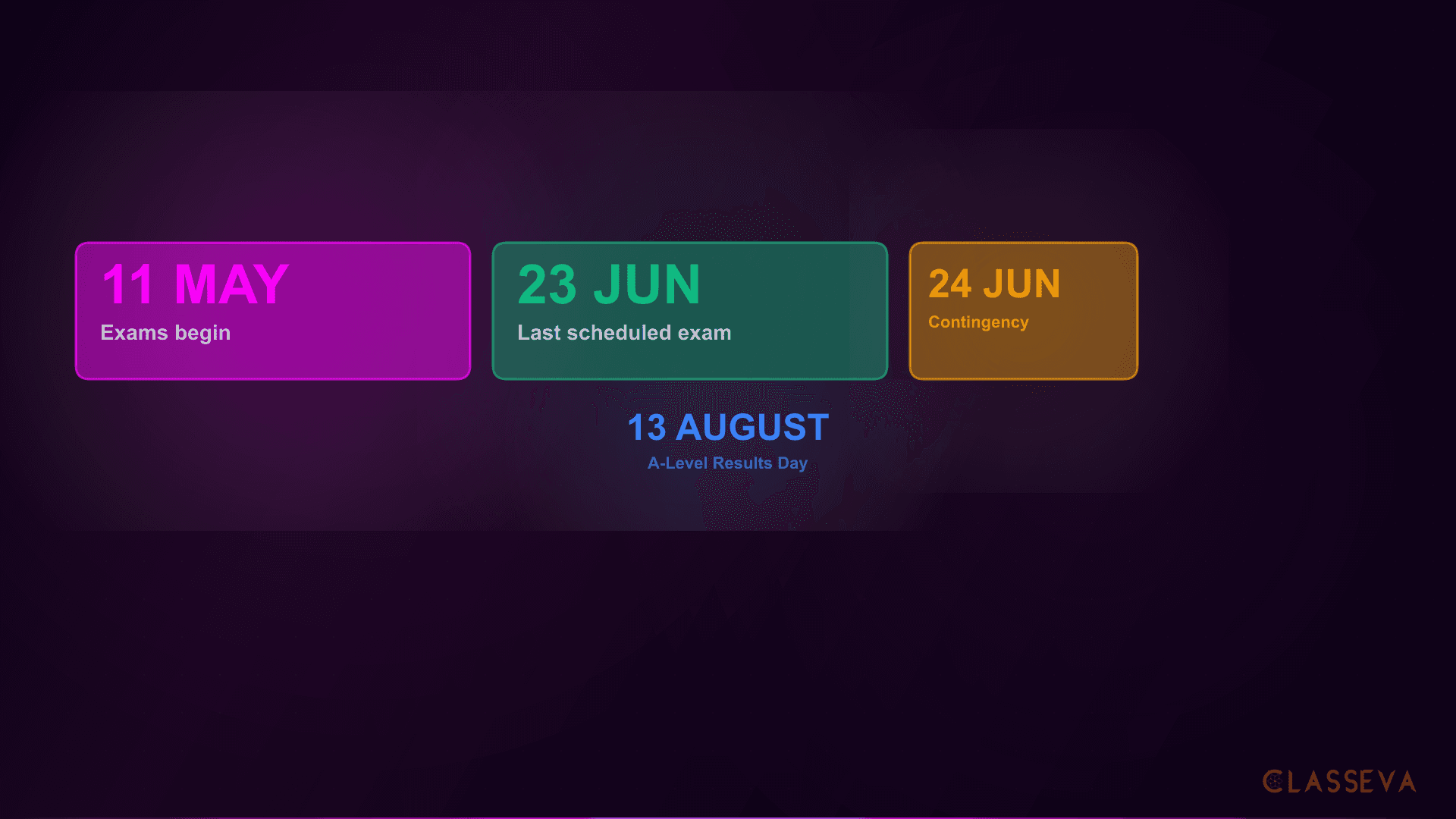
A-Level Results Day 2026 is Thursday 13 August. This date is set nationally and applies to all exam boards: AQA, Edexcel (Pearson), OCR, and WJEC. Schools and sixth form colleges receive results the evening before, but students and parents do not have access until the morning.
Thursday 13 August 2026 is A-Level Results Day. Results available from your school or college from approximately 8:00 AM BST.
Other Key Dates to Know
Results day does not exist in isolation. Several other dates matter, particularly if your child is applying to university through UCAS.
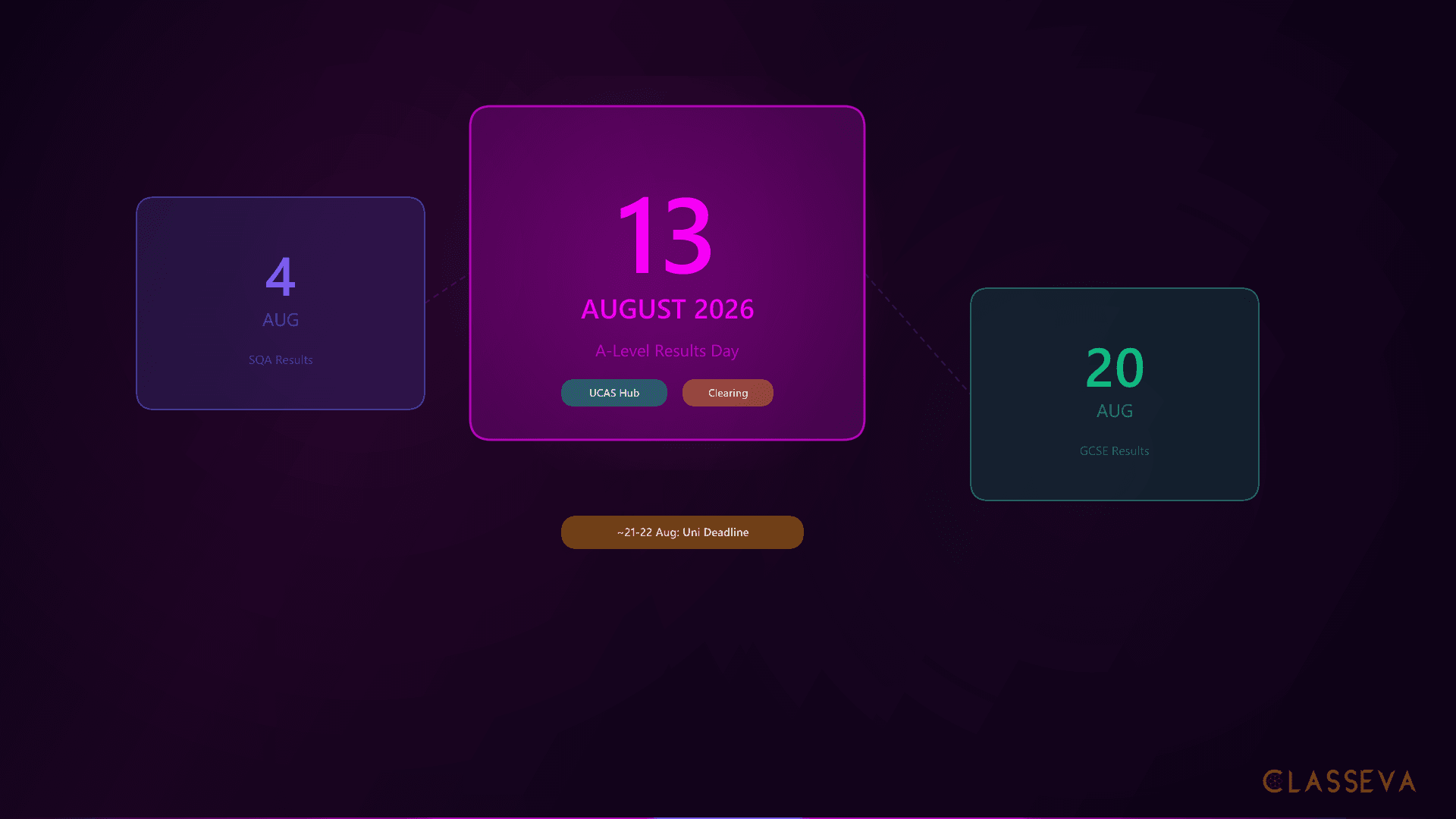
| Date | Event |
|---|---|
| 2 July 2026 | UCAS Clearing opens |
| 4 August 2026 | SQA Results Day (Scotland) |
| 13 August 2026 | A-Level Results Day (England, Wales, NI) |
| 20 August 2026 | GCSE Results Day |
| ~21-22 August 2026 | Deadline for universities to confirm places |
| 19 October 2026 | UCAS Clearing closes |
Source: UCAS, Save My Exams
What Happens on the Morning
Most schools open their doors at around 8:00 AM. Some hand out physical envelopes; others email results directly. If your child cannot attend in person, check with the school in advance to arrange postal or email delivery.
The important distinction to understand is that UCAS Hub shows placement status, not grades. Your child's grades come from the school. UCAS Hub, which updates from around 8:15 AM, shows whether the university has confirmed their place. These are two separate pieces of information and they arrive through two separate channels.
How UCAS Hub Works on Results Day
In the days before results day, UCAS Hub is frozen. No changes can be made to choices, and the status will not update until results are released. This catches some parents off guard, as the Hub may still show the old “Waiting for results” message right up until the morning.
From around 8:15 AM on results day, UCAS Hub updates to show one of five possible outcomes. This is where your child finds out whether their university place has been confirmed. Understanding these scenarios in advance is essential so you can respond quickly and calmly.
The Five UCAS Scenarios
Scenario 1 is what every parent hopes for. Scenario 2 is perfectly fine and happens more often than you would think. Scenarios 3, 4, and 5 require action, and that is where preparation matters.
What “Waiting for Confirmation” Means
This scenario causes the most anxiety. It does not mean your child has been rejected. It simply means the university has not yet communicated its decision to UCAS. This can happen because universities process thousands of results simultaneously, and some are slower than others.
If UCAS Hub still shows “Waiting for confirmation” by 10:00 AM, phone the university admissions office directly. Have your child's UCAS ID and grades ready. Most resolve within hours, but calling speeds up the process.
What to Do If Your Child Missed Their Offer
If your child opens their results and the grades are below what they needed, the most important thing you can do in that moment is stay calm. They will be looking to you for a cue on how serious this is. If you panic, they will panic. The truth is that there are multiple paths forward, and none of them require a decision in the next five minutes.
Understanding UCAS Clearing
UCAS Clearing is the process by which students who do not hold a university place can find available courses. It opens on 2 July 2026 and runs until 19 October 2026. According to UCAS, more than 50,000 students find their places through Clearing every year.
Clearing is not a consolation prize. Many excellent universities and courses have places available, including Russell Group institutions. The stigma around Clearing is outdated and does not reflect the reality of how modern university admissions work.
Russell Group universities regularly offer places through Clearing. A student with strong grades who missed their first choice by one grade can often find an equivalent or better course through Clearing on results day itself.
How Clearing Actually Works
Search for available courses
Use the UCAS Clearing search tool or university websites to find courses with available places. Filter by subject, location, and entry requirements.
Phone the university directly
Call the admissions team, explain your grades, and ask if they would accept you. This is a phone-first process. Universities expect these calls and have dedicated Clearing hotlines.
Get a verbal offer
If the university says yes, they will give you a verbal confirmation. Do not add the choice on UCAS Hub until you have this verbal offer.
Add your Clearing choice on UCAS Hub
From 1:00 PM on results day, add ONE Clearing choice at a time on UCAS Hub using your Clearing number. The university then confirms formally through UCAS.
Your child will need their UCAS ID, Clearing number (shown in UCAS Hub), their actual grades, and ideally a copy of their personal statement. Having all of this ready before results day saves precious time.
Preparing for Clearing Before Results Day
The best Clearing outcomes go to students who prepared in advance. If there is any chance your child might miss their offer, do the following before 13 August.
Before Results Day
- •Research 3-5 backup universities and courses
- •Save Clearing hotline phone numbers
- •Prepare UCAS login credentials
- •Charge phones and have a charger ready
- •Discuss all possible scenarios openly
On Results Day
- •Check grades from school first
- •Then check UCAS Hub from ~8:15 AM
- •Phone universities before adding choices
- •Add Clearing choice from 1:00 PM
- •Do not rush. Take time to think.
Remarks, Appeals, and Grade Changes
If a grade seems unexpectedly low, and your child was consistently performing at a higher level in mock exams and coursework, a remark (formally called a “review of marking”) may be worth considering. But it is not a decision to take lightly.
How the Remark Process Works
The school submits the remark request to the exam board on the student's behalf. Parents and students cannot contact exam boards directly. The fee is approximately £50 or more per paper, depending on the board and review type. If the grade changes (up or down), the fee is refunded.
Grades can go down after a remark.If the examiner finds an error that was in the student's favour, the lower grade stands. Only request a remark if you genuinely believe there was a marking error, not just because the grade was disappointing.
Timing is critical. Universities have a deadline of approximately 21 to 22 August to confirm places based on updated grades. If you want a remark result to affect university placement, the request must go in immediately after results day. Speak to the school on the morning of 13 August if you believe a remark is needed.
When a Remark Is Worth Requesting
A remark is most likely to be worthwhile when your child was one or two marks below a grade boundary. If they missed a grade by 15 marks, a remark is unlikely to change the outcome. Your school should be able to request the raw marks from the exam board to help you make this decision. To understand how grade boundaries work in detail, see our guide to A-Level grade boundaries explained.
Other Options After Results Day
Clearing is the most common path when grades do not go to plan, but it is not the only one. Depending on your child's situation, there are three other routes worth knowing about.
UCAS Adjustment
Adjustment is the opposite of Clearing. If your child achieved higher grades than their firm offer required, Adjustment gives them five days to look for courses with higher entry requirements without losing their confirmed place. If they find something better, they switch. If not, their original offer remains safe.
Adjustment is less well-known than Clearing, but it is a genuine opportunity for students who exceeded expectations. The catch is that very competitive courses (Medicine, Veterinary Science, Dentistry) rarely have Adjustment places, so this works best for humanities, social sciences, and some STEM courses.
Deferring Entry
If your child has a confirmed place but wants to take a gap year, they can contact the university to request a deferral. Most universities accept gap year deferrals, but it must be requested rather than assumed. Some competitive courses do not allow deferrals, so check first.
A gap year can be genuinely valuable. Students who take a structured gap year (work experience, travel, volunteering) often arrive at university more focused and mature than those who go straight from school. It is not a consolation prize. For many students, it is the best decision they make.
Resitting A-Levels
A-Level resits are available in the following summer exam series only. There are no November resits for A-Levels. This means a resit in 2027 requires a full year of continued study or self-study.
Resitting is a significant commitment. It means a full year before your child can reapply to university, and they will need to decide whether to resit at their school, a further education college, or independently. Some students use the year productively by combining resit preparation with work experience or part-time employment.
Clearing
- •Find a place at a different university immediately
- •Start university in September 2026 as planned
- •50,000+ students use Clearing every year
- •Russell Group courses available
Resitting
- •Retake exams in summer 2027
- •Delays university by one full year
- •Chance to improve grades significantly
- •Requires ongoing study commitment
How to Support Your Child on Results Day
This section matters more than any of the logistics above. After working with hundreds of families through the tutoring process, the single clearest pattern I saw was this: the parents who handled results day best were those who separated their own emotions from their child's experience. Your child does not need you to fix everything in the first hour. They need you to be calm, present, and reassuring.
Before the Day
Have the conversation now, not on the morning
Sit down with your child and discuss every scenario: "What if you get your offer? What if you do not? What if you do better than expected?" This removes the shock factor.
Prepare the practical details
Ensure you have their UCAS ID, login credentials, a list of backup universities with Clearing phone numbers, and a fully charged phone with charger.
Agree on the plan for the morning
Will you go to school together? Will they call you? Make sure they know you are available and supportive whatever happens.
Check collection arrangements with the school
Confirm the time, location, and whether results can be emailed or posted if your child cannot attend in person.
On the Morning and After
Be there. Whether that means waiting in the car park, sitting at the kitchen table, or being on the end of the phone, make sure your child knows you are available. Results day is emotional regardless of the outcome.
If the results are good, celebrate. Your child has worked hard and deserves recognition. If the results are disappointing, resist the urge to immediately start problem-solving. Give them a few minutes to process the news before moving into practical next steps.
Remember that grades do not define your child. Many highly successful people did not get their first-choice university offer. A-Level results are one data point in a much longer journey. The way you respond in this moment will shape how your child handles setbacks for years to come.
If your child needs support with their studies before results day arrives, our A-Level tutoring covers all subjects and exam boards. For students considering their options after results, our guide on the best A-Level subject combinations for university may also be helpful, particularly if they are rethinking their path.
For parents also awaiting GCSE results the following week, our GCSE Results Day 2026 guide covers the full process for younger students, including resit options and reviews of marking.
| Scenario | What to Do | Timeline |
|---|---|---|
| Firm offer confirmed | Celebrate. No action needed. | Immediate |
| Insurance offer confirmed | Accept and prepare. No action needed. | Immediate |
| Not placed (Clearing) | Research courses. Phone universities. Add choice from 1 PM. | Same day |
| Waiting for confirmation | Phone university admissions directly. | By mid-morning |
| Changed offer received | Review carefully. Accept or decline within 5 days. | 5 days |
| Grade seems wrong | Speak to school about remark. Act before ~21 August deadline. | 1-2 days |
Quick reference: what to do in every A-Level results day scenario
Whatever happens on 13 August, remember this: your child has completed one of the most demanding academic qualifications in the UK. Whether they are heading to their dream university, finding a place through Clearing, or taking a different path entirely, the resilience they have built through A-Levels will serve them well. Your job on results day is simple: be there, stay calm, and remind them that one set of results does not determine the rest of their life.
For more on how UCAS handles results day, visit the official UCAS Results Day guide.