Best AI Learning Tools for Students in 2026
The best AI learning tools for students in 2026 are not the ones with the flashiest marketing. They are the ones your child will actually open at 8pm on a Tuesday when they are stuck on a maths question or need to revise three chapters of Biology before a test.
AI-powered learning tools have exploded since 2023, and sorting the genuinely useful from the overhyped is harder than ever. Having seen hundreds of students prepare for GCSEs and A-Levels during my time working in a UK tutoring company, I know that the tool itself matters far less than whether it matches how your child actually learns. This guide cuts through the noise.
Why AI Learning Tools Matter Now
Three years ago, the phrase “AI tutor” sounded like science fiction. Today, millions of UK students use some form of AI-assisted learning alongside their school work. The shift has been rapid, and parents are right to ask which tools are worth their child's time and which are distractions dressed up as education.
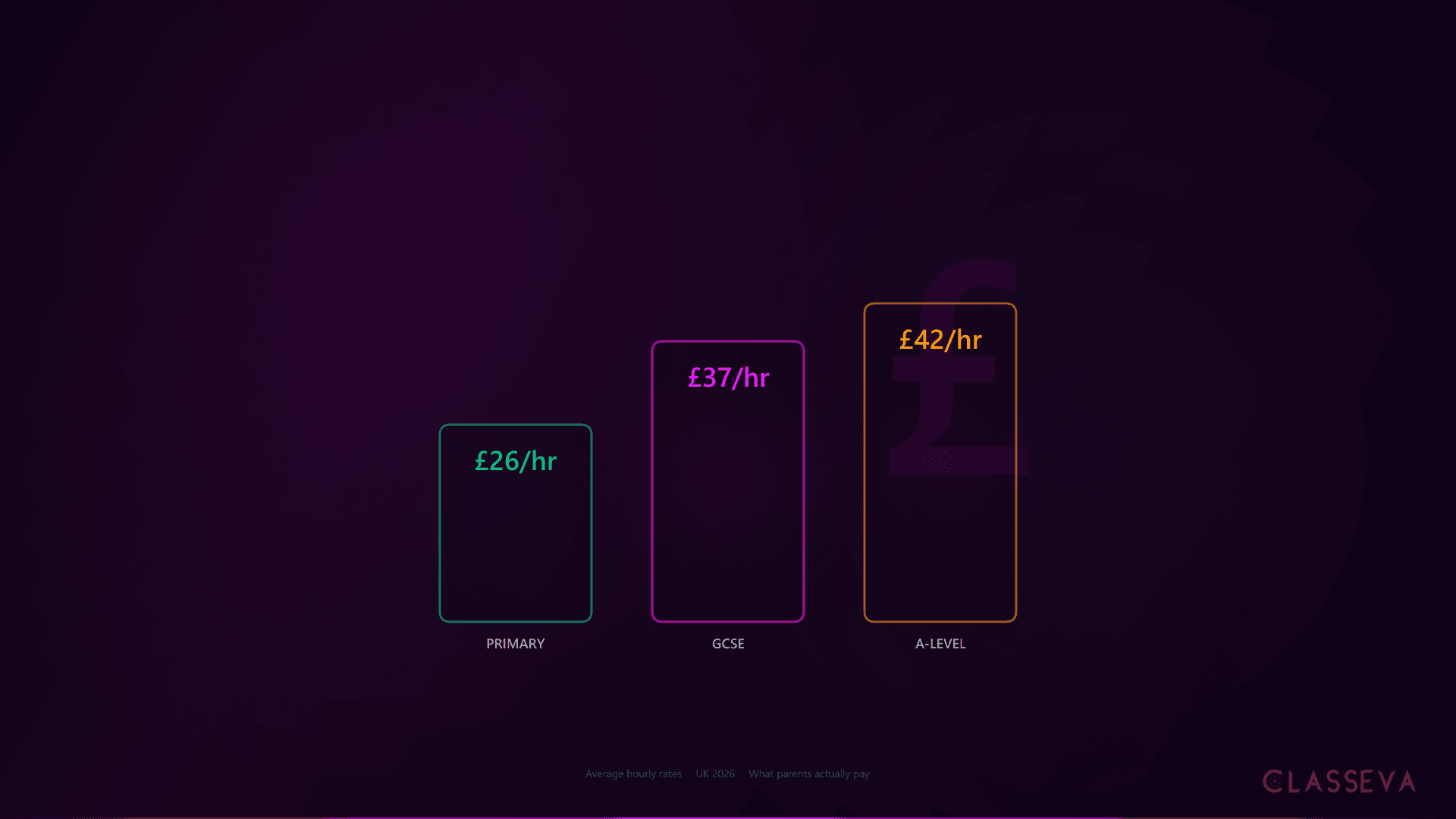
The core problem is access. According to the Sutton Trust, roughly 30% of UK secondary students have received private tutoring, but human tutoring costs £35 to £50 per hour. At eight to ten GCSE subjects, that quickly becomes unaffordable. AI tools are filling the gap by making personalised support available for a fraction of the cost.
What Changed in 2025 and 2026
The AI learning tools available today are fundamentally different from what existed even two years ago. Earlier tools generated generic explanations with no understanding of exam board specifications. The current generation is curriculum-mapped, understands the difference between AQA and Edexcel content, and can generate exam-style questions that mirror the real thing.
The result is a landscape where parents can realistically assemble a set of two or three tools that covers most of what a private tutor would provide. Not all of it (we will get to what AI still cannot do), but enough to make a genuine difference to your child's grades.
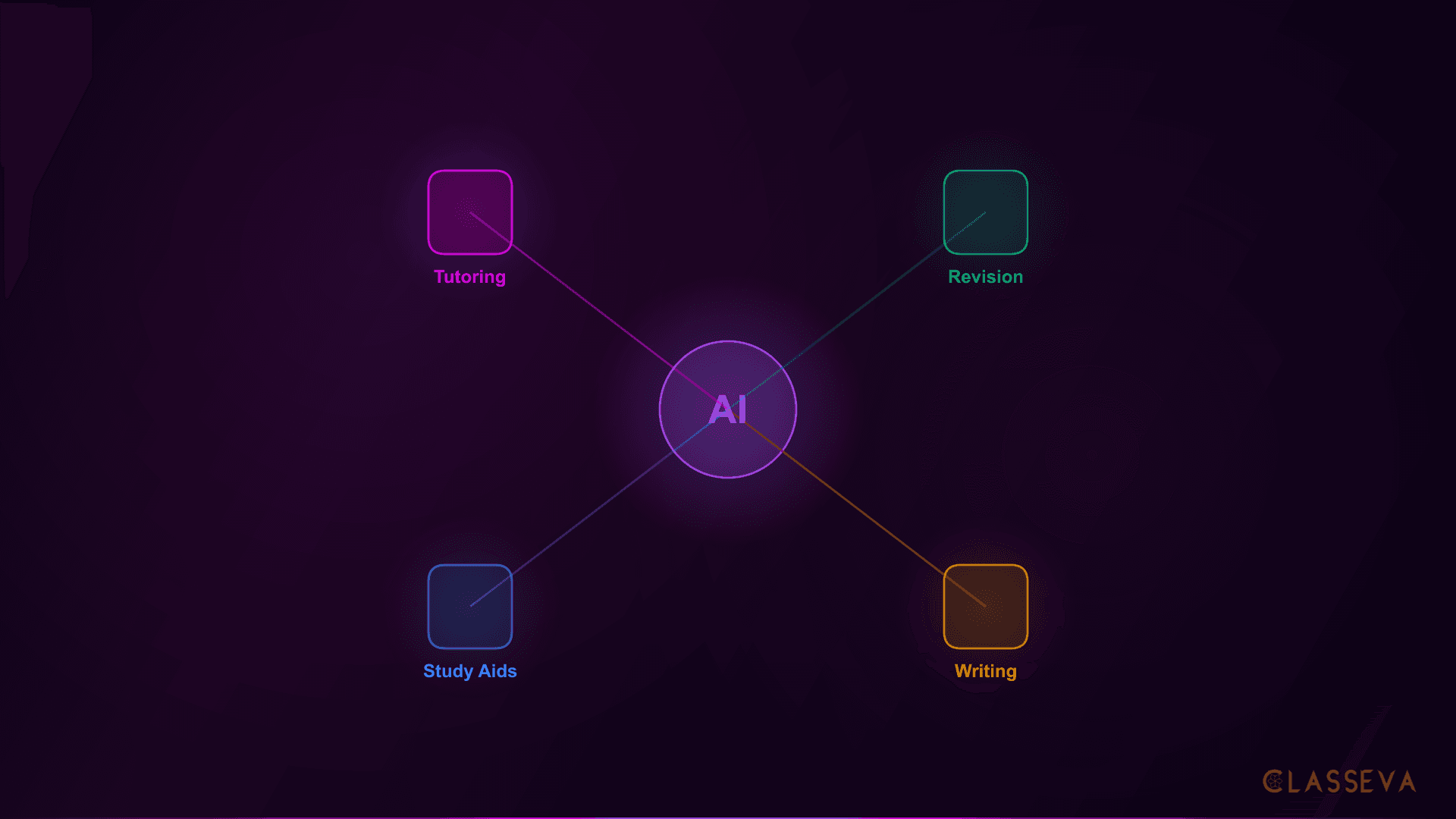
AI Tutoring Platforms
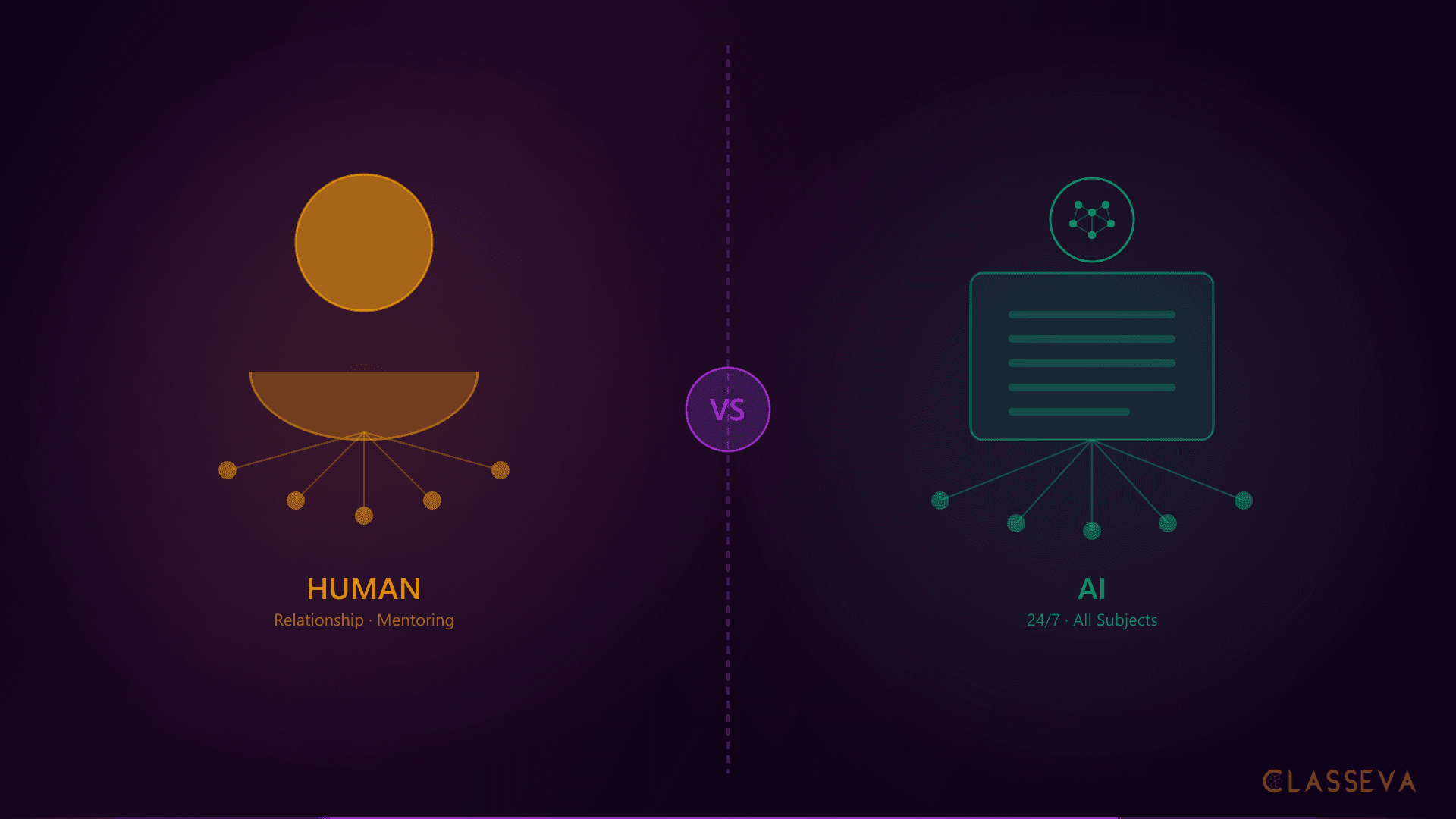
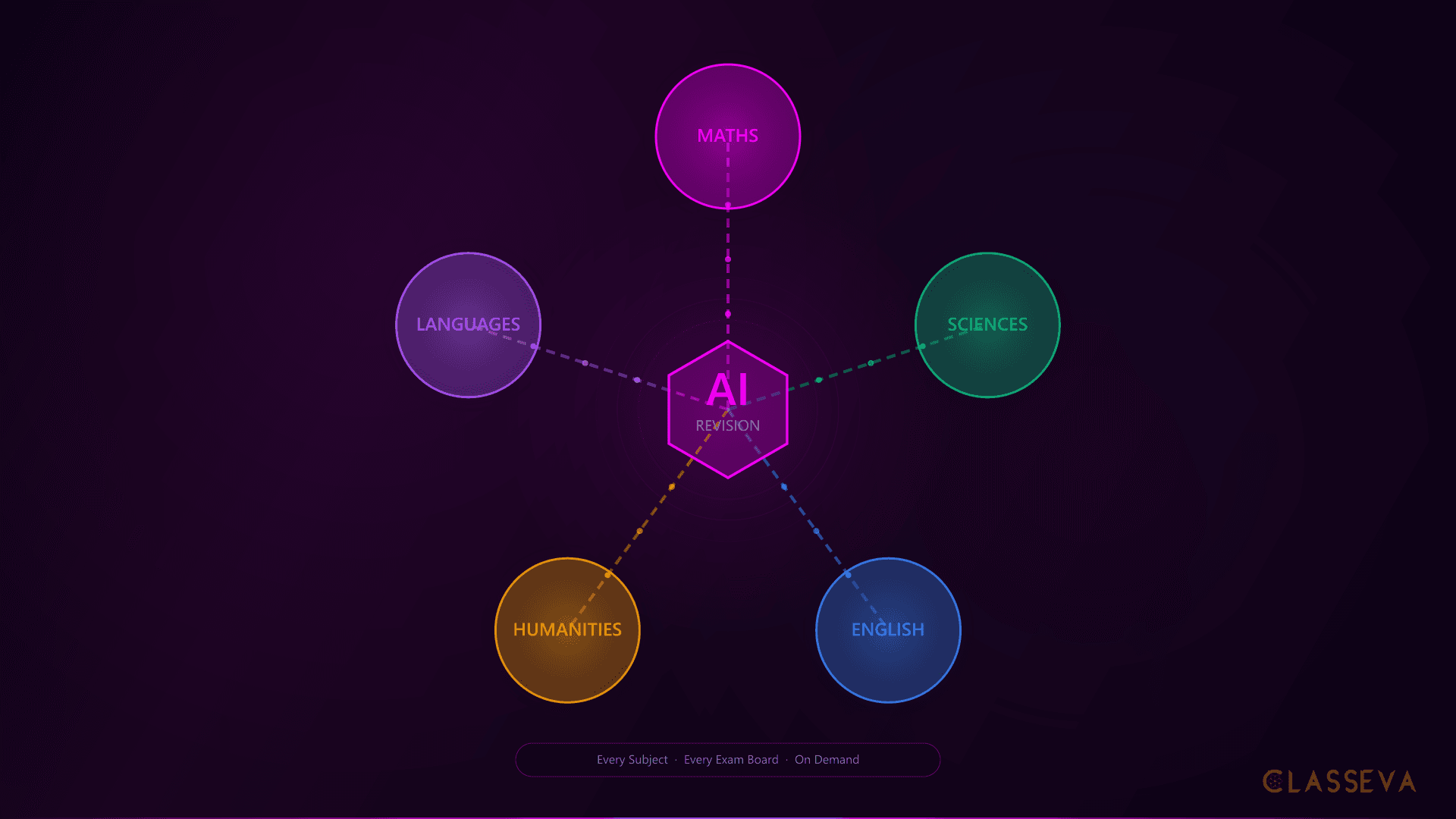
These are the tools that aim to replicate what a human tutor does: explain concepts, guide students through problems, and provide personalised feedback. The best ones go further by covering all subjects simultaneously, something no single human tutor can do.
Classeva
Classevais an AI tutoring platform built specifically for the UK curriculum. It maps directly to GCSE and A-Level specifications from AQA, Edexcel, and OCR, which means the AI understands exactly what is and is not on your child's exam.
What It Does Well
- •Personalised tutoring mapped to your child’s exact exam board
- •Step-by-step explanations for exam-style questions
- •Covers Maths, Sciences, English, and more subjects
- •Available 24/7 for on-demand help
Best For
- •GCSE and A-Level students who need help across multiple subjects
- •Students who learn by working through problems
- •Families who want curriculum-aligned AI rather than a generic chatbot
One thing that consistently frustrated me when I worked in tutoring was watching students revise content that was not even on their exam, because their tutor taught to the wrong specification. Classeva solves this by grounding every response in the actual spec your child is studying. It knows the difference between AQA Biology and OCR Biology, and it will not waste your child's time on irrelevant material.
Khanmigo (Khan Academy)
Khanmigois Khan Academy's AI tutor, built on the Socratic method. Rather than giving students answers directly, it asks guiding questions to help them work through problems themselves. This can be excellent for building genuine understanding.
Khanmigo is designed for a global audience, not the UK curriculum specifically. It is strong on conceptual understanding but does not map to AQA, Edexcel, or OCR specifications. For general maths and science concepts, it is very good. For targeted exam preparation, a UK-specific tool like Classeva or Seneca is a better fit.
AI-Enhanced Revision Platforms
Revision platforms use AI differently from tutoring platforms. Rather than simulating a one-to-one conversation, they optimise what your child revises and when. The best ones use spaced repetition, a technique that research from Dunlosky et al. (2013) identified as one of the most effective study methods available.
Seneca Learning
Seneca Learning is used by millions of UK students and is one of the most well-established AI revision tools in the country. It creates personalised revision paths using spaced repetition and interleaving, adjusting the difficulty and focus based on where your child is struggling.
Free Tier
- •Comprehensive revision content for most GCSE and A-Level subjects
- •Spaced repetition scheduling
- •Mapped to UK specifications (AQA, Edexcel, OCR)
Premium (approx. £5/month)
- •Exam-style questions with detailed mark scheme breakdowns
- •Progress tracking and analytics for parents
- •Priority content updates
When I worked with students preparing for their GCSEs, the ones who used Seneca consistently alongside past papers almost always outperformed those relying on re-reading alone. The spaced repetition forces them to revisit topics just before they would forget, which is uncomfortable but extremely effective.
Save My Exams
Save My Exams focuses on exam-board-specific revision notes and topic questions. It is less “AI-powered” than Seneca, but its strength lies in having content carefully organised by specification and paper. Some AI features offer personalised recommendations based on performance.
Best for:Students who want to work through topic-by-topic questions organised exactly by their exam board, particularly for past paper practice. Free tier provides substantial content; paid plans start from approximately £5 per month.
AI Study Aids
Study aids sit alongside tutoring and revision platforms. They help with specific parts of the learning process: creating flashcards, processing notes, or optimising memorisation. Some use AI extensively; others use proven algorithms without marketing themselves as “AI”.
Quizlet
Quizlet's AI generates flashcards from notes, textbooks, or uploaded content, then uses a spaced repetition algorithm to optimise review timing. It is particularly effective for vocabulary-heavy subjects: Modern Foreign Languages, Biology, Psychology, and any subject that requires memorising key terms.
The free tier covers basic flashcard creation and practice. Quizlet Plus (from approximately £3 per month) adds AI-generated explanations and advanced study modes. For most GCSE students, the free version is more than sufficient. Upgrade only if your child is already using it several times a week.
NotebookLM (Google)
NotebookLM lets students upload their own class notes, textbook chapters, or PDFs, and the AI creates summaries, study guides, and practice questions from that material. It is completely free and works well for A-Level students who have accumulated large volumes of notes and need help processing them.
The key advantage is that it works from your child's own materials, meaning the output is directly relevant to what they have been taught in class. The limitation is that it requires good-quality input: if your child's notes are sparse or disorganised, the AI output will reflect that.
Anki
Anki is not technically an AI tool, but it uses one of the most sophisticated spaced repetition algorithms available. It is open-source, free on desktop and Android (the iOS app is paid), and has been the go-to memorisation tool for medical students for over a decade. If your child needs to memorise large volumes of factual content, Anki is hard to beat.
The trade-off is usability. Anki's interface is not as polished as Quizlet's, and setting it up requires more effort. For self-motivated A-Level students, particularly those studying Biology, Chemistry, or Languages, the effort pays off.
AI Writing and Essay Assistants
Using AI to write assessed coursework or essays is academic malpractice. Schools actively detect AI-generated submissions. The tools in this section are for learning and practising writing skills, not for producing work your child submits as their own.
Grammarlychecks grammar, spelling, and punctuation while suggesting improvements to clarity and tone. It is useful across all essay-based subjects, from English Literature to History to Geography. The free tier handles basic corrections; the premium version (approximately £10 per month) adds AI-powered tone and style suggestions.
The honest take: Grammarly is a polishing tool, not a teaching tool. It catches errors your child might miss, but it does not teach them why a sentence is unclear or how to structure an argument. For developing actual writing skills, there is no substitute for reading model answers and practising with feedback from a teacher or tutor. Use Grammarly as a safety net, not a crutch.
What to Avoid
Not every AI tool marketed at students is worth using. Some are actively harmful to learning. Having seen the consequences of students relying on the wrong tools, I would caution parents to watch out for the following.
Generic AI chatbots for exam-specific questions
ChatGPT and similar tools can help explain concepts, but they do not know the specific mark scheme for AQA GCSE Biology Paper 2. They generate plausible-sounding answers that may be factually incorrect or irrelevant to your child’s actual exam. Purpose-built tools are always better for exam preparation.
“AI essay writer” services
These produce work that students submit as their own. This is cheating, it is increasingly detectable by schools, and it ultimately harms your child by preventing them from developing real writing skills. Avoid any tool that positions itself as doing the work for the student.
Apps with aggressive paywalls and no free tier
Quality AI learning tools offer substantial free access. If an app demands payment upfront with no trial, be cautious. The best tools in this guide (Seneca, Quizlet, NotebookLM, Anki) all offer robust free versions because their value proposition is strong enough to convert users through quality, not pressure.
Tool Comparison at a Glance
Here is every tool covered in this guide, compared across the factors that matter most to parents: what it does, what it costs, and how well it fits the UK curriculum.
| Tool | Category | UK Curriculum | Free Tier | Paid From |
|---|---|---|---|---|
| Classeva | AI Tutoring | AQA, Edexcel, OCR | Limited | Affordable monthly |
| Khanmigo | AI Tutoring | Global | Basic access | Premium tier |
| Seneca | Revision | AQA, Edexcel, OCR | Comprehensive | £5/month |
| Save My Exams | Revision | Board-specific | Substantial | £5/month |
| Quizlet | Study Aid | User-created | Core features | £3/month |
| NotebookLM | Study Aid | From your notes | Fully free | Free |
| Anki | Study Aid | User-created | Desktop + Android | iOS app paid |
| Grammarly | Writing | N/A | Basic checks | £10/month |
Tools highlighted in green offer the strongest combination of UK curriculum alignment and free access.
How to Choose the Right Tools
The mistake I see most parents make is downloading five apps, paying for three subscriptions, and then watching their child use none of them. More tools does not mean better results. The best approach is deliberate and minimal.
Start with what your child actually needs
Are they struggling with understanding concepts, or do they understand but keep forgetting? The first needs an AI tutor. The second needs a spaced repetition tool. These are different problems with different solutions.
Use the free tiers first
Every tool on this list offers free access. Do not pay for premium features until your child has used the free version consistently for at least two weeks. If they are not opening the app regularly on the free plan, a paid subscription will not change that.
Check the curriculum fit
For GCSE and A-Level exam preparation, tools mapped to the actual UK specification (AQA, Edexcel, OCR) are more effective than generic global tools. This is the single biggest factor that separates useful revision from wasted time.
Combine AI with traditional methods
AI tools work best alongside past papers, textbook reading, and teacher feedback. They are an addition to your child’s revision toolkit, not a replacement for the fundamentals. A student who does past papers plus Seneca will outperform one who uses Seneca alone.
Monitor usage, not just subscriptions
Ask your child what they used this week, not whether they have an account. The best tool is the one they actually open regularly. A free app used four times a week beats a £20 subscription opened once a month.
A Sensible Toolkit for Most Students
If you are not sure where to start, here is a practical combination that covers most needs for a typical GCSE or A-Level student:
The Essentials (Free)
- •Seneca Learning for spaced repetition revision
- •Quizlet for vocabulary and key terms
- •Past papers from the exam board website
Add If Needed
- •Classeva for on-demand AI tutoring across all subjects
- •NotebookLM for processing A-Level notes
- •Anki for heavy memorisation subjects (Biology, Languages)
Before adding any tool, ask: “Will my child actually use this regularly?”A “perfect” app that sits unopened on their phone is worthless. The best AI study tools for GCSE and A-Level students are the ones that fit naturally into their existing revision routine.
For more on how AI tutoring compares specifically to hiring a private tutor, see our detailed AI tutor vs human tutor comparison. If you want to understand how AI tutoring actually works under the hood, read how AI tutoring works. And for a broader look at all revision resources (not just AI-powered ones), our guide to the best A-Level revision resources covers everything from textbooks to YouTube channels.
If your child is specifically looking for help with AI-powered GCSE revision, we have a dedicated guide covering how to use these tools effectively during the critical revision period.