AI Tutoring vs Human Tutoring: Which Is Better?
AI tutor vs human tutor: it is the question more UK parents are asking as AI-powered learning tools move from novelty to genuine classroom alternatives. Your child takes eight to ten GCSEs across a range of subjects, and the idea of hiring a separate human tutor for each one is financially impossible for most families. But can software really do what a good tutor does?
The honest answer is: it depends on what your child actually needs. Having worked in a tutoring company and seen both brilliant and terrible tutors in action, I can tell you that “human” does not automatically mean “better.” And having built Classeva, I have also seen where AI falls short. This post gives you a genuinely balanced comparison so you can make the right decision for your family.
Why Parents Are Asking This Question
Five years ago, this was not a real question. AI tutoring did not exist in any meaningful form, and parents who wanted extra academic support had one option: find a human tutor and pay by the hour.
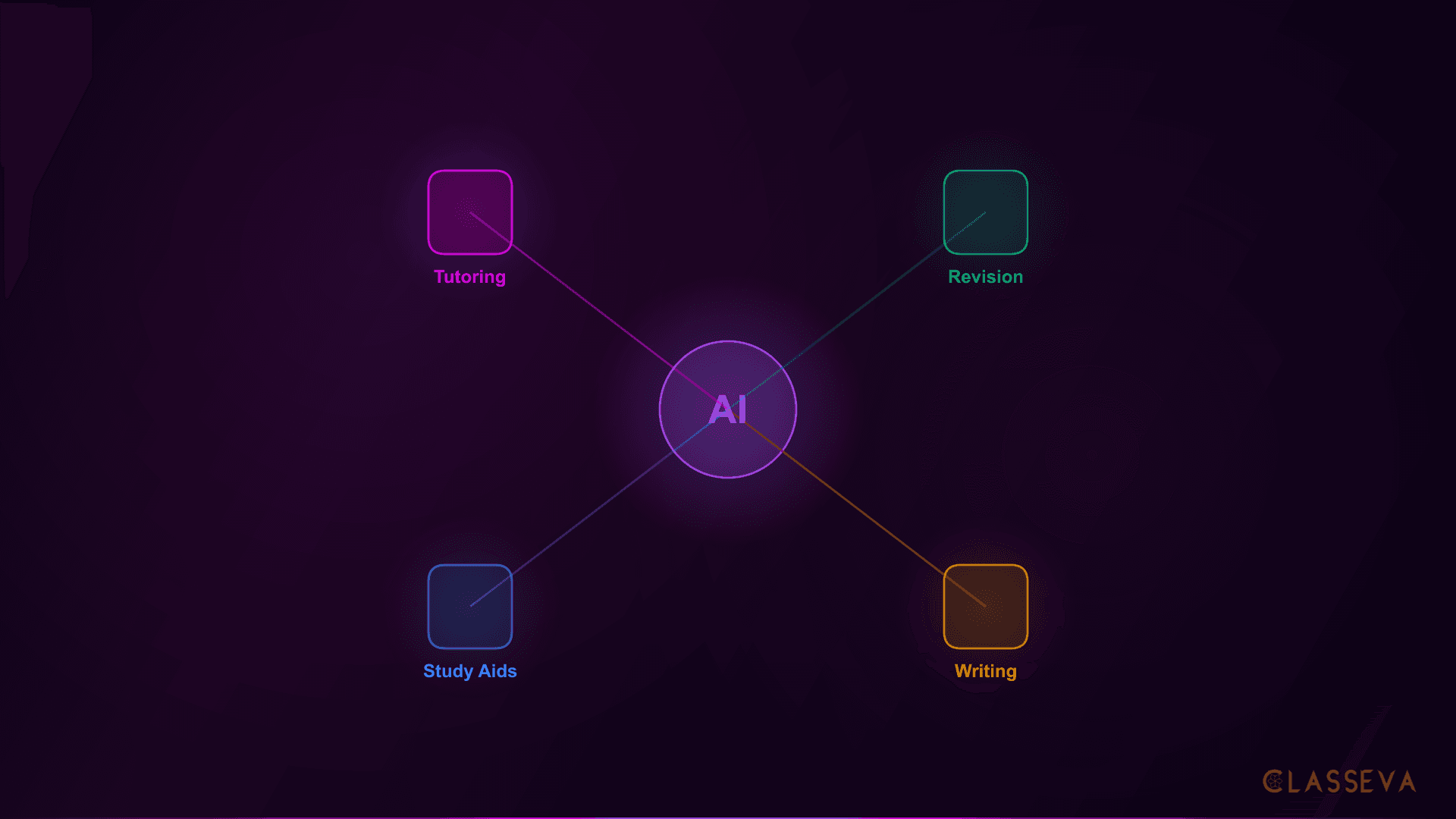
That has changed. Tools like Classeva now offer exam-board-specific practice, step-by-step explanations, and instant feedback across every GCSE and A-Level subject. Meanwhile, the cost of human tutoring has continued to climb.
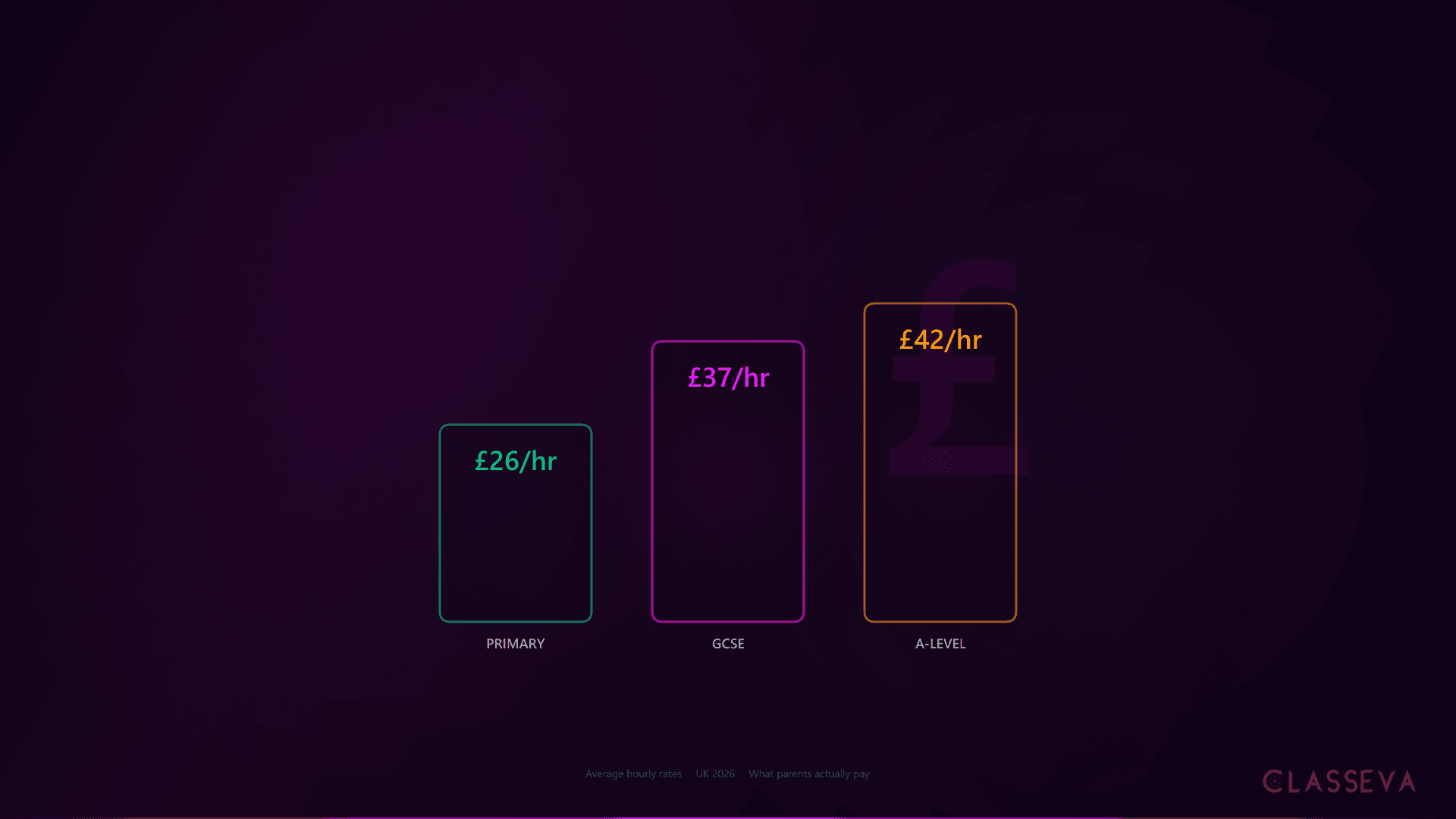
That 30% figure from the Sutton Trust reveals something important: the majority of families are not using private tutoring. Cost is the biggest barrier. At £35 to £50 per hour, weekly tutoring in a single subject costs more than many families spend on groceries. This is where AI tutoring changes the conversation entirely.
What Each Option Actually Costs
Before comparing effectiveness, let us be transparent about cost. This is often the deciding factor for families, and the gap is significant.
| Human Tutor | AI Tutor | |
|---|---|---|
| Typical cost | £35-50/hour | £5-20/month |
| Monthly cost (1x/week) | £140-200 | £5-20 |
| Subjects covered | 1 subject | All subjects |
| Annual cost (1 subject) | £1,500-2,400 | £60-240 |
| Annual cost (3 subjects) | £4,500-7,200 | £60-240 |
Sources: Tutorful, TutorCruncher, FindTutors. Human tutor costs are averages for GCSE-level tuition in England.
Hourly vs Monthly: The Real Maths
The cost difference is stark when you consider that GCSE students take eight to ten subjects. A human tutor for three subjects at one session per week costs £4,500 to £7,200 per year. An AI tutoring subscription covering every subject costs a fraction of a single month of human tutoring. Even affluent families rarely hire more than two human tutors.
Online human tutoring is cheaper than in-person (roughly £5-10 less per hour), but still costs £25-40 per session. London and the South East are the most expensive regions, with averages of £38-40 per hour. Premium tutors (qualified teachers, Oxbridge graduates) charge £50-100+ per hour.
During my time at a tutoring company, I noticed that parents often started with ambitions of weekly sessions across multiple subjects, then quickly scaled back to one session per fortnight in one subject once they saw the bills. The result was support that was too thin to make a real difference.
What Human Tutoring Does Best
Let me be clear: a good human tutor can be transformative. The emphasis is on “good.” The problem is that quality varies enormously, and there is no reliable way for parents to verify it before committing.
Emotional Connection and Mentoring
The single biggest advantage of a human tutor is the relationship. A skilled tutor builds rapport, reads body language, detects when a student is confused or frustrated before they say a word, and adapts their approach in real time. For students who are struggling with confidence or motivation, this human connection can make the difference between giving up and pushing through.
When I worked in a tutoring company, the best tutors I saw were not always the most qualified academically. They were the ones who made students feel safe to make mistakes. A Year 10 student who trusts their tutor enough to say “I have absolutely no idea what is happening in this topic” is in a far better position than one who nods along pretending to understand.
Accountability Through Relationship
Students show up for a person in a way they might not for an app. A scheduled weekly session creates rhythm and accountability. If your child has a tutor arriving at 4pm on Tuesday, they will be at the desk at 4pm on Tuesday. That external structure is valuable for students who struggle with self-discipline.
The tutoring industry has very low barriers to entry. Almost anyone can call themselves a tutor. I saw university students who were barely one chapter ahead of the student they were teaching. A bad tutor is genuinely worse than no tutor, because they waste time, money, and (worst of all) your child's confidence. Always ask for qualifications, DBS checks, and references.
Human tutors can also provide pastoral support that goes beyond academics. For students dealing with exam anxiety, family stress, or social difficulties at school, a trusted tutor can become an important stable adult in their life.
What AI Tutoring Does Best
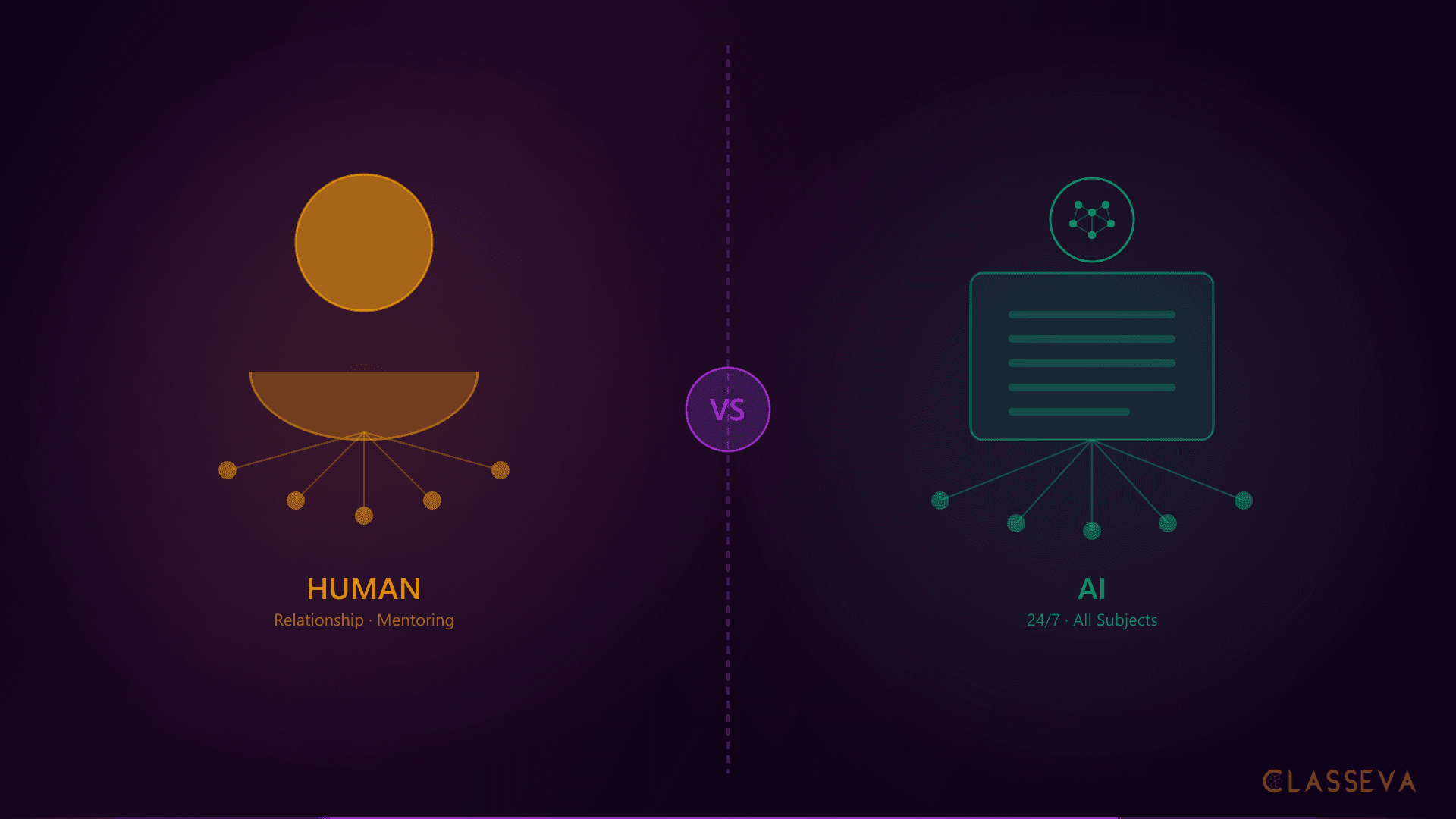
AI tutoring has a completely different set of strengths. Where human tutoring is deep but narrow (one tutor, one subject, one hour per week), AI tutoring is broad and always on.
Always Available, Always Patient
The most common time a GCSE student gets stuck on homework is between 7pm and 10pm. Their tutor is not available. Their teacher is not available. Their parents may not understand the content. An AI tutor is available at 9pm on a Sunday night, at 6am before school, and at midnight during exam season. It will explain the same concept a hundred times without a flicker of frustration.
This patience factor matters more than parents realise. Many students are too embarrassed to ask their human tutor to explain something for the fourth time. They nod, pretend they understand, and move on with the gap still there. With an AI tutor, there is no judgement. Students who are too shy to ask questions in class or in front of a person will type questions freely into a screen.
Multi-Subject Coverage
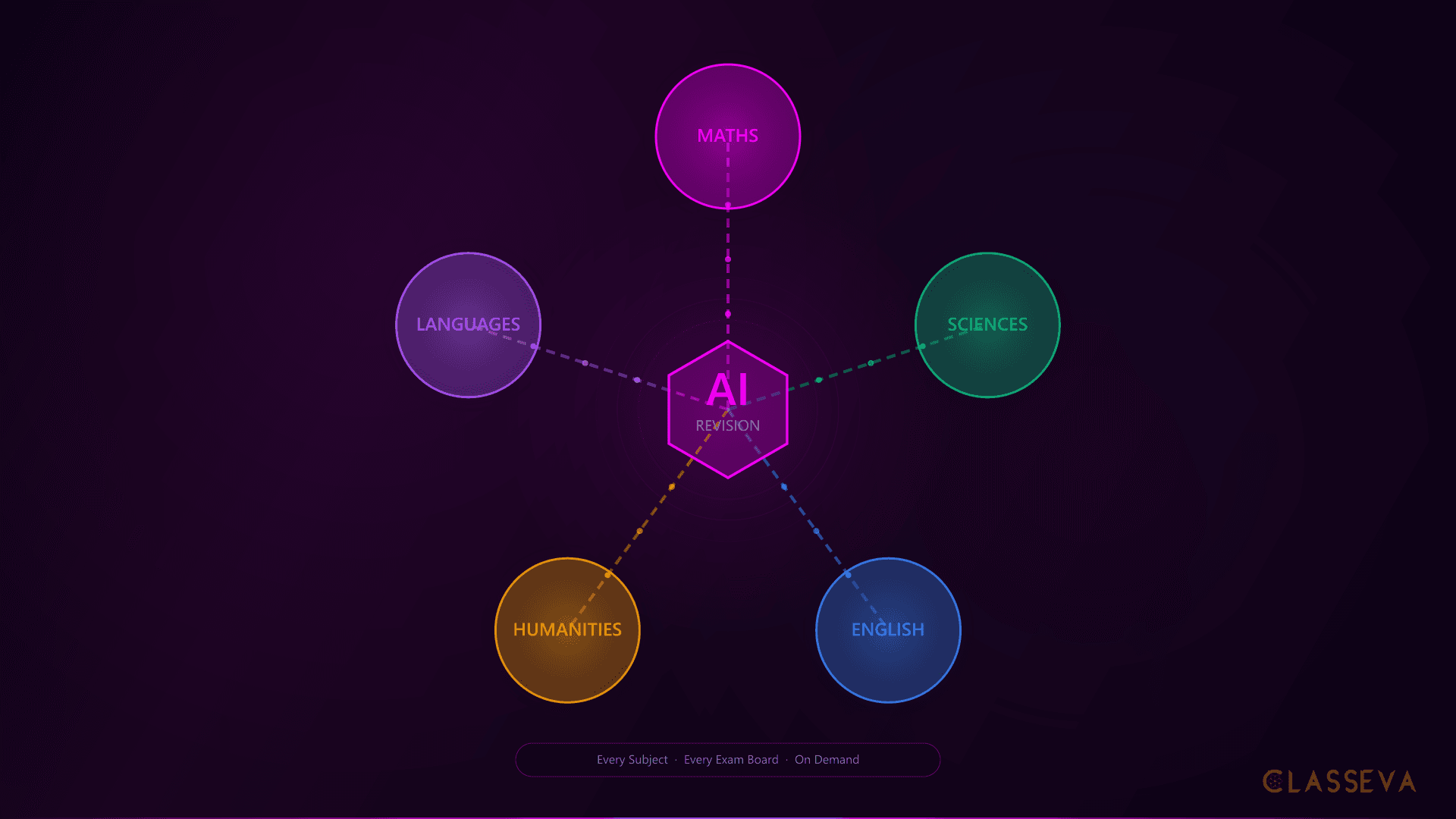
A typical GCSE student takes nine subjects. Even families who can afford human tutoring rarely cover more than one or two subjects. AI tutoring covers every subject with a single subscription. Your child can work through GCSE maths topics at 5pm, switch to chemistry at 6pm, and practise French vocabulary at 7pm.
Crucially, AI tutoring tools like Classevafollow the exact exam board specification. They do not go off-topic, teach irrelevant content, or focus on their own strengths rather than the student's needs. This was a persistent problem I saw with human tutors: they would teach what they were comfortable with, not necessarily what appeared on the specific exam board's paper.
Side-by-Side Comparison
Here is how AI tutoring vs private tutor compares across the factors that matter most to parents.
| Factor | Human Tutor | AI Tutor |
|---|---|---|
| Cost per month | £140-200 (1 subject) | £5-20 (all subjects) |
| Availability | Scheduled sessions only | 24/7, on demand |
| Subjects covered | 1 per tutor | All GCSE/A-Level subjects |
| Emotional support | Strong (relationship-based) | Limited (no personal bond) |
| Patience | Varies by tutor | Infinite, judgement-free |
| Accountability | High (appointment to show up for) | Low (self-directed) |
| Feedback speed | During session or next week | Instant |
| Quality consistency | Varies enormously | Consistent (curriculum-aligned) |
| Exam board alignment | Depends on tutor knowledge | Built into the platform |
| Best for | Confidence, mentoring, complex reasoning | Practice, revision, multi-subject help |
Comparison based on typical UK tutoring market conditions.
Human Tutor Strengths
- •Builds emotional connection and trust
- •Reads body language and adapts in real time
- •Provides accountability through scheduled sessions
- •Offers pastoral support beyond academics
- •Excels at complex, multi-step reasoning
AI Tutor Strengths
- •Available 24/7, including exam crunch periods
- •Covers all subjects for a fraction of the cost
- •Instant marking and explanations
- •Infinite patience, no embarrassment
- •Follows exact exam board specification
When to Choose Which
The right choice depends on your child's specific situation. Here is a practical guide based on the patterns I have seen across hundreds of students.
Choose Human Tutoring When
Human Tutor Is the Better Fit
- •Your child needs emotional support and confidence alongside academic help
- •The core problem is motivation or engagement, not just understanding content
- •Your child has specific learning needs (dyslexia, ADHD) that benefit from personal adaptation
- •You are targeting one specific subject and can afford £150-200 per month
- •Your child learns best through dialogue and relationship
If your child's issue is primarily emotional (they have given up, they are anxious, they lack confidence), no amount of AI practice will fix that. They need a human who sees them, believes in them, and helps them rebuild their self-belief. Read our guide on when to get a tutor for a deeper decision framework.
Choose AI Tutoring When
AI Tutor Is the Better Fit
- •Your child needs flexible, on-demand help across multiple subjects
- •Budget is a constraint (most families cannot afford £200/month per subject)
- •Your child is self-motivated but needs practice and instant feedback
- •The primary need is exam practice, worked solutions, and topic revision
- •Your child is too embarrassed to ask questions in front of a person
The embarrassment factor is one of the most underestimated advantages of AI tutoring. Students who sit silently in class rather than risk looking foolish in front of peers will happily ask an AI to explain the same concept five times. There is zero social risk.
The Best Approach: Combine Both
For many families, the answer to “AI tutor or human tutor for GCSE” is not either/or. The most effective approach combines both, playing to each one's strengths.
Use AI tutoring for daily practice across all subjects
Platforms like Classeva provide exam-board-aligned practice questions, instant marking, and step-by-step explanations. Your child can use this every day across maths, science, English, and every other GCSE subject for a single monthly fee.
Identify the one or two subjects causing the most difficulty
Look at mock results, school reports, and your child's own assessment. Which subjects have the biggest gap between where they are and where they need to be?
Invest in a human tutor for those key subjects
A weekly session in the one or two subjects where your child needs the most support provides the depth, relationship, and personalised guidance that makes the biggest difference.
Let AI data inform the human tutor sessions
AI tutoring platforms track which topics your child struggles with most. Share this data with the human tutor so they can focus each session on the exact areas that need the most work, rather than covering ground your child has already mastered.
Think of it as two layers. The AI layer provides breadth: coverage across all subjects, available whenever your child needs it. The human layer provides depth: intensive, personalised support in the subjects that matter most. Together, they cover far more ground than either could alone, at a cost most families can actually afford.
This combined approach typically costs £160 to £220 per month (one human tutor session per week plus an AI subscription), compared to £420 to £600 per month for human tutoring in three subjects. Your child gets better coverage at less than half the price.
A Practical Decision Framework
If you are still unsure, work through these five questions. They will point you toward the right approach for your family.
Is the problem content or confidence?
If your child does not understand the material, AI tutoring can fill that gap efficiently across multiple subjects. If the problem is confidence, motivation, or anxiety, a human tutor who builds a genuine relationship will be more effective. Read our guide on spotting the signs that your child is struggling at school.
How many subjects need support?
If it is one subject, a human tutor is affordable and effective. If it is three or more, the cost of human tutoring becomes prohibitive for most families, and AI tutoring gives you full coverage.
What is your realistic budget?
Be honest about what you can sustain for the full academic year. A tutor you can only afford for two months before exams is less effective than AI tutoring your child uses consistently for twelve months.
Is your child self-motivated?
AI tutoring requires the student to choose to use it. There is no appointment to show up for. If your child needs external accountability to sit down and work, a scheduled human session provides that structure.
Have you tried the free options first?
Before spending anything, make sure your child is using school revision sessions, free resources like BBC Bitesize, and past papers from the exam board websites. If these are not enough, start with AI tutoring (the most affordable step up) and add a human tutor only if needed.
The biggest mistake parents make is assuming human always equals better. For practice, instant feedback, and multi-subject coverage, AI tutoring is often more effective because it is always available and endlessly patient. Do not spend £200 per month on a human tutor for exam practice when a £15 AI subscription does that job better. Save the human tutor budget for the subjects and situations where human connection genuinely makes the difference.
For a deeper dive into whether your child needs any external support at all, read our guide on when to get a tutor for your child. And if you are looking for effective revision tools to supplement either approach, our roundup of the best A-Level revision resources covers the options worth considering.