GCSE Science Resit: Everything Parents Need to Know
A GCSE science resit is not something every student needs to worry about. Unlike Maths and English, where a grade below 4 triggers a legal requirement to keep studying, science sits in a different category entirely. There is no obligation to resit it. But that does not mean the grade is irrelevant.
If your child wants to take science A-Levels, apply for a health science degree, or keep certain career doors open, a disappointing GCSE science grade can create a real barrier. The question is not “must they resit?” but “should they resit, and is it the smartest route forward?”
Having worked in tutoring, one frustration I saw repeatedly was parents making rushed decisions on results day without understanding the full picture. Some signed their child up for a resit that was unnecessary. Others assumed nothing could be done when a straightforward resit would have solved the problem. This guide covers the rules, the practical steps, and the honest question of whether resitting is the right call.
Do You Have to Resit GCSE Science?
The short answer: no. There is no legal or funding requirement to resit GCSE science. This catches many parents off guard because the rules for Maths and English are so prominent.
The Condition of Funding Rule
In England, the Condition of Funding requires any student who has not achieved grade 4 or above in GCSE Maths or English to continue studying those subjects until they do. This applies to all 16 to 19 year olds in funded education, whether at a sixth form, college, or apprenticeship provider.
This rule does not apply to science. Your child could finish school with a grade 2 in Combined Science and face no legal requirement to resit.
Why Science Is Different
The government considers Maths and English as the two “gateway” qualifications: foundational skills needed for employment and further education across every sector. Science, while compulsory at GCSE, is not treated the same way in post-16 funding rules. The practical effect is that your child will never be forced to resit GCSE science, but they may choose to if a higher grade opens a specific door.
Maths and English
- •MUST resit if below grade 4
- •Condition of Funding applies
- •November and summer resit options
- •Schools legally required to provide classes
Science
- •NO resit requirement at all
- •Not covered by Condition of Funding
- •Summer resit only (no November option)
- •Schools not required to offer resit support
When Resitting GCSE Science Makes Sense
Just because your child can resit does not mean they should. Resitting only makes sense when a specific, achievable goal depends on a higher grade. Here are the three scenarios where a GCSE science resit is genuinely worth considering.
Sixth Form Entry Requirements
Most sixth forms set minimum GCSE grades for A-Level science subjects. The typical requirements look like this:
| A-Level Subject | Typical GCSE Requirement | Additional Notes |
|---|---|---|
| Biology | Grade 6-7 in GCSE Biology or high Combined Science grade | Some schools accept grade 6; selective sixth forms require 7+ |
| Chemistry | Grade 6-7 in GCSE Chemistry or high Combined Science grade | Often the strictest entry requirement of the three sciences |
| Physics | Grade 6-7 in GCSE Physics + Grade 6-7 in GCSE Maths | Maths requirement is almost universal for A-Level Physics |
Typical sixth form entry requirements for science A-Levels. Requirements vary by school.
If your child scored grade 5 in Combined Science but wants to take A-Level Biology, they have a clear target. A resit to reach grade 6 or above could unlock that path. From experience working with families in this exact position, I found that students who were within one or two grades of the threshold had the best chance of improving, provided they focused on their weakest topics rather than repeating everything from scratch.
Before committing to a resit, contact the sixth form directly. Many schools are flexible with entry grades, especially for students who are close to the threshold and can demonstrate strong motivation. Some offer provisional places with the condition that the student resits the following summer.
University Course Requirements
Certain university courses specify minimum GCSE science grades as part of their entry requirements, separate from A-Level grades. This is most common in health sciences:
- Nursing and Midwifery: Many universities require grade 4 or above in GCSE Science (or equivalent) alongside Maths and English
- Medicine (foundation year): Some foundation year programmes specify GCSE science grades as part of their admissions criteria
- Veterinary Science: Often requires strong GCSE science grades to demonstrate breadth of scientific understanding
- Dentistry: Similar to Medicine, with GCSE science frequently mentioned in admissions requirements
If your child is in Year 12 or 13 and discovering these requirements for the first time, a summer resit could still be completed before their UCAS application deadline. Check the specific entry requirements on UCAS for each university and course.
When the Grade Does Not Reflect Ability
Sometimes the grade is simply wrong. Your child was ill during the exam week, dealt with a family crisis, or had a panic attack in the exam hall. If their classwork, mock exam results, and teacher assessments consistently showed a higher level of understanding, a resit gives them the chance to demonstrate what they actually know.
This is the most straightforward case for resitting. The knowledge is already there; the exam just did not capture it. In situations like these, the improvement between first attempt and resit can be significant because the student is not learning new material, just getting a fair chance to show what they already understand.
When Resitting Is Not Worth It
Not every disappointing grade justifies a resit. Here are the situations where I would advise against it:
Their future plans do not require science
If your child is taking A-Levels in English, History, and Politics, a grade 4 in Combined Science is perfectly fine. No employer or university will ask about it. Resitting would be a waste of time and energy that could go toward their actual subjects.
The issue was deep understanding, not exam performance
If your child consistently struggled with science throughout Years 10 and 11, scoring similarly in mocks and classwork, the exam result probably reflects their current level. Resitting without significant, targeted intervention is likely to produce the same grade. This is where alternatives like BTEC may be more productive.
It would overload their Year 12 workload
Adding a GCSE resit on top of three or four A-Levels is demanding. A-Level content is substantially harder than GCSE, and the jump in Year 12 catches many students off guard. If the resit would compromise their A-Level performance, the trade-off is not worth it.
They are resitting to please others, not themselves
A resit only works if your child is motivated to improve. If they have moved on from science and are engaged with their new subjects, forcing a resit creates resentment without results.
Signing up for a resit on results day without a clear plan for how the outcome will be different. A resit without focused, targeted revision on the specific topics that cost marks the first time will almost certainly produce the same grade.
How GCSE Science Resits Work
The mechanics of resitting GCSE science are different from Maths and English in several important ways. Understanding these rules before committing saves time and prevents surprises.
Summer Series Only
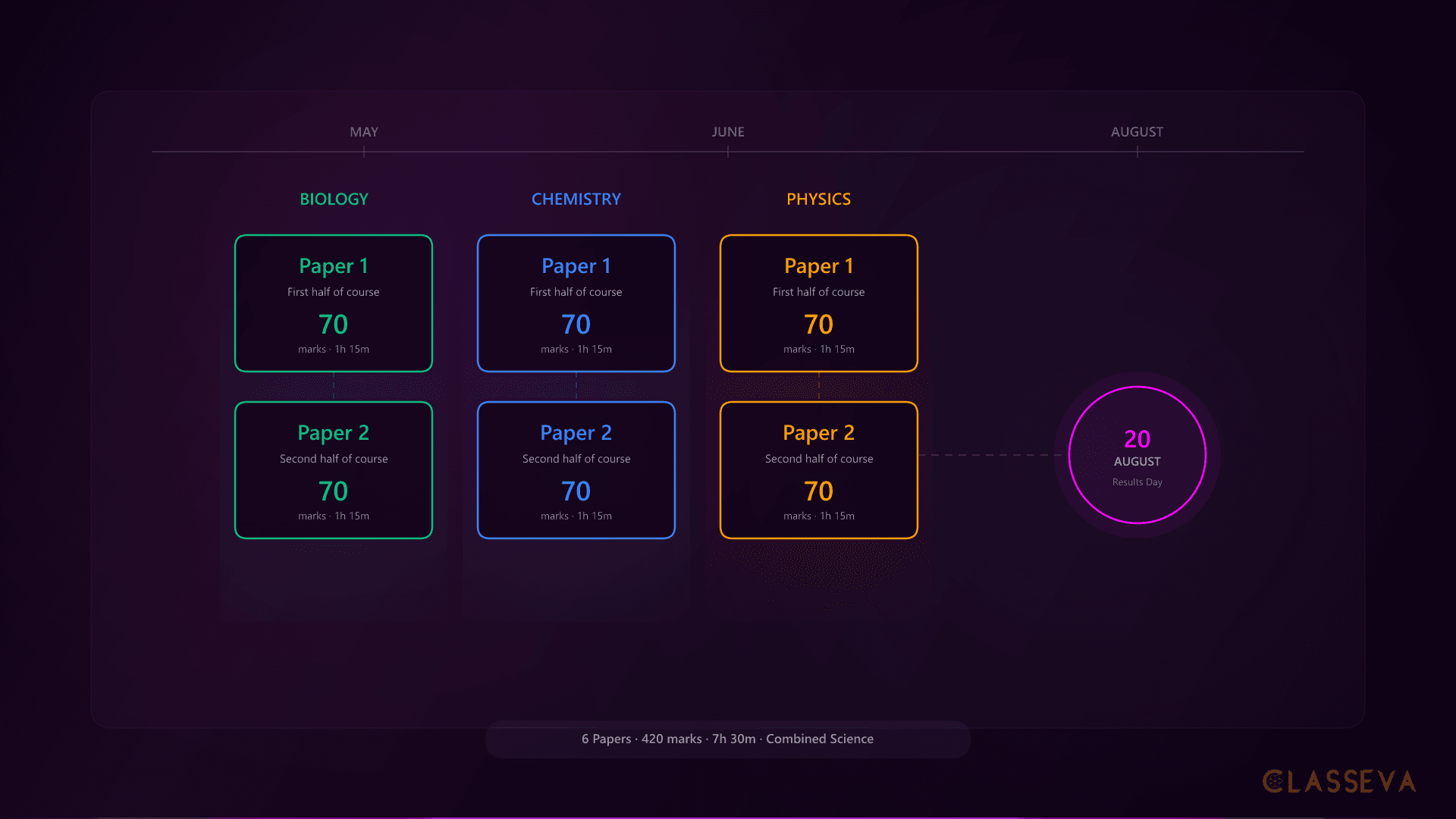
GCSE Maths and English Language have a November resit series, giving students a chance to improve their grade within a few months of receiving results. Science does not have this option. GCSE science resits are only available in the summer exam series, which runs from mid-May to late June.
This means if your child receives their results in August and decides to resit, they will need to wait almost a full year until the following May or June. That is a significant time commitment, and it is worth factoring in when deciding whether resitting is the right choice.
All Papers Must Be Resat
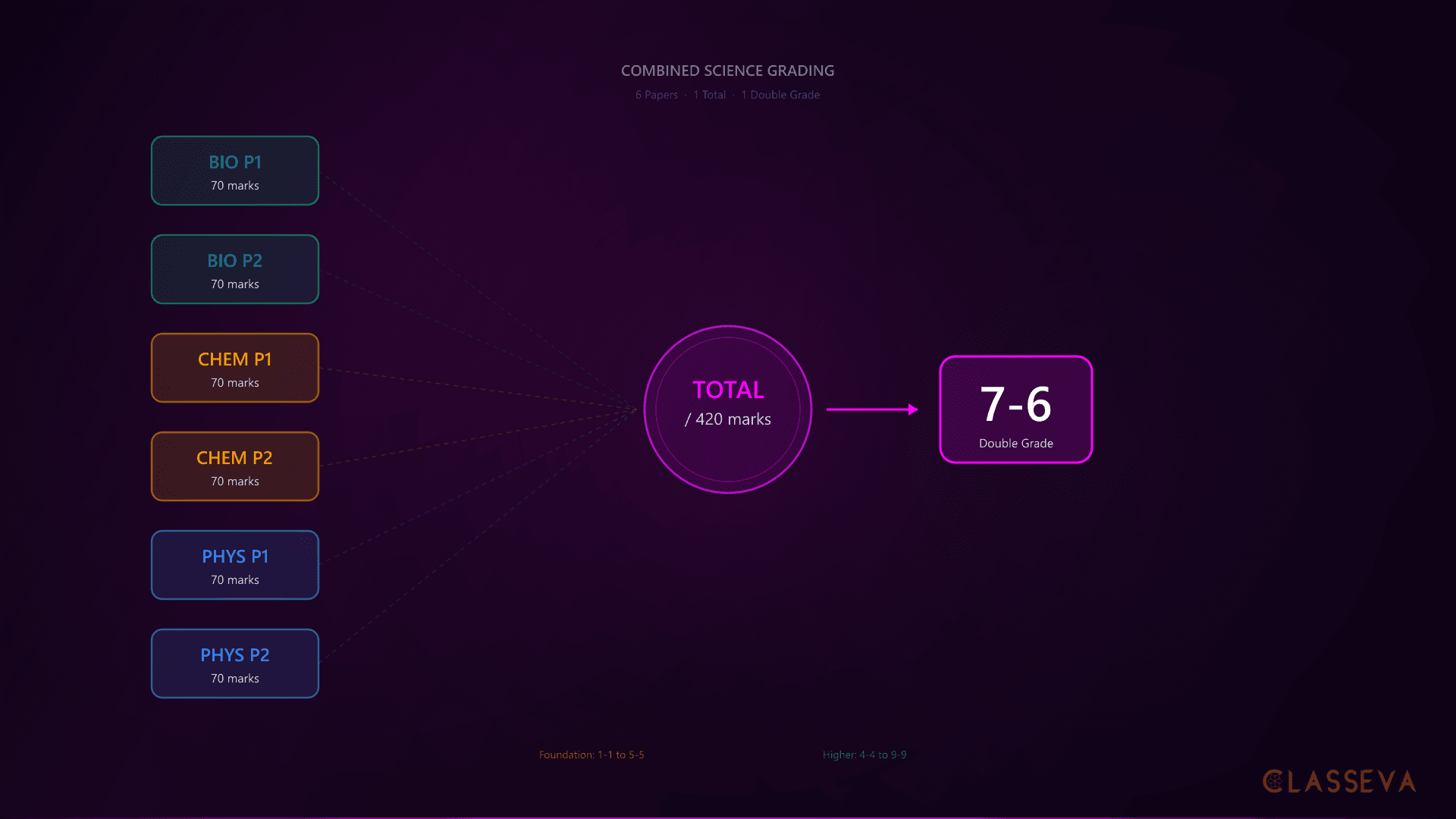
There is no option to resit individual papers. Your child must resit the entire qualification:
This is an important distinction. If your child took Combined Science and only struggles with the physics component, they still need to resit all six papers, including the biology and chemistry papers they may have done well on. With Triple Science, they could resit just the one subject that needs improving, which is a much lighter commitment.
If your child only needs to improve in one science discipline, consider whether switching from Combined Science to a single Triple Science GCSE (e.g., GCSE Biology alone) might be more efficient. Discuss this with the school's exams officer, as not all centres support this option.
Where to Register and What It Costs
Your child can register for a GCSE science resit through several routes:
| Registration Route | Typical Cost | Notes |
|---|---|---|
| Through current school or college | £0 to £50 | Some schools absorb the cost; others charge a subsidised rate |
| Through an external exam centre | £50 to £150 | Full fee payable; centres add admin charges on top of board fees |
| Through an adult education provider | £50 to £150 | May include tuition as part of a resit course |
Costs vary by exam board and centre. Contact your chosen centre directly for exact fees.
The simplest route is through your child's current school or sixth form. Speak to the exams officer in September or October to ensure your child is registered in time for the summer series. External candidates need to find an approved exam centre, which can be found on the relevant exam board's website.
Alternatives to Resitting GCSE Science
A GCSE resit is the most direct route if the goal is a specific GCSE grade. But it is not the only path, and for some students, an alternative qualification or pathway will be more effective and less stressful.
University Foundation Years
Many universities offer foundation year programmes designed for students who do not meet standard entry requirements. These are full-time, one-year courses that sit before the first year of a degree. They are particularly common in science and health-related fields.
A foundation year means your child spends four years at university instead of three, but they gain a structured introduction to degree-level content with dedicated support. For students whose GCSE science grade is significantly below the threshold (e.g., grade 3 when grade 6 is needed), a foundation year is often more realistic than hoping a resit will bridge a three-grade gap.
BTEC and Access to HE Courses
BTEC Applied Science
- •Level 3 vocational qualification
- •Coursework-based assessment
- •Can be studied alongside A-Levels
- •Accepted by many universities for science degrees
- •Available at most further education colleges
Access to HE (Science)
- •Designed for adults aged 19+
- •One-year intensive programme
- •Widely accepted for Nursing, Midwifery, and health sciences
- •Often free for students under 24 without a Level 3 qualification
- •Provides UCAS tariff points
BTEC Applied Science is a strong option for students who find coursework-based assessment more manageable than terminal exams. It covers biology, chemistry, and physics at Level 3 (equivalent to A-Level) and is accepted by many universities as an alternative to science A-Levels.
Access to Higher Education courses are designed for mature students, but the age threshold is 19, not 21 or 25. If your child is taking a gap year or has been out of formal education for a year, an Access course in Science can provide a direct route to health science degrees. These courses are specifically designed for progression to university and are widely accepted, particularly by post-1992 universities.
The key point is that a GCSE resit is not the only route forward. If your child is set on a science-related career but their GCSE grade is significantly below the threshold, one of these alternative pathways may actually get them there faster and with less stress than attempting to bridge a large gap through a single resit.
What to Do on Results Day
GCSE results dayis emotional for everyone. If your child's science grade is not what they hoped for, here is a practical sequence to follow before making any decisions.
Check the actual entry requirements
Before assuming a resit is needed, check the specific entry requirements for your child's chosen sixth form and A-Level subjects. Requirements vary significantly between schools. A grade 5 might be fine at one sixth form and one grade short at another.
Speak to the sixth form immediately
Most sixth forms have staff available on results day specifically to discuss borderline cases. If your child is one grade below the entry requirement, the school may offer a provisional place. This is especially common when the student is strong in other subjects and clearly motivated.
Request a review of marking if appropriate
If you believe the grade is genuinely wrong (not just disappointing), you can request a review of marking through the school. This is different from a resit and happens much faster. Priority reviews are processed within days of results day, and the grade can go up or down.
Decide on a resit only after exploring all options
A resit is a commitment that stretches into the following summer. Make sure it is genuinely needed before signing up. If the sixth form accepts your child without a resit, or if their career plans do not require science, there is no reason to add the extra workload.
If your child is resitting Combined Science, check whether they were entered for Foundation or Higher tier. Foundation tier caps the maximum grade at 5-5. If they need grade 6 or above, they must be entered for Higher tier. Discuss the tier decision with their science teacher or tutor before registering.
It is also worth considering whether the difficulty of GCSE science was genuinely the issue, or whether exam technique let your child down. Students who understand the content but lose marks on command words, six-mark questions, or practical-based questions can often improve significantly with targeted practice on exam-style questions rather than re-learning entire topics.
If your child does commit to a resit, the most effective preparation combines topic-specific revision on their weakest areas with regular timed practice on past papers. AI tutoring tools like Classeva can help with this by identifying knowledge gaps across biology, chemistry, and physics, then generating targeted questions matched to their exam board specification. The advantage of this approach is that your child focuses only on what they need to improve, not on topics they already understand.
For students considering the broader picture of what grades they need and where, our guides on GCSE grades needed for sixth form and GCSE grades required for specific A-Levels cover the entry requirements in detail. And if Maths or English also needs attention, the general GCSE resits guide explains the mandatory resit rules and the November series option that science does not have.
Finally, if your child is looking further ahead to post-A-Level options, our A-Level resits guide covers how resitting works at that level. The rules are different again, and planning ahead can save considerable stress.