What A-Levels Do You Need for Architecture?
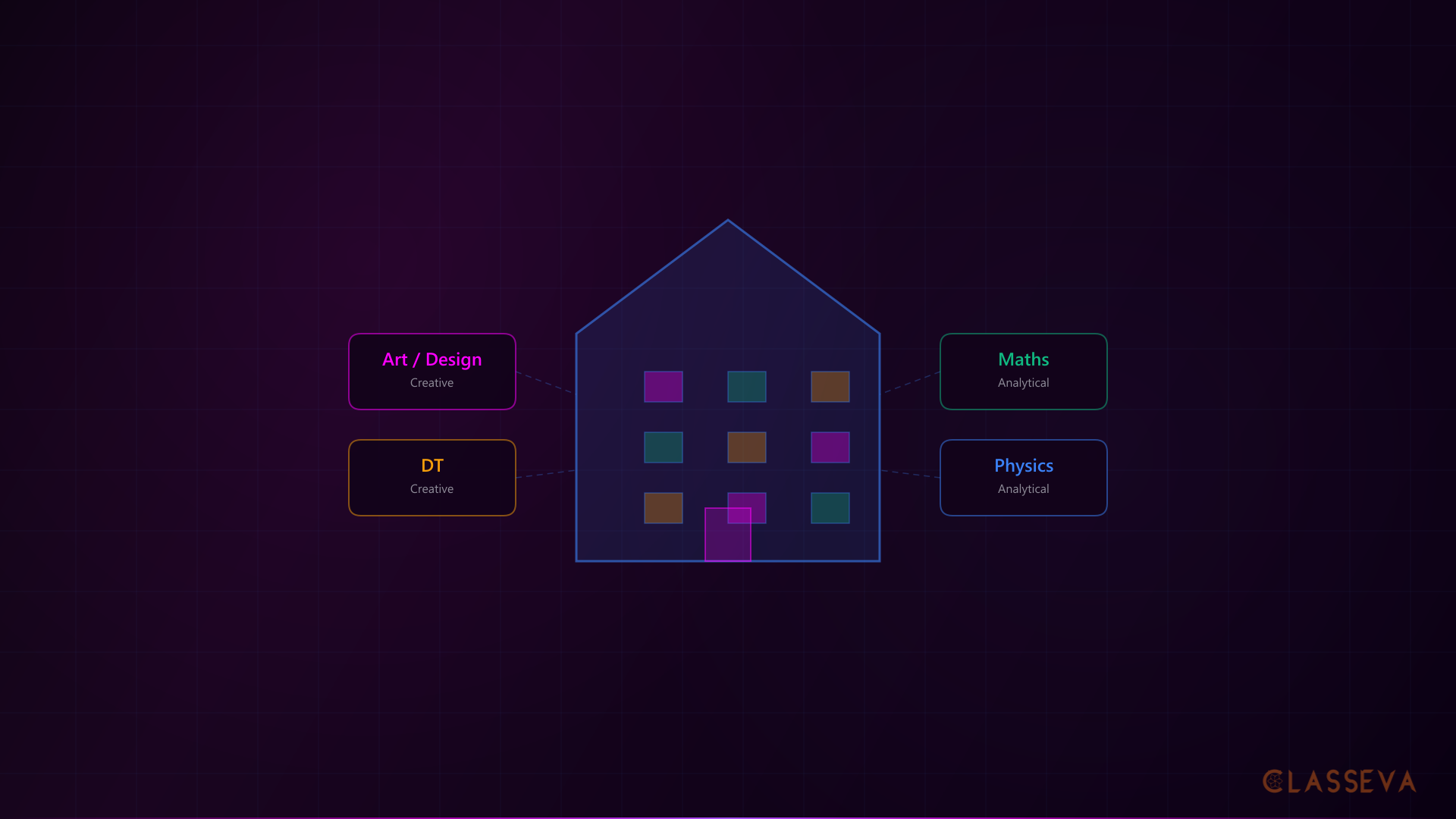
A-Levels for architecture are unusual compared to most degree pathways. Unlike engineering (which demands Maths and Physics) or medicine (which requires Chemistry and Biology), architecture has no single mandatory A-Level. What universities want instead is a combination that shows both creative flair and analytical ability. That distinction catches a lot of families off guard.
One thing that struck me when I first started working with students considering architecture was how different the admissions process is from other competitive degrees. A student with three A*s in the wrong subjects and no portfolio will lose out to someone with ABB, Art A-Level, and a brilliant sketchbook. Understanding this balance early gives your child a genuine advantage.
Are There Mandatory A-Levels for Architecture?
No. There is no A-Level that every architecture school in the UK requires. This is one of the most important things for parents to understand early, because it means your child has genuine flexibility in their subject choices. The flip side is that without a clear “must-have” list, choosing the right combination takes more thought.
Why No Single Subject Is Required
Architecture sits at the intersection of art and science. An architect needs to design buildings that are visually compelling, structurally sound, environmentally responsible, and legally compliant. No single A-Level covers all of that. Universities deliberately keep requirements broad to attract students with different strengths. Some of the best architects come from humanities backgrounds; others from pure sciences.
That said, certain subjects appear far more frequently in successful applications than others. Art, Maths, and Physics are the three that carry the most weight across the sector.
What Universities Actually Look For
When admissions tutors review architecture applications, they assess three things: academic ability (your A-Level grades), creative potential (your portfolio), and genuine interest in the built environment (your personal statement and interview). The A-Levels for architecture you choose signal which of these strengths you bring.
Grades prove academic ability. The portfolioproves creative potential. Most architecture schools weigh both equally. Strong grades with a weak portfolio, or a strong portfolio with weak grades, will both limit your child's options.
The Best A-Level Combinations for Architecture
Since there is no fixed requirement, the question becomes: which combination gives your child the widest range of options? Having worked with families navigating A-Level subject choices, I can tell you that architecture applicants who show both creative and technical ability consistently have stronger applications than those who lean entirely one way.
The Strongest All-Round Combination
Art/Design + Maths + one humanities or science subject (such as History, Geography, English, or Physics). This keeps every architecture school open while demonstrating the breadth that admissions tutors value. Art proves creative ability and feeds directly into portfolio work. Maths proves analytical rigour. The third subject adds depth and context.
Technical Emphasis
Maths + Physics + Art/Design. This is the strongest option for students drawn to the structural and engineering side of architecture. It also keeps the door open for engineering degrees if your child changes direction. Several universities with technically rigorous programmes (Bath, Cambridge) favour this combination.
Creative Emphasis
Art + Design & Technology + one academic subject. This suits students whose strength is in design and making. The third subject should be academic (English Literature, History, Geography) to balance the application and meet the general entry criteria of selective universities.
All-Round (Widest Options)
- •Art/Design + Maths + Humanities/Science
- •Keeps all architecture schools open
- •Strong portfolio + strong academics
- •Best if your child is undecided on specialism
Technical (Structural Focus)
- •Maths + Physics + Art/Design
- •Ideal for Bath, Cambridge, UCL
- •Also works for engineering if plans change
- •Best if your child loves the science of buildings
Not all schools offer Art or Design & Technology at A-Level. If this is the case, your child can still apply for architecture. They will need to build a portfolio independently (more on this below) and choose a combination that includes Maths plus a subject that demonstrates analytical or creative thinking, such as English Literature, Geography, or History.
University Entry Requirements for Architecture
Architecture entry requirements vary significantly between institutions. Grade offers range from AAA at the most competitive schools down to BBC at others. What stays consistent is the expectation of a portfolio and evidence of genuine interest in the built environment.
Top Schools and Their Offers
| University | Typical Offer | Subject Requirements | Portfolio |
|---|---|---|---|
| UCL Bartlett | AAA | No specific subjects required | Essential |
| Cambridge | A*AA | Two from Arts, Sciences, Humanities preferred | Essential + admissions test |
| University of Bath | AAA to AAB | Normally including Mathematics | Required |
| University of Sheffield | AAA to AAB | No specific subjects | Required |
| Manchester School of Architecture | ABB to BBB | No specific subjects | Assessed at interview |
Source: Individual university admissions pages, UCAS. Always verify current requirements directly with each university.
The table above shows a clear pattern: the higher the entry grades, the more likely the university is to be flexible on specific A-Level subjects. That is because highly selective schools trust that students with top grades can learn the technical content on the course. What they cannot teach as easily is creative vision, which is why the portfolio is weighted so heavily.
The Portfolio: Why It Matters as Much as Grades
This is where architecture admissions diverge most sharply from other competitive degrees. A medical school does not ask to see your child's lab work. A law school does not assess their creative writing. Architecture schools, however, require tangible evidence of creative ability, and the portfolio is how they assess it.
Most architecture schools require a portfolio either at the point of application (uploaded digitally) or brought to an interview. Some assess it formally with a score; others use it as a discussion point. Either way, a weak portfolio will sink an otherwise strong application.
What to Include in a Portfolio
The portfolio does not need to be exclusively architectural drawings. In fact, admissions tutors have said they prefer seeing range and curiosity over narrow technical skill. Your child should include:
Observational drawing and sketching
Pencil or charcoal studies of buildings, landscapes, objects, or people. Shows the ability to look closely and record what they see.
Photography
Photographs of interesting buildings, textures, patterns, and spaces. Demonstrates visual awareness and an eye for composition.
Model-making
Physical models from card, balsa wood, or mixed materials. Even simple models show spatial thinking and making skills.
Digital work
Any digital design, CAD work, or graphic design projects. Shows comfort with technology, which is central to modern architecture.
Design projects
School projects from Art, DT, or personal projects that show a design process from concept to finished outcome.
Building a Portfolio Without Art A-Level
Students who do not take Art A-Level can still build a competitive portfolio. They just need to be more deliberate about it. Keeping a regular sketchbook (even 15 minutes a day), photographing buildings they find interesting, and completing a few model-making projects over Year 12 and 13 will give them enough material. Several RIBA-accredited schools explicitly state that they do not require Art A-Level as long as the portfolio demonstrates creative potential.
Do not leave portfolio preparation until the UCAS application window. Encourage your child to start a dedicated sketchbook in Year 12. By the time they apply in autumn of Year 13, they will have over a year of varied work to select from.
The 7-Year Pathway to Becoming an Architect
Architecture is the longest professional training route in the UK. From starting university to becoming a registered architect takes a minimum of 7 years. This is something every family should discuss before your child commits, not because it should put them off, but because understanding the timeline helps with realistic planning.
Part 1, Part 2, and Part 3 Explained
The qualification is structured in three parts, governed by the Royal Institute of British Architects (RIBA) and the Architects Registration Board (ARB):
| Stage | What It Is | Duration |
|---|---|---|
| Part 1 | Undergraduate degree (BA/BSc Architecture) | 3 years full-time |
| Year Out | Practical work experience in an architectural practice | Minimum 1 year |
| Part 2 | Postgraduate degree (MArch or Diploma) | 2 years full-time |
| Year Out | Further practical experience, often at a different firm | Minimum 1 year |
| Part 3 | Professional practice examination | Exam (after completing required experience) |
Source: RIBA and ARB. The year-out placements are paid positions.
The year-out placements deserve highlighting. Your child earns a salary during these periods, typically working on real projects under a qualified architect. Many students find these placements to be the most valuable part of their training. They also help offset the cost of a longer-than-average university journey.
Seven years of training means more tuition fees than a standard 3-year degree. However, Part 1 graduates can earn during their year out (typical starting salaries are around £20,000 to £24,000), and Part 2 graduates earn more. Many architecture students graduate with less personal debt than expected because of the paid placements.
If your child is weighing architecture against a shorter route like other degree pathways, the key question is whether they are genuinely passionate about designing buildings. Students who love the subject tend to thrive in the longer programme. Those who are uncertain may want to consider architectural technology (a 3-year degree) as a faster alternative.
Alternative Routes into Architecture
A-Levels are the most common entry route, but they are not the only one. If your child does not meet standard entry requirements, has not taken the ideal subject combination, or wants a different path, several alternatives exist.
Foundation Year
- •Adds 1 year before the Part 1 degree
- •Designed for students without Art A-Level
- •Available at many RIBA-accredited schools
- •Leads to the same full qualification
Architectural Technology
- •Complete 3-year degree (not 7 years)
- •Focus on technical building design
- •Does not lead to RIBA/ARB registration
- •Strong career in construction industry
Degree apprenticeships in architecture are still emerging and relatively rare, but they are worth monitoring. Your child would work in a practice while studying part-time, with the employer covering tuition costs. The trade-off is that these programmes take longer than the traditional route and availability is limited. Check the UCAS architecture page and individual university websites for the latest options.
These are different qualifications. A BSc in Architectural Technology is a 3-year degree that qualifies your child to work on the technical aspects of building design, but it does notlead to registration as an architect. Only the Part 1/2/3 route (minimum 7 years) confers the protected title of “Architect.” Make sure your child understands which path they are choosing.
What Parents Should Do Now
If your child is considering architecture, the best thing you can do is help them prepare early and make informed choices. Here are the most impactful steps, roughly in order of priority:
Research university requirements together
Look at 5 to 6 architecture schools across different entry levels. Note which subjects they require or prefer, and what their portfolio expectations are. The RIBA website lists all accredited courses.
Choose A-Levels that balance creative and analytical
Art/Design plus Maths is the strongest foundation. If Art is not available, ensure at least one creative or design-related subject is included alongside Maths or a science.
Start building a portfolio in Year 12
A dedicated sketchbook, regular photography of buildings, and one or two model-making projects will provide solid material. This does not require Art A-Level.
Visit buildings and exhibitions
Take your child to Open House London, architecture exhibitions, or simply walk through interesting buildings. Genuine enthusiasm for the built environment comes through in personal statements and interviews.
Discuss the 7-year commitment honestly
Architecture is a rewarding profession, but the training is long. Have an open conversation about the timeline, the costs, and the year-out placements. Students who go in with realistic expectations handle the journey better.
If your child is torn between architecture and a related field like engineering, the good news is that Maths and Physics keep both doors open. They do not need to decide definitively until they submit their UCAS application. For more on choosing A-Level subjects that keep multiple career paths available, we have a dedicated guide.
Architecture rewards students who are curious, creative, and willing to commit to a long training route. The right A-Level combination will not make or break their career, but it will make the application process significantly smoother. Start with Art and Maths, build a portfolio, and look at the specific requirements of their target universities. The rest follows from there.
RIBA lists all accredited architecture courses in the UK. UCAS Architecture provides entry requirement details. Informed Choices from the Russell Group explains which A-Level subjects keep options open for competitive degrees.