What A-Levels Do You Need for Engineering?
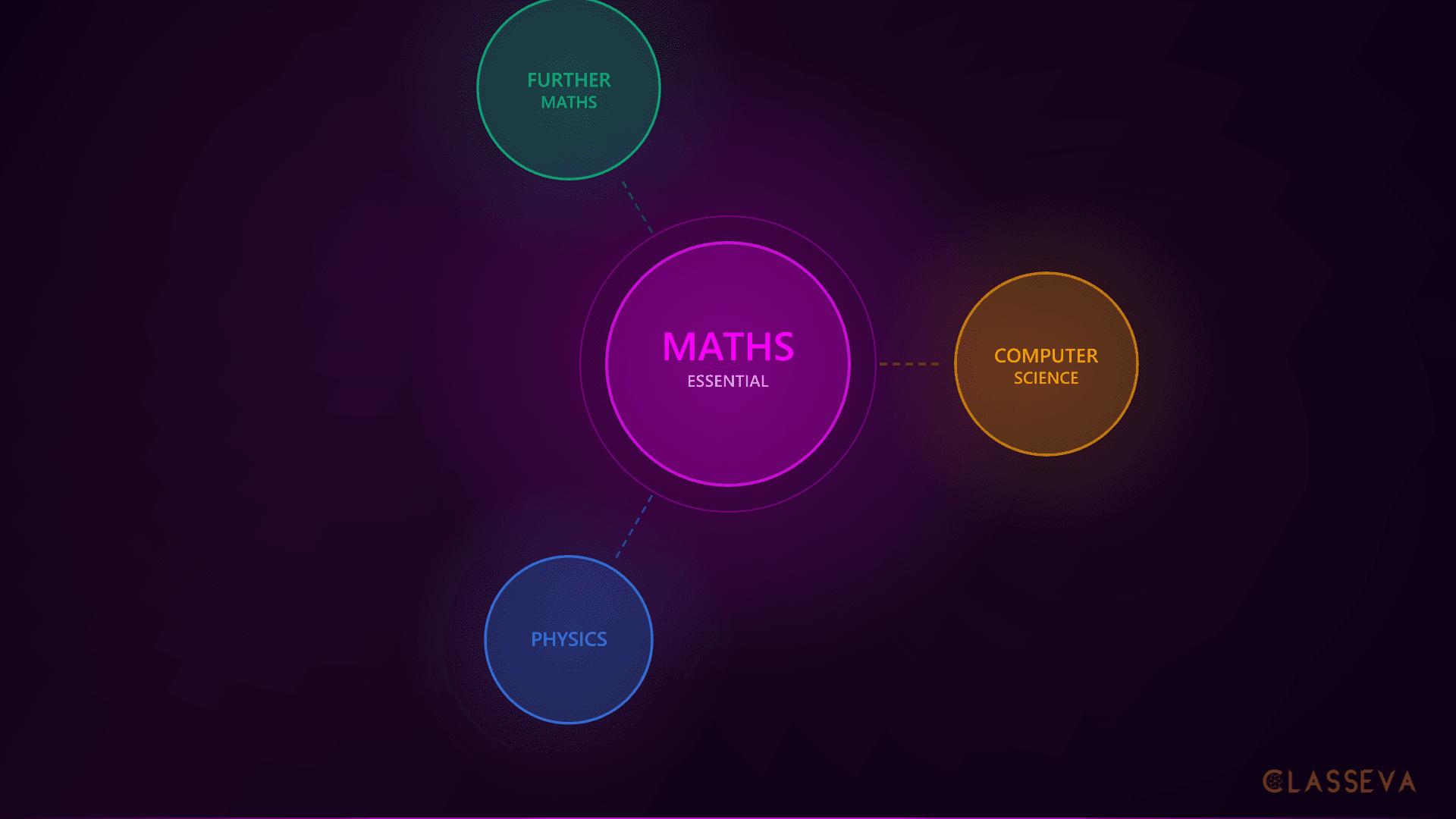
Engineering is one of the most searched A-Level pathways after medicine, and for good reason: it leads to some of the best-paid graduate careers in the UK. The good news for parents is that the core requirements are clearer than almost any other degree. For the vast majority of engineering courses, your child needs A-Level Maths and Physics. That is the starting point for nearly every branch of engineering.
What caught me off guard when I first started working with tutoring families was how many students had a vague idea that they wanted to “do engineering” but had not looked at exactly which A-Levels their target universities required. One student I worked with had chosen Maths, Chemistry, and Biology, assuming “sciences are sciences.” He only discovered in Year 12 that mechanical engineering at his first-choice university required Physics specifically. That is an avoidable mistake if you check requirements early.
This guide covers exactly which A-Levels you need for engineering, how requirements differ across specialisations, what the top universities ask for, and whether Further Maths is genuinely necessary or just nice to have.
Why Maths and Physics Are Non-Negotiable
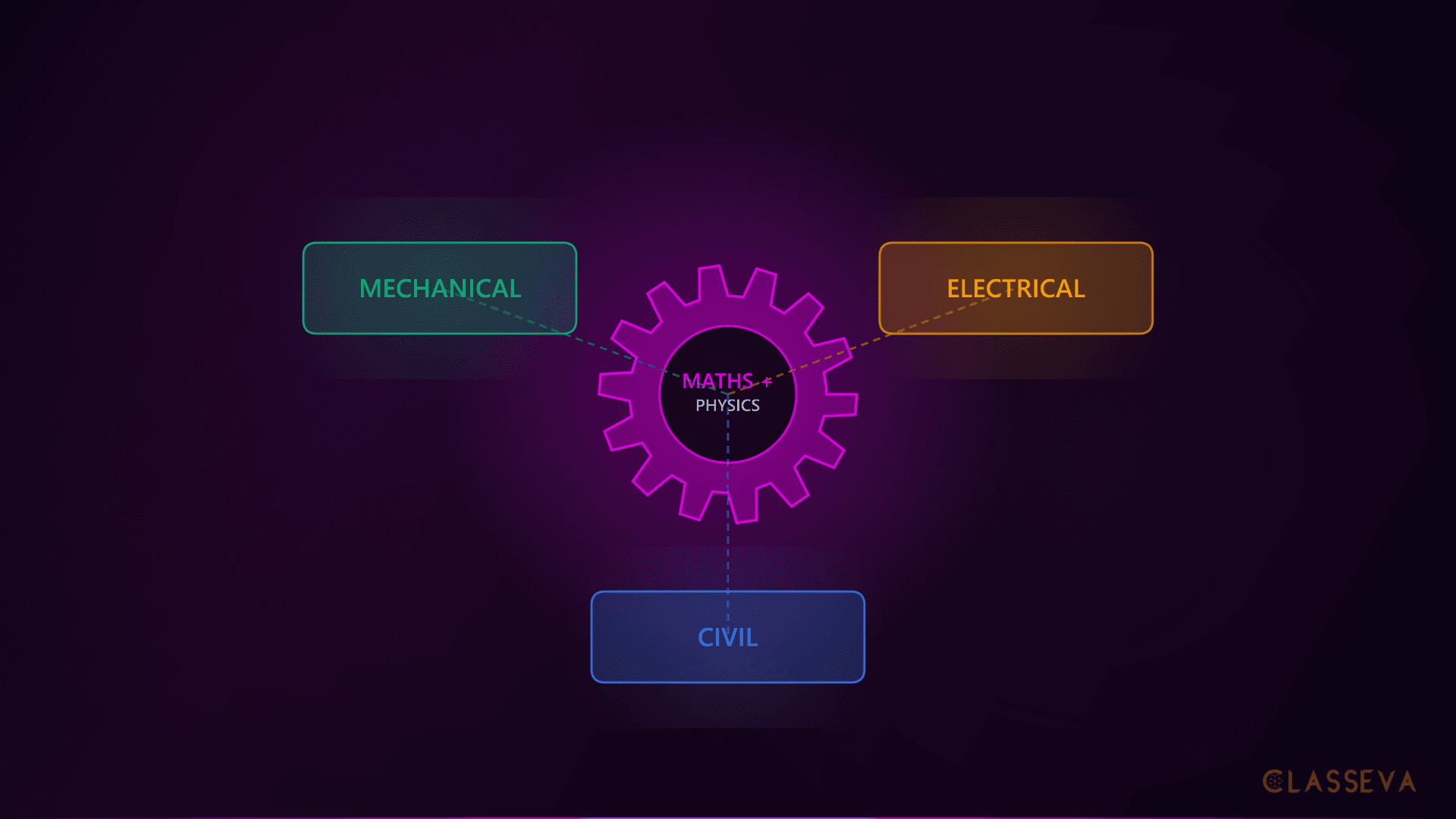
If your child is considering any branch of engineering, A-Level Maths is the single most important subject choice they will make. Every engineering degree in the UK requires it. There are no exceptions. Physics sits alongside Maths as the second essential subject for mechanical, civil, electrical, and aerospace engineering.
What Makes These Two Essential
Engineering degrees build directly on A-Level Maths and Physics content from day one. First-year university modules assume fluency in calculus, mechanics, and wave theory. A student without A-Level Physics arriving at a mechanical engineering lecture would be missing foundational knowledge that other students have spent two years building.
Mathematics provides the language of engineering: differential equations, linear algebra, and statistical modelling are used across every discipline. Physics provides the real-world application: forces, energy transfer, materials behaviour, and circuit analysis. Together, they form the bedrock that every engineering specialisation builds upon.
Maths + Physics covers mechanical, civil, electrical, aerospace, and most general engineering degrees. Maths + Chemistry is the combination for chemical engineering. If your child picks both Maths and Physics, they can apply to the widest range of engineering courses.
What Grades Do Universities Expect?
Entry requirements vary significantly. At the lower end, some universities accept CCC for engineering. At the top end, Cambridge, Oxford, and Imperial ask for A*A*A. The most common mid-range offer is ABB, with many Russell Group universities asking for AAA or AAB.
The grade in Maths matters most. Many universities specify that the A or A* must be in Maths specifically. If your child is predicted a B in Maths but an A in their other subjects, that can be a problem for competitive engineering courses.
Requirements by Engineering Specialisation
While Maths and Physics cover the vast majority of engineering courses, the details vary by specialisation. Here is what each branch typically requires and which third A-Level gives your child the strongest application.
Mechanical and Aerospace Engineering
These two disciplines overlap heavily in their A-Level requirements. Both need Maths and Physics without exception. Mechanical engineering is the most popular branch, and aerospace builds on the same physics and materials science foundation with a focus on flight and propulsion.
For the third A-Level, Further Mathsis the strongest choice if your child is targeting top universities. Chemistry and Design & Technology are also well regarded. The key is that the third subject should demonstrate either deeper mathematical ability or relevant applied knowledge.
Civil Engineering
Civil engineering follows the same Maths-plus-Physics pattern. Geography can be a beneficial third option for some programmes, particularly those with environmental or geotechnical modules. Several universities mention Geography as a “useful” subject in their admissions guidance for civil engineering courses.
Civil engineering offers tend to be slightly lower than mechanical or aerospace at the same university, with many programmes accepting ABB or BBB at mid-ranked institutions.
Electrical and Software Engineering
Electrical engineering requires Maths and Physics, with Further Maths being a particular priority for this specialisation. The mathematical content in electrical engineering (complex numbers, Fourier analysis, signal processing) is heavier than in most other branches.
Software engineering is the main outlier. Maths remains essential, but Physics is not required by most software engineering programmes. Computer Science A-Level is helpful but, surprisingly, not always required. Many universities accept any combination that includes Maths.
Electrical Engineering
- •Maths + Physics essential
- •Further Maths is a priority
- •Computer Science also valued
- •Heavy mathematical content
Software Engineering
- •Maths essential
- •Physics not required
- •Computer Science helpful but optional
- •Further Maths valued at top universities
Chemical and Biomedical Engineering
Chemical engineering is the major exception to the Maths-plus-Physics rule. It requires Maths and Chemistry, with Physics as a highly recommended third subject. If your child is interested in chemical engineering specifically, Chemistry is more important than Physics for their application.
Biomedical engineering sits at the intersection of engineering and life sciences. Most programmes require Maths plus at least one of Physics, Chemistry, or Biology, with two sciences preferred. This is one of the more flexible branches in terms of A-Level requirements.
If your child is torn between chemical and mechanical engineering, choosing Maths, Physics, and Chemistry as their three A-Levels covers both options. It is one of the few three-subject combinations that genuinely keeps multiple engineering paths open.
Top University Entry Requirements
Entry requirements vary dramatically between universities. Understanding this range helps you and your child set realistic targets and identify safety choices alongside aspirational ones.
Oxbridge Engineering
Cambridge Engineering requires A*A*Awith Maths and Physics both essential. The university “highly recommends” Further Maths as a third subject. Between 2017 and 2019, 87% of students who received offers had achieved A*A*A* or above. All applicants must also sit the ESAT (Engineering and Science Admissions Test).
Oxford Engineering Science requires A*A*A, with the A* grades in Maths and either Further Maths or Physics. Oxford also uses the ESAT for engineering admissions. Of successful engineering and computer science applicants, 96% had taken A-Level Further Maths.
Other Top Universities
Beyond Oxbridge, the pattern is consistent. Imperial College London typically asks for A*A*A with Maths and Physics required. The University of Manchester requires AAA including Maths. Bristol requires Maths and typically asks for AAA, though notably it also offers a foundation year for students who do not have A-Level Maths, making it unusually accessible among top-tier departments.
| University | Typical Offer | Required Subjects | Additional Notes |
|---|---|---|---|
| Cambridge | A*A*A | Maths, Physics | Further Maths highly recommended. ESAT required. |
| Oxford | A*A*A | Maths, Physics or Further Maths | A*s in Maths and Physics/FM. ESAT required. |
| Imperial | A*A*A | Maths, Physics | One of the largest engineering faculties in the UK. |
| Manchester | AAA | Maths | Physics preferred but not always mandatory. |
| Bristol | AAA | Maths | Offers a foundation year without A-Level Maths. |
| Leeds | AAA | Maths, Physics | Strong industry placement programme. |
| Southampton | AAB | Maths | Physics preferred for most engineering branches. |
Source: University admissions pages, 2025/26 entry cycle
The Further Maths Question
This is the question I hear most often from parents of aspiring engineers: does my child actually need Further Maths, or is it just a bonus? The honest answer is that it depends entirely on where your child wants to study.
When Further Maths Makes a Real Difference
At Oxford, 96% of successful engineering and computer science applicantshad taken Further Maths at A-Level. That is not a formal requirement; it is a statistical reality of who gets offered places. Cambridge “highly recommends” it as the third A-Level for engineering applicants.
Even beyond Oxbridge, Further Maths gives your child a head start at university. Engineering degrees cover content (complex numbers, matrices, differential equations) that Further Maths A-Level introduces directly. Students who have already met this material in Year 13 find the first-year transition significantly easier than those encountering it for the first time.
For electrical engineering in particular, Further Maths is more valuable than for other branches. The mathematical demands of circuit analysis, control theory, and signal processing align closely with Further Maths content.
If your child is aiming for a Russell Group engineering department but not Oxbridge, Further Maths is an advantage, not a requirement. Most Russell Group offers for engineering are based on Maths and Physics plus any third academic A-Level.
What If Your Child's School Doesn't Offer It?
Not all schools offer A-Level Further Maths, particularly smaller sixth forms. Universities are generally understanding about this. Cambridge explicitly states that applicants from schools that do not offer Further Maths will not be disadvantaged.
The Advanced Mathematics Support Programme (AMSP)offers free support for students studying Further Maths, including online tuition and resources. If your child's school does not offer it, the AMSP can help them access the qualification through self-study or distance learning.
Choosing the Right Third A-Level
With Maths and Physics locked in, the third A-Level choice is where your child has genuine freedom. The right pick depends on which engineering branch interests them and how competitive their target universities are.
| Third A-Level | Best For | Why It Works |
|---|---|---|
| Further Maths | All branches, especially electrical and Oxbridge | Deepens mathematical fluency and covers first-year university content. |
| Chemistry | Chemical engineering, biomedical, general engineering | Required for chemical engineering. Useful across multiple branches. |
| Computer Science | Software engineering, electrical, general | Demonstrates computational thinking. Not always required but valued. |
| Design & Technology | Mechanical, product design, manufacturing | Shows practical engineering aptitude and design skills. |
| Geography | Civil engineering, environmental | Relevant for geotechnical and environmental specialisations. |
| Biology | Biomedical engineering | Needed alongside Maths and one other science for biomedical. |
Third A-Level options for engineering applicants, ranked by breadth of application
If your child has no strong preference yet, Further Maths is the safest third choice. It strengthens every engineering application and does not close any doors. Chemistry is the second most versatile option, covering both the chemical engineering pathway and adding weight to general engineering applications.
Choosing a third A-Level purely because it is “easier” to boost overall grades. Engineering admissions teams pay close attention to the Maths and Physics grades specifically. A student with A*AA in Maths, Physics, and Further Maths is a stronger applicant than one with A*A*A* in Maths, Physics, and Art, even though the second set of grades is higher overall.
Alternative Routes into Engineering
A-Levels are the most common pathway, but they are not the only one. If your child does not have the traditional Maths-plus-Physics combination, or has not achieved the grades they need, there are several credible alternative routes into engineering.
Foundation Years and BTECs
Several universities, including Bristol and Nottingham, offer foundation year programmes specifically designed for students who do not have A-Level Maths or Physics. These add an extra year to the degree (making it four years total for a BEng, five for an MEng) but lead to exactly the same qualification.
BTEC Engineering qualifications are accepted by many universities, though not by Oxbridge for engineering. A BTEC Level 3 Extended Diploma in Engineering can provide an alternative to A-Levels, particularly at universities that focus on practical, industry-connected programmes.
T-Levels in engineering are gaining wider acceptance across UK universities, though uptake is still growing. Introduced in 2020, they combine classroom learning with a substantial industry placement, but not all universities list them explicitly in their entry requirements yet.
Degree Apprenticeships
Degree apprenticeships combine university study with paid work at an engineering employer. Your child earns a full degree while being employed and paid. Companies like Rolls-Royce, BAE Systems, Jaguar Land Rover, and Dyson all offer engineering degree apprenticeships.
Entry requirements for degree apprenticeships vary, but they typically ask for A-Levels in Maths and Physics (or equivalent qualifications). The key difference is that your child applies to the employer, not to the university, and the employer funds the degree.
Traditional A-Levels → Degree
- •3 A-Levels (typically Maths, Physics, third subject)
- •Full-time university for 3-4 years
- •Student loan covers tuition fees
- •Widest choice of universities
Degree Apprenticeship
- •A-Levels or equivalent required
- •Work and study combined over 4-5 years
- •Earn a salary from day one, no tuition fees
- •Apply to employer, not university
What Parents Should Do Next
If your child is considering engineering, the decisions you make now about A-Level subjects will directly shape which universities and courses they can apply to. Here is a practical checklist to work through together.
Confirm Maths and Physics are on the list
These two are non-negotiable for most engineering branches. If your child is interested in chemical engineering specifically, swap Physics for Chemistry.
Research target universities early
Check the exact entry requirements for 3-4 universities your child might apply to. Requirements differ, and you need to know whether Further Maths is expected or optional.
Decide on the third A-Level strategically
Further Maths is the safest choice for keeping options open. Chemistry covers the chemical engineering pathway. Computer Science suits software and electrical engineering.
Check if the school offers Further Maths
If not, look into the AMSP (Advanced Mathematics Support Programme) for free online support and distance learning options.
Look at admissions tests
Cambridge and Oxford both use the ESAT for engineering. If your child is targeting either, early preparation matters. Register for the test well before the deadline.
Consider alternative routes if needed
Foundation years, BTECs, and degree apprenticeships are all viable paths into engineering. Do not assume A-Levels are the only option.
Engineering is one of the most straightforward degree pathways in terms of A-Level requirements. Maths is essential everywhere. Physics is essential for most branches. The rest comes down to your child's specific interests and how competitive their target universities are. For a broader perspective on how to approach these decisions, our guide on how to choose A-Level subjects covers the general framework.
If your child is also weighing up engineering against other competitive pathways like medicine, our guide on A-Levels for medicine explains how that route differs. And for parents still at the GCSE stage wondering what grades open the door to engineering A-Levels, see our breakdown of GCSE grades needed for A-Levels.
You can explore engineering courses and entry requirements further on the Informed Choices website (run by the Russell Group) and browse available engineering programmes through UCAS engineering courses.