What A-Levels Do You Need for Computer Science?
Computer science is one of the fastest-growing degree choices in the UK. But when parents start researching the A-Levels for computer science degreeprogrammes, the advice gets confusing fast. Some sources say A-Level Computer Science is essential. Others say Maths is all you need. University websites are not always clear about the difference between “required” and “recommended.”
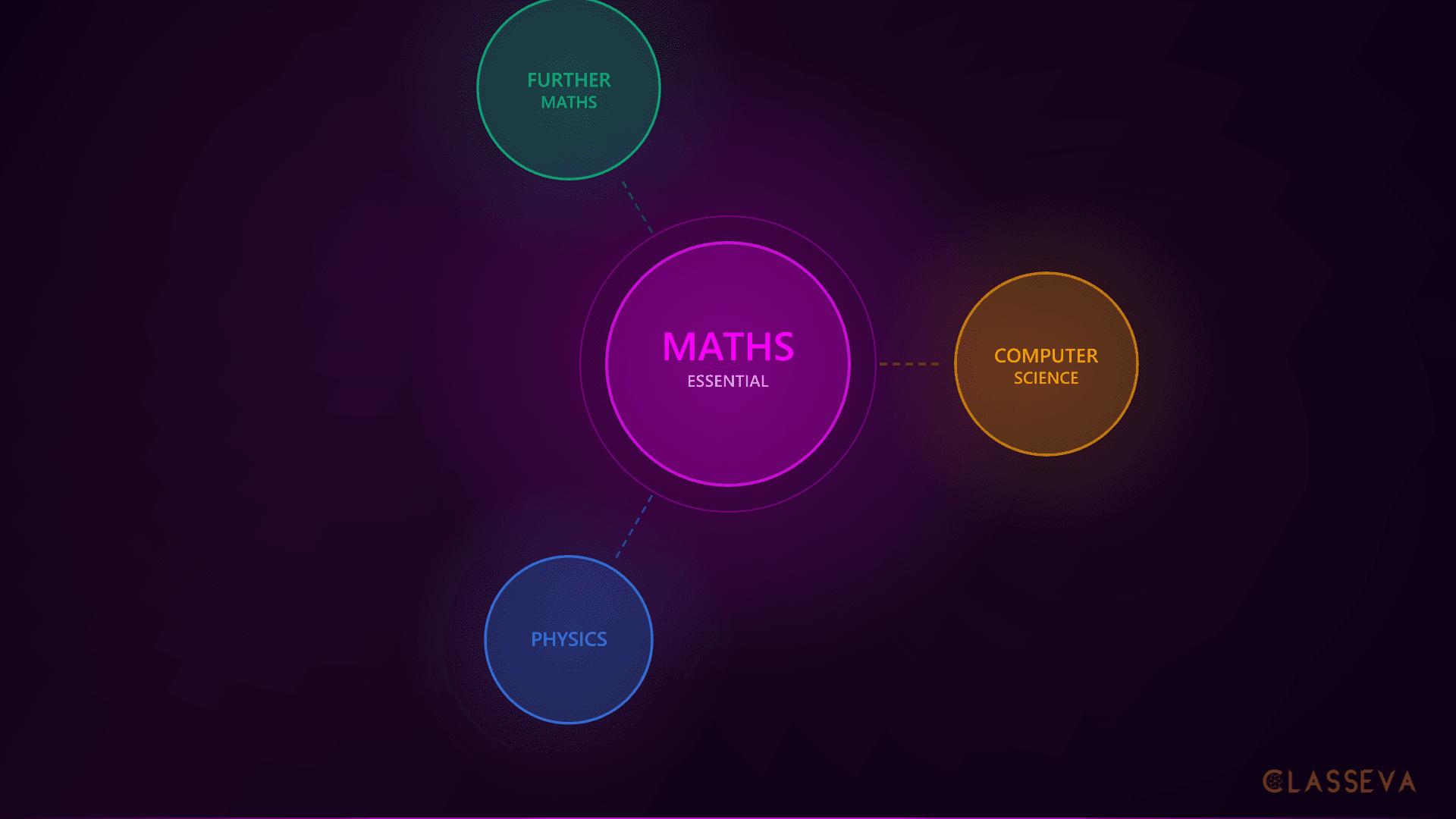
The reality is simpler than it looks: there is a clear hierarchy. Maths sits at the top, Further Maths strengthens applications to competitive universities, and A-Level Computer Science is useful but rarely the deciding factor. This guide breaks down exactly what each university tier expects.
The A-Level Hierarchy for Computer Science
Not all A-Levels carry equal weight for CS admissions. Having helped students navigate this decision at a tutoring company, I saw one mistake more than any other: students and parents assuming A-Level Computer Science was the key subject. It is not. The hierarchy is clear and consistent across almost every UK university.
Maths: The Non-Negotiable
Mathematics is the foundation of a computer science degree. Algorithms, data structures, machine learning, cryptography, and formal logic all rest on mathematical principles. This is not something universities are vague about: Maths A-Level is required at almost every UK university offering CS.
Even universities with the lowest entry requirements (BCC at some institutions) still require Maths. Manchester goes further, specifying that Maths must contain “a significant pure element”, meaning Use of Maths does not count.
If your child wants to study computer science at university and can only focus on excelling in one A-Level, it must be Maths. UniAdmissions states plainly: “the only subject that you absolutely need is Mathematics.” Everything else is secondary.
Further Maths: The Oxbridge Advantage
Further Mathematics is where applications to top-tier universities are won or lost. The numbers tell the story clearly:
At Cambridge, 96% of computer science entrants also took Further Maths, and 85% took Physics. Oxford's entry requirements state that Further Maths is expected “if available” at your school. Imperial similarly describes Further Maths as “strongly recommended.”
Further Maths is not just a box to tick. The content, including complex numbers, matrices, further calculus, and discrete mathematics, directly maps onto first-year CS modules. Students who arrive with this background spend less time catching up on the mathematical foundations their degree demands.
A-Level Computer Science: Helpful, Not Essential
This surprises many parents. A-Level Computer Science feels like the obvious choice for a CS degree, yet most universities explicitly state it is not required. Cambridge's admissions data shows only 59% of entrants took A-Level CS, far less than the 96% who took Further Maths.
The reason is practical: university CS programmes are designed to teach programming from scratch. They assume no prior coding experience. A student who excels in Maths but has never written a line of code is not at a disadvantage. A student who took CS but struggles with the maths will find the degree significantly harder.
What Top Universities Actually Require
Rather than relying on general advice, here is exactly what the major CS programmes ask for. These are verified from current university admissions pages.
Oxford and Cambridge
| University | Typical Offer | Required Subjects | Further Maths | Admissions Test |
|---|---|---|---|---|
| Oxford | A*AA | A*A in Maths + Further Maths | Expected if available | ESAT |
| Cambridge | A*A*A | Maths required | Expected if available (96% take it) | ESAT |
Source: Oxford CS admissions, Cambridge undergraduate admissions 2026 cycle.
At Oxford, the A*AA offer requires A*A specifically in Maths and Further Maths (if available). A-Level Computer Science is accepted but not required. The Cambridge offer is higher at A*A*A, with Maths required and Further Maths expected to at least AS level if the school offers it.
Cambridge publishes detailed data on its CS entrants. Of the most recent cohort: 96% took Further Maths, 85% took Physics, and 59% took Computer Science. The pattern is clear: Maths and Further Maths are the core, with CS as a common but far from universal third choice.
Other Russell Group Universities
| University | Typical Offer | Required Subjects | Notes |
|---|---|---|---|
| Imperial | A*A*A | Maths required | Further Maths strongly recommended |
| Manchester | A*AA | Maths (significant pure element) | Use of Maths does not count |
| Leeds | AAA | Maths required | No specific second subject required |
| Queen Mary | AAA | Maths, CS, or Physics | One of three accepted, not all needed |
| Lower-entry unis | BCC-BBB | Maths typically required | Broadest subject flexibility |
Source: The Uni Guide, university admissions pages. Requirements can change year-to-year.
The pattern across all tiers is consistent: Maths is the constant. Further Maths becomes increasingly important as you move towards the most competitive programmes. A-Level CS is welcomed everywhere but required almost nowhere.
Queen Mary is an interesting exception: it accepts Maths, CS, or Physicsas the required subject, meaning A-Level CS alone could satisfy the entry requirement even without Maths. This is unusual, and parents should always check the specific wording on each university's admissions page.
Do You Need A-Level Computer Science?
The short answer: no, for most universities. The longer answer depends on what your child hopes to gain from it.
What A-Level CS Gives You
Advantages of A-Level CS
- •Introduces programming concepts and computational thinking early
- •Covers algorithms, data structures, and Boolean logic before university
- •Demonstrates genuine interest in the field on UCAS applications
- •Provides context for what a CS degree actually involves
Why It Is Not Required
- •University CS degrees teach programming from zero
- •Mathematical foundations matter more than prior coding experience
- •A-Level CS covers a narrow slice of what a CS degree includes
- •Many top CS graduates worldwide never took it at school
Why Universities Do Not Require It
When I worked in tutoring, I noticed something consistent about students applying for CS degrees. The ones who thrived at university were not necessarily the ones who had coded since age 12. They were the ones who could think mathematically: break problems into logical steps, reason abstractly, and handle formal proof-style arguments. These are skills that come from Maths and Further Maths, not from A-Level CS.
Universities design their CS programmes knowing that many incoming students have never programmed before. First-year modules cover Python or Java from the very basics. What universities cannot easily teach from scratch is the mathematical maturity that underpins theoretical computer science: discrete mathematics, linear algebra, calculus, and formal logic. That is why Maths is required and CS is not.
The Further Maths Question
Further Maths is the subject that causes the most anxiety for parents of aspiring CS students. The statistics are intimidating: if 96% of successful Oxford applicants took it, does not taking it effectively rule your child out?
The honest answer is nuanced. If your child's school offers Further Maths and they are aiming for Oxford, Cambridge, or Imperial, they should take it. The admissions data makes this clear. But the picture changes significantly if their school does not offer it.
What If Your School Does Not Offer It?
Both Oxford and Cambridge explicitly state that they understand not every school offers Further Maths. They will not penalise applicants for something beyond their control. However, they recommend contacting the college or department directly to discuss this before applying.
The Advanced Mathematics Support Programme (AMSP)provides free or low-cost access to Further Maths tuition for students whose schools do not offer it. This includes online classes and local hub sessions. If your child's school does not offer Further Maths, the AMSP is the first place to look. Visit their website to find provision in your area.
For universities below the Oxbridge/Imperial tier, Further Maths is a bonus rather than an expectation. Manchester, Leeds, and most other Russell Group universities will happily accept strong applicants without it. Focus on getting the highest possible grade in Maths A-Level first, and treat Further Maths as the next priority if it is accessible.
Admissions Tests for Computer Science
Top universities do not rely solely on A-Level grades. Admissions tests play a significant role, and understanding what they test reveals what these universities truly value.
ESAT and TMUA
ESAT (Oxford and Cambridge)
- •Engineering and Science Admissions Test
- •Tests mathematical reasoning and problem-solving
- •Does NOT test programming or coding ability
- •Required for all CS applicants at both universities
TMUA (Other Universities)
- •Test of Mathematics for University Admission
- •Used by some universities for CS and maths courses
- •Focuses on mathematical thinking beyond A-Level standard
- •A strong TMUA score can lead to reduced grade offers
Notice the pattern: both tests assess mathematical reasoning. Neither tests programming, algorithms, or anything specific to A-Level Computer Science. This reinforces the hierarchy. Universities are telling you, through their admissions tests, exactly what they value most: the ability to think mathematically.
Many parents assume the admissions tests for CS will involve coding challenges or programming problems. They do not. The ESAT and TMUA are mathematics tests. Preparing for them means practising advanced mathematical problem-solving, not learning Python. Your child's time is better spent on Maths preparation than on building a coding portfolio for admissions purposes.
Building the Strongest Application
Given everything above, here is how to translate the hierarchy into practical A-Level choices for a CS degree.
Recommended Combinations
Lock in Maths first
This is non-negotiable. Your child needs A-Level Maths with the strongest possible grade. Every university requires it, and it is the subject most closely aligned with what a CS degree demands.
Add Further Maths if aiming high
For Oxford, Cambridge, Imperial, or any university where the typical offer is A*A*A or A*AA, Further Maths is effectively essential. If the school does not offer it, explore the AMSP. For other universities, it is a strong bonus but not required.
Choose your third subject strategically
A-Level Computer Science or Physics are the strongest third choices. Both demonstrate analytical thinking. CS shows direct subject interest. Physics shows mathematical application. If your child already has Maths and Further Maths, either works well.
Prioritise grades over subject prestige
A student with A*A*A in Maths, Further Maths, and English Literature has a stronger CS application than one with A*AB in Maths, Further Maths, and Physics. The third subject matters less than the grades achieved in it.
For broader guidance on subject combinations, our guide to the best A-Level combinations for university covers other degree pathways. If your child is still deciding how many A-Levels to take, see our guide on how many A-Levels you should take.
Computer science degrees are built on mathematics. Maths A-Level is essential. Further Maths dramatically strengthens applications to the top universities. A-Level Computer Science is a useful addition but never the deciding factor. The strongest thing your child can do is excel in Maths, because that is the foundation everything else in a CS degree rests upon.
For general advice on choosing the right subjects, see our complete guide to choosing A-Level subjects.