How to Take Notes That Actually Help With Revision
Your child sits at their desk for two hours, highlighters fanned out like a paint palette, rewriting the same textbook paragraphs in neater handwriting. It looks like revision. It feels like revision. But when the exam arrives, they cannot recall half of it. This is one of the most common traps in note taking techniques students fall into, and it is entirely fixable.
Having spent years working alongside tutors and students, one thing became clear to me quickly: the students who performed best in exams were rarely the ones with the prettiest folders. They were the ones whose notes were designed as revision tools from the start, not as display pieces. This guide covers the five methods that actually work, what to avoid, and how to take notes for GCSE revision that your child will genuinely use.
Why Most Student Notes Do Not Work
The core problem is that most students treat note-taking as the end goal rather than a step in the learning process. They spend hours producing colour-coded pages, then file them away and never interact with the material again. The notes become a product, not a tool.
The Illusion of Productivity
Copying from a textbook word-for-word is passive. The hand moves, but the brain is not required to process, filter, or understand what it is writing. Your child can copy an entire chapter on photosynthesis and still not be able to explain what photosynthesis produces. The same applies to highlighting: it identifies important text without requiring any deeper engagement.
Beautiful, colour-coded notes can also become a form of procrastination. Spending two hours making a page look perfect is not the same as spending two hours learning the content. If the notes never get used for self-testing, the time invested has limited return.
What Good Notes Actually Do
Good notes serve one purpose: they make active recall easier. Active recall means testing yourself from memory rather than re-reading. Any note-taking method that builds in self-testing, forces summarisation, or creates ready-made revision material is doing its job. The five methods below all share this quality.
Notes should be a tool for revision, not an end in themselves. If your child never uses their notes to test themselves, the notes have limited value regardless of how neat they look.
The Cornell Method
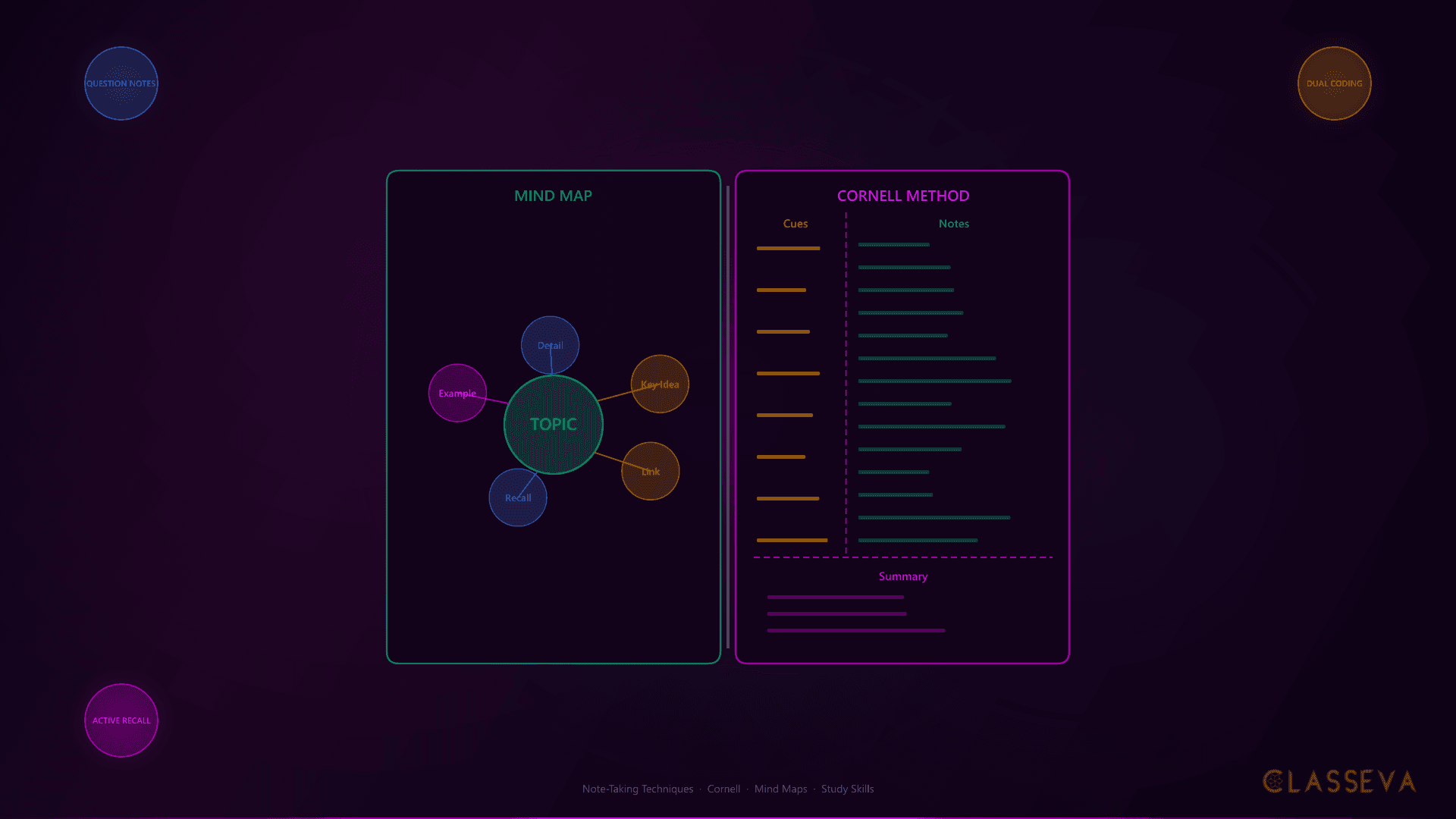
The Cornell method is one of the best note taking methods students can adopt because it turns every page of notes into a built-in self-testing tool. Developed at Cornell University, it divides each page into three distinct sections that each serve a different purpose in the learning cycle.
How the Cornell Layout Works
During class or study
Write detailed notes in the wide right column. Do not worry about neatness. Focus on capturing key ideas, definitions, and examples.
After the session
Read through your notes and write questions or keywords in the narrow left column that correspond to each section of notes.
Write a summary
At the bottom of each page, write a 2-3 sentence summary of the entire page in your own words. This forces you to identify the most important points.
Revise actively
Cover the right column with a sheet of paper. Use only the cue questions on the left to test yourself. Check your answers against the notes.
Why Cornell Is So Effective
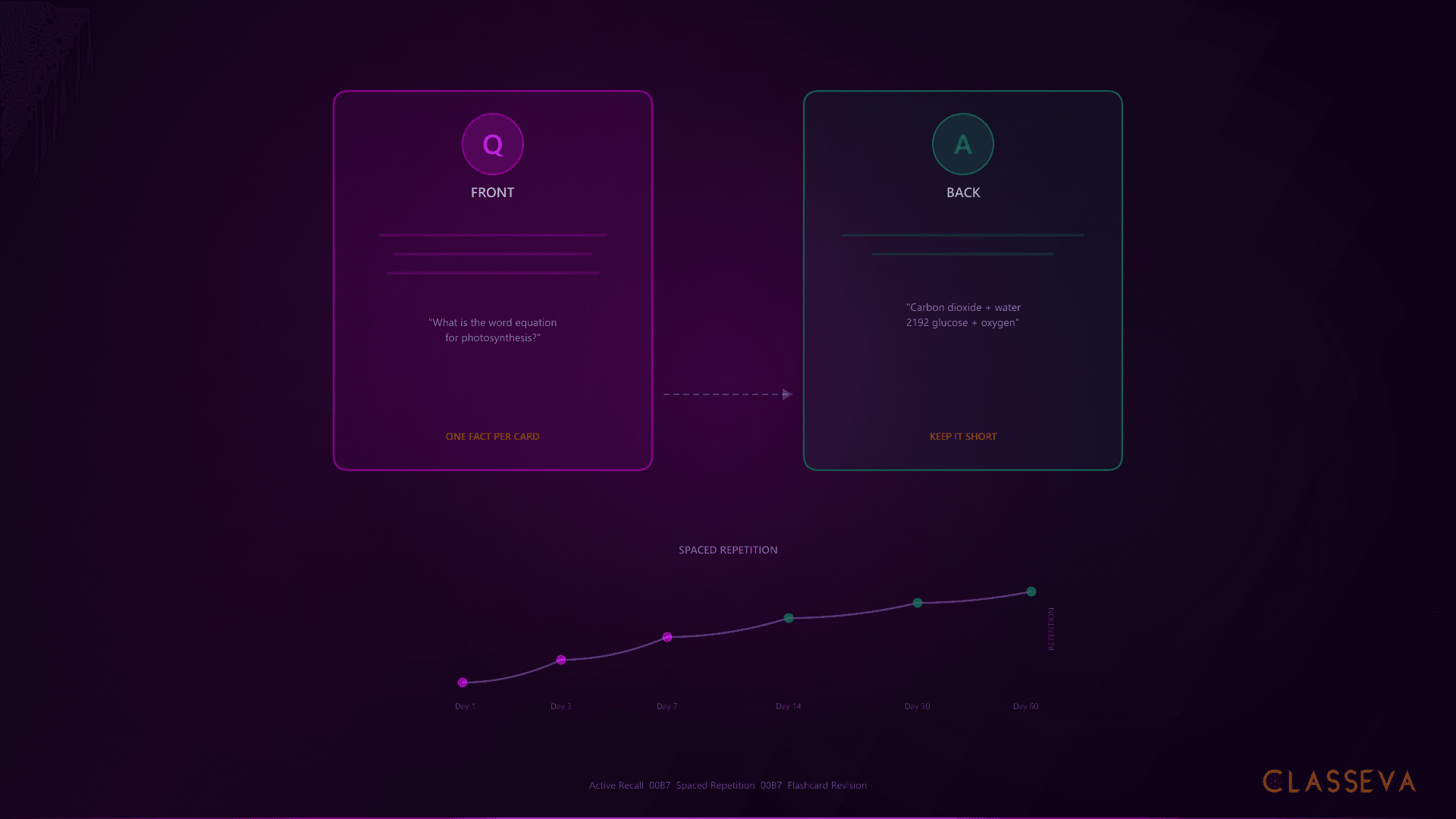
The cue column is what makes Cornell special. Most note-taking methods stop at recording information. Cornell goes further by transforming your notes into a self-testing tool. The cue questions function like flashcards built directly into your notebook, so revision requires no extra preparation. You simply cover one side and retrieve from the other.
You can buy pre-printed Cornell note pads online, or your child can draw the layout on any lined paper with a ruler. The important part is the habit, not the stationery. A simple pencil line down the left third of the page is all it takes.
Mind Maps and Dual Coding
Not every student thrives with linear notes. Mind maps and dual coding offer alternative approaches that leverage visual processing, and research from cognitive science supports their effectiveness when used actively.
When Mind Maps Work Best
A mind map places the main concept in the centre of the page with branches radiating outward for subtopics, details, and connections. Tony Buzan popularised the technique, and it works best when hand-drawn with colours and simple images. Mind maps are particularly good for seeing connections between ideas and getting an overview of a whole topic at a glance.
The critical distinction is how your child uses the mind map. Copying a mind map from a textbook is passive. The far more effective approach: create a mind map from memory first, then compare it against your notes. The gaps between what you drew and what you missed reveal exactly what you do not know. This is active recall in visual form.
Mind Maps Work Well For
- •Seeing connections between ideas
- •Topic overviews (e.g. cell biology)
- •Visual learners and creative thinkers
- •Subjects with branching concepts
Mind Maps Are Less Ideal For
- •Detailed sequential information
- •Step-by-step processes or timelines
- •Dense factual content (dates, equations)
- •Subjects requiring precise terminology
Dual Coding: Words Plus Visuals
Dual codingmeans combining written words with visual representations: diagrams, timelines, flow charts, sketches, and labelled drawings. The principle comes from Allan Paivio's dual coding theory: the brain encodes information more strongly when it processes material through both verbal and visual channels simultaneously.
This is particularly effective for science processes (the water cycle, digestion, cell division), history timelines, and geography case studies. Students do not need to be artistic. Stick figures, simple arrows, and rough sketches work perfectly well. The act of translating words into a visual forces deeper processing of the material.
Question-Based Notes
Question-based notesflip the traditional approach entirely. Instead of writing statements (“Photosynthesis produces glucose”), you write questions (“What does photosynthesis produce?”) with the answer alongside. This immediately creates flashcard-ready revision material from day one.
Turning Statements Into Questions
The act of converting a statement into a question forces the student to identify what is important and what might be tested. It shifts the brain from passively recording to actively thinking: “What is the key piece of information here? What would an examiner ask about this?”
| Statement Note | Question-Based Note |
|---|---|
| Photosynthesis produces glucose and oxygen. | What does photosynthesis produce? → Glucose + oxygen |
| Tectonic plates move due to convection currents. | Why do tectonic plates move? → Convection currents in the mantle |
| The Treaty of Versailles was signed in 1919. | When was the Treaty of Versailles signed? → 1919 |
| Macbeth kills Duncan to fulfil the witches' prophecy. | Why does Macbeth kill Duncan? → To fulfil the witches' prophecy |
Converting traditional statement notes into question-based revision material
This method is particularly effective for science, geography, and history, where exam questions often test recall of specific facts. Your child ends each study session with a ready-made set of questions to test themselves with, rather than a block of text to passively re-read.
Summarisation Done Right
Summarisation gets a bad reputation because most students do it wrong. Copying key sentences from a textbook is not summarisation. Genuine summarisation means: read a section, close the book, then write a summary in your own words from memory. This forces understanding and retrieval, not just transcription.
Keep summaries deliberately short. The constraint of fitting an entire topic onto half a page forces your child to identify the most important points and discard the padding. This pairs beautifully with the Cornell method: the summary section at the bottom of each page is designed for exactly this purpose.
The Learning Scientists identify six evidence-based study strategies. Retrieval practice (self-testing) and spaced practice consistently rank as the most effective. Note-taking methods that build in self-testing, like Cornell and question-based notes, directly leverage retrieval practice.
Methods That Waste Time
The landmark Dunlosky et al. (2013) meta-analysis evaluated ten common study techniques and rated each by effectiveness. The results were clear: the methods most students rely on performed worst.
| Method | Effectiveness | Why |
|---|---|---|
| Highlighting / underlining | Low | Passive. Identifies text without processing it. |
| Re-reading notes | Low | Creates familiarity, not genuine recall ability. |
| Copying from textbooks | Low | No processing required. The brain is on autopilot. |
| Summarisation (copying style) | Low | Only effective when done from memory, which most students skip. |
| Practice testing (self-quizzing) | High | Forces retrieval from memory, which strengthens retention. |
| Spaced practice | High | Spreading sessions over time locks information into long-term memory. |
Source: Dunlosky et al. (2013), Strengthening the Student Toolbox
The Handwriting Advantage
Research by Mueller and Oppenheimer (2014) found that students who handwrote their notes performed significantly better on conceptual questions than those who typed. The reason: handwriting is slower, which forces the brain to summarise and process rather than transcribe verbatim. Students who typed tended to capture lectures word-for-word, which required less cognitive effort.
This does not mean laptops are always bad. Typing is more accessible for students with certain learning needs, and digital tools offer powerful organisation features. But for most students, the extra cognitive effort of handwriting translates directly into better understanding.
When to Take Notes vs When to Revise
One of the biggest mistakes students make is continuing to take notes deep into the revision period. Notes are best for initial learning: when encountering new material for the first time. Once the material has been recorded, the focus should shift entirely to active recall.
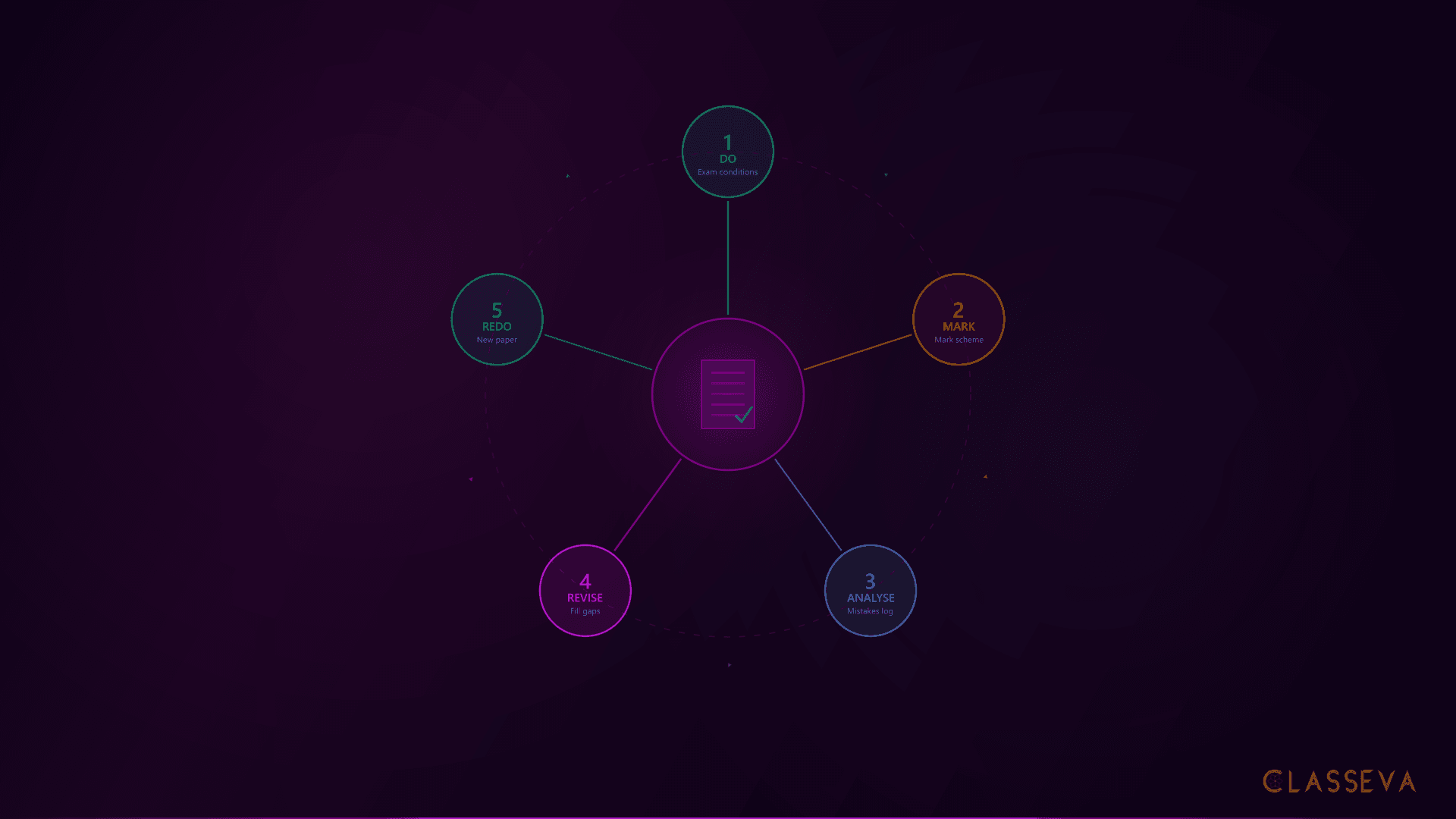
The revision cycle looks like this: make notes (during lessons and first encounters with content), then use those notes for active recall (cover and test), then identify gaps (what could you not recall?), then fill the gaps with targeted review, then repeat. If your child is still making fresh notes two weeks before the exam, they are likely spending time on the wrong activity. By that point, the notes should already exist, and every minute should go towards evidence-based revision techniques like practice testing and spaced repetition.
Rewriting notes “more neatly” as a revision activity. This feels productive but is passive. If your child is recopying notes they already have, suggest they close the original and write from memory instead. That single change transforms a passive task into active recall.
How Parents Can Help
You do not need to be an expert in your child's subjects to help them take better notes. The most useful thing a parent can do is understand the difference between productive and decorative note-taking, and gently steer towards the former.
Practical Things You Can Do This Week
Ask how they use their notes
The question is not "Have you taken notes?" but "Show me how you revise from these." If the answer is "I read through them," suggest the cover-and-recall method: cover the answers, test yourself, then check.
Do not judge notes by appearance
Messy notes that get used for active recall are genuinely more valuable than beautiful notes that sit in a folder. Resist the urge to praise neat notes if they are never used for self-testing.
Help set up the Cornell layout
Draw the lines on blank paper together, or buy a pre-printed Cornell pad. The habit of dividing the page matters more than the stationery.
Encourage note-taking during lessons
Notes made throughout the year are far more useful than notes made in a panic before exams. If your child is not taking notes in class, a conversation with their teacher can help establish the habit.
Try the quiz game
Take your child's notes, read the cue questions aloud, and let them answer from memory. This makes revision social and more engaging. It also gives you visibility into what they actually know versus what they think they know.
If Your Child Has Specific Learning Needs
Students with dyslexia, ADHD, or other specific learning needs may find handwritten note-taking slower or more frustrating. Digital tools can help: apps like OneNote or Google Keep allow voice-to-text input, easy reorganisation, and searchable notes. Some schools permit audio recording of lessons (check with the school first). The core principles remain the same: the notes must be used for active recall, regardless of the medium.
For students who find extended writing difficult, mind maps and dual coding can be especially valuable. A labelled diagram takes less writing than a paragraph of text but can encode the same information. The Cornell method can also be adapted: use single-word cues in the left column rather than full questions, and keep the summary section to one sentence.
If you are unsure whether your child's revision is effective, our guide to GCSE revision techniques covers the research behind active recall and spaced repetition in detail. The key insight: time spent is less important than how that time is spent. Thirty minutes of self-testing beats two hours of re-reading.
Note-taking is not revision. It is the preparation that makes revision possible. The best note taking methods students can adopt are those that build self-testing in from the start. Whether your child uses Cornell, mind maps, question-based notes, or dual coding, the test is always the same: can they close the book and recall what they wrote? If yes, the notes are doing their job. If not, a small change in method can make an enormous difference to how effectively they use their time.
If your child needs extra support building effective study habits, Classeva's AI tutoring follows their exact exam board specification and builds in active recall throughout every session, so the revision techniques happen naturally rather than as an afterthought.