How to Motivate Your Teenager to Revise
Every parent of a GCSE student has felt it: the growing tension of watching your teenager scroll through their phone while a stack of revision guides gathers dust on the desk. You know exams are approaching, you know the stakes, and you cannot understand why they will not just start. The instinct is to push harder, remind them more often, or threaten consequences. But if you want to know how to motivate your teenager to revise, the evidence points in a very different direction.
Having spent years working in the tutoring industry, I saw this dynamic play out in hundreds of families. The parents who cracked it were not the ones who applied the most pressure. They were the ones who understood why their teenager was stuck and changed their approach accordingly.
Why Your Teenager Avoids Revision
Before you can fix the problem, you need to understand it. “My teenager won't revise” is one of the most common frustrations parents share during exam season. But behind the avoidance, there is almost always a specific cause, and it is rarely laziness.
The Overwhelm Problem
Most GCSE students sit 8 to 10 subjects. Each subject has multiple papers. Each paper covers dozens of topics. When a student looks at the totality of what they need to know, the volume feels insurmountable. They do not know where to start, so they do not start at all.
This is not dramatic. It is a well-documented psychological response called task paralysis. When a task feels too large, the brain defaults to avoidance because it cannot identify a clear first step. The solution is not “just get on with it” but rather breaking the work into pieces small enough that starting feels manageable.
Fear of Failure and Procrastination
Paradoxically, the students who care most about their grades often procrastinate the most. Starting revision means confronting the possibility of not being good enough. As long as they have not tried, they can tell themselves they would have done well if they had. Psychologists call this self-handicapping, and it is extremely common among bright teenagers.
A teenager who avoids revision may actually care more about their results than one who appears calm. Fear of failure and high standards can produce the same outward behaviour as indifference.
The Developing Teenage Brain
The prefrontal cortex, responsible for planning, organisation, and delayed gratification, does not fully mature until the mid-twenties. This means self-regulation is genuinely harder for teenagers than adults. Expecting a 15-year-old to manage long-term revision planning with the same executive function as an adult is biologically unrealistic.
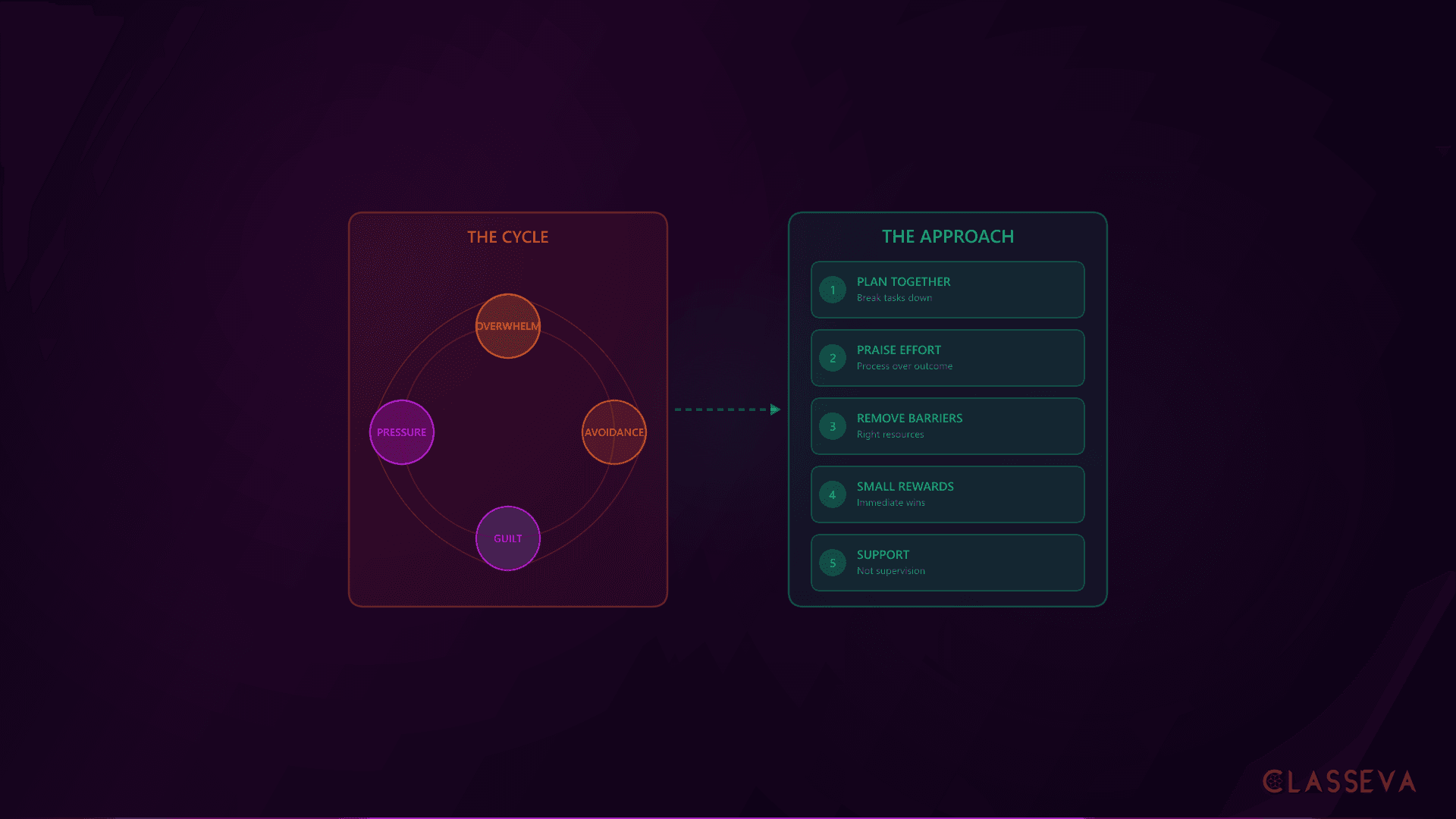
Understanding this cycle is the first step. If your teenager is caught in it, the most effective intervention is at the overwhelm stage: help them break the work down until starting feels possible.
Six Strategies That Actually Work
If you are searching for how to get your teenager to study, the answer is not a single trick. It is a combination of approaches rooted in what motivation research consistently shows. Here are six strategies that I have seen make a genuine difference.
Help Them Plan (Without Taking Over)
Sit down together and help break revision into specific, manageable tasks. The difference between a task that gets done and one that does not is almost always specificity. “Revise Biology” is overwhelming. “Spend 25 minutes on Topic 3: Cell Division using flashcards” is actionable.
List all subjects and papers
Write out every exam they are sitting, including paper numbers. Seeing the full picture helps them understand the scope.
Identify weak topics in each subject
Use mock exam results or teacher feedback to highlight which topics need the most work. Prioritise these.
Break topics into 25-minute blocks
Each revision session should focus on one specific topic using one method (flashcards, past paper questions, or practice problems).
Let them choose the timetable
Autonomy is critical. If they want to revise at 8pm instead of 4pm, let them. The important thing is that the work gets done, not when.
If your teenager does not know where to start with building a revision timetable, working through it together once is far more helpful than handing them a blank template and telling them to fill it in.
The Pomodoro Technique (25 minutes focused work, then a 5-minute break) works exceptionally well for teenagers. It makes revision feel finite rather than endless, and the built-in breaks prevent burnout. After four cycles, they take a longer 15 to 20 minute break.
Focus on Process, Not Outcomes
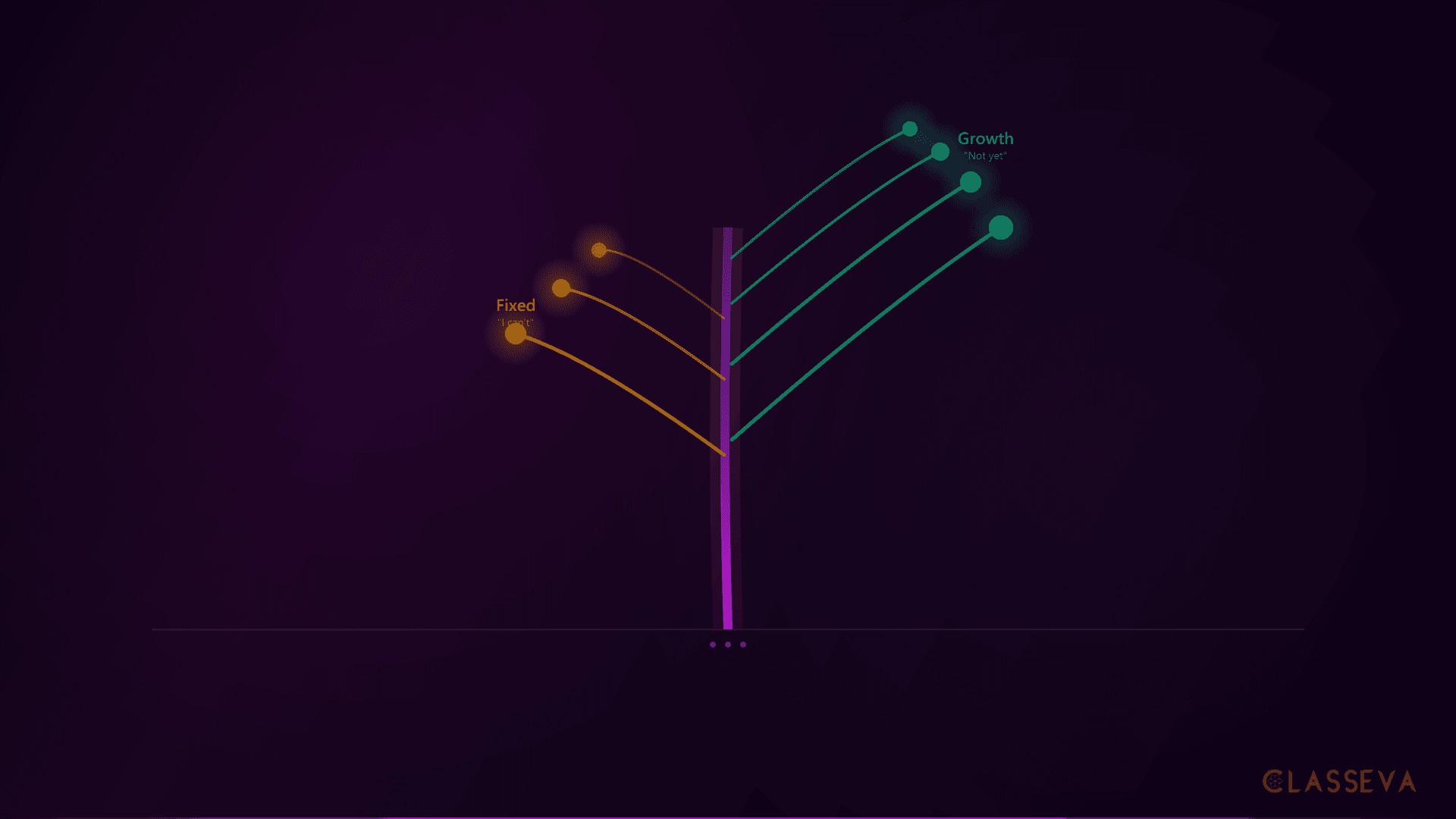
Carol Dweck's growth mindset research at Stanford University demonstrates that students who believe ability comes from effort (rather than fixed talent) work harder and achieve more. The language you use at home directly shapes this belief.
Process-Focused (Effective)
- •"I noticed you spent a solid hour on Maths tonight."
- •"You really stuck with that difficult topic."
- •"What method did you use for that revision session?"
- •"I can see you're getting more confident with Chemistry."
Outcome-Focused (Less Effective)
- •"You need to get at least a 7."
- •"Your mock result wasn't good enough."
- •"Why can't you do as well as your sister?"
- •"If you don't revise, you'll fail."
This is not about lowering expectations. It is about reinforcing the behaviour (revision effort) that leads to the outcomes you both want. When effort is praised, teenagers are more likely to increase it. When only results are discussed, the fear of disappointing you can trigger exactly the avoidance you are trying to prevent.
Remove Practical Barriers
Sometimes the reason a teenager is not revising is simpler than you think. They might not have the right materials, not know which revision techniques actually work, or not have a quiet space to concentrate.
One pattern I noticed again and again during my time in tutoring was that students who had been re-reading their notes for weeks felt like they were “doing revision” but were making almost no progress. When they switched to active recall (testing themselves from memory) and past papers, their confidence and their grades improved within weeks. If your teenager does not know how to revise effectively, that is the first barrier to remove.
Practical barriers to remove include: a noisy revision space, missing past papers or revision guides, not knowing which exam board they are sitting (this is more common than you would think), and not having access to structured practice. AI tutoring tools like Classeva can help with that last one, providing instant feedback and practice questions tailored to their specific exam board specification.
Small Rewards and Short-Term Motivation
Distant, abstract rewards do not motivate teenagers. “If you do well in your GCSEs, you will get into a good university” is too far away to change behaviour today. Short-term, specific, achievable rewards are far more effective because they align with how the teenage brain processes motivation.
How to Use Rewards Effectively
The key is pairing a specific task with a specific reward, and letting your teenager choose both where possible.
Tie rewards to effort, not results
"Once you've finished these three past paper questions, you can have your phone for 30 minutes." The reward is earned by completing the work, regardless of how many they got right.
Keep rewards small and immediate
A snack, screen time, choosing what to watch that evening. These work better than "If you get all 9s, I'll buy you a car" because they are concrete and close.
Let them choose their own rewards
Autonomy amplifies motivation. Ask "What would you like to do after this session?" rather than dictating the reward.
Gradually reduce external rewards
As revision becomes habitual, the internal reward of feeling prepared starts to take over. External rewards are a bridge, not a permanent fixture.
Removing all leisure as a punishment for not revising backfires. Revision without any breaks or enjoyment leads to burnout, resentment, and worse performance. Your teenager needs downtime to consolidate what they have learned.
Being a Support, Not a Supervisor
The single biggest shift parents can make is moving from supervisor to support. Supervisors monitor, check, and chase. Supporters are available, practical, and encouraging. Research on self-determination theory (Deci and Ryan, 2000) consistently shows that autonomy, competence, and relatedness are the three core drivers of intrinsic motivation. Hovering over your teenager undermines all three.
The Right Questions to Ask
Check in once a day, not every hour. The questions you ask matter enormously. Open, curious questions encourage reflection. Closed, pressured questions trigger defensiveness.
Supportive Questions
- •"What did you work on today?"
- •"Is there anything you're finding tricky that I can help with?"
- •"Would it help if I quizzed you on those flashcards?"
- •"Do you want me to drive you to the library this weekend?"
Pressured Questions
- •"Have you done enough revision today?"
- •"Why aren't you revising right now?"
- •"How many hours have you done?"
- •"Don't you think you should be working?"
Practical support makes a bigger difference than you might expect. Quiz them from their flashcards. Make them a snack during a study break. Keep the house quiet during revision hours. These actions communicate “I am on your side” without saying “I do not trust you to do this on your own.”
Normalise Struggle
Share your own experiences of finding things hard and pushing through. Teenagers often believe that struggling with a topic means they are not clever enough, when in reality, the feeling of confusion during revision is a sign of active learning.
Remind them that revision is supposed to feel difficult. If past paper questions felt easy, they would not be learning anything new. The discomfort of working through a hard topic is what builds the neural pathways that produce understanding. Cognitive science calls this desirable difficulty (Bjork, 1994), and it is one of the most robust findings in learning research.
Robert Bjork's research at UCLA found that learning conditions which make initial performance harder (like testing yourself rather than re-reading) actually produce stronger long-term retention. Feeling confused while revising is not a sign of failure. It is a sign the revision is working.
What Definitely Does Not Work
Knowing what to avoid is as important as knowing what to do. These approaches feel instinctive to many parents but consistently make things worse, based on both research and what I observed working with families in the tutoring industry.
The parents I worked with who struggled most were often the most caring. They nagged because they were worried. They compared because they wanted to inspire. They took over the planning because they could see the deadline approaching and their child was not acting. But each of these responses, however well-intentioned, pushes the teenager further away from owning their revision.
If nagging worked, no parent would ever need to ask how to motivate their teenager to revise. The fact that you have arrived at this article suggests the nagging approach has already failed. That is completely normal, and it is a sign that a different strategy is needed, not more of the same.
When to Seek Extra Help
Most teenagers go through patches of low motivation, and most come through the other side, especially with the right support at home. But there are situations where the issue goes beyond normal teenage reluctance, and it is important to recognise when that line has been crossed.
Warning Signs to Watch For
Complete disengagement despite looming exams
If your teenager is not revising at all with exams only weeks away, and nothing you have tried has made any difference, this may indicate something beyond a motivation issue.
Signs of anxiety or depression
Persistent changes in sleep, appetite, mood, or social withdrawal can indicate that revision avoidance is a symptom of a deeper mental health concern.
Total disengagement from school
Refusing to attend school, missing lessons regularly, or actively rejecting all academic work suggests a problem that goes beyond revision motivation.
Using avoidance as a coping mechanism
If avoiding revision seems connected to perfectionism, self-harm, or other concerning behaviours, professional support is important.
In any of these cases, the right first step is to speak to your child's school. The pastoral team or head of year has experience with these situations and can arrange structured support, exam access arrangements, or referrals to counselling services. The Young Minds parent helplinealso offers free, confidential support for parents worried about their child's mental health.
If your teenager is struggling with motivation across all subjects, start small. Pick one subject, one topic, one 25-minute session. Success with a single focused session can rebuild confidence that revision is manageable. For structured, exam-board-specific practice that breaks topics down into bite-sized pieces, Classeva's AI tutoring is free to try and available whenever your teenager is ready to start.
Motivating your teenager to revise for GCSEs is not about finding the perfect motivational speech or the right level of pressure. It is about understanding why they are stuck, removing barriers, supporting their autonomy, and being patient. The revision itself has to come from them. Your job is to make it as easy as possible for them to choose to do it.
For more on building an effective revision plan once motivation is there, see our complete GCSE revision guide for parents and our guide to the best GCSE revision resources for 2026.