How to Use Past Papers Properly When Revising
The single most common misuse of past papers is reading them. A student opens a past exam, reads the questions, nods at each one, and closes it feeling prepared. That process rehearses recognition, not recall. On exam day, the questions arrive without the model answers attached, and recognition collapses. Revising with past papers the correct way means treating each paper as a full retrieval test under real conditions, then marking your output against the scheme with enough honesty to see exactly where your memory failed.
The research behind this approach connects directly to retrieval practice. Roediger and Karpicke (2006), published in Psychological Science, found that students who retrieved material from memory retained roughly 61% at one week, versus about 40% for students who re-read the same material. Past exam papers, taken under timed conditions without notes, produce that retrieval effect at full module scale. That is what makes them the most efficient revision tool available, provided you use them correctly.
Why Most Students Use Past Papers Wrong
Most students treat past papers as a preview of what the exam looks like rather than as a simulation of sitting it. They read through the questions with notes nearby, estimate what they would write, and move on. That process takes about twenty minutes per paper and produces almost no lasting benefit.
Reading a Paper Versus Sitting One
Reading a paper and sitting a paper are different cognitive activities. Reading a paper while your notes are open activates recognition: the questions look familiar, the material feels accessible, and your brain registers that familiarity as readiness. Sitting a paper under timed conditions without notes activates retrieval: you must produce the answer from memory, and every question where you cannot produces a concrete, specific gap you can act on.
Dunlosky et al. (2013), in their review of 10 study techniques published in Psychological Science in the Public Interest, rated practice testing as high utility and re-reading as low utility. Practice papers revision qualifies as practice testing only when the paper is taken without access to source material.
The Comfort-Read Trap
Reading past papers feels reassuring. The questions look manageable, the content feels familiar, and the session ends with a sense of progress. That reassurance is the trap. Fluency with a question that is visible in front of you does not translate to fluency with a blank answer sheet. Robert Bjork's research on desirable difficulties at UCLA frames the difference precisely: conditions that feel comfortable during study tend to produce weaker long-term retention than conditions that feel harder.
Sitting a paper under time, by contrast, feels uncomfortable. The clock runs. Some questions stall. That discomfort is the mechanism working. The difficulty of producing answers under pressure, rather than recognising them with the paper visible, is exactly what drives the consolidation that shows up in exam performance.
The Timed-Mark-Redo Loop
The method that converts past exam papers technique into durable exam performance has four steps: sit under time, mark against the scheme, log every error, then redo the missed questions cold after a delay. Each step is non-optional. Skipping the marking step means the diagnostic never happens. Skipping the redo step means the gap stays as a gap.
Step 1: Sit Under Timed Conditions
Set a timer for the exact duration of the exam. Close every source: notes, textbook, previous papers, and any browser tab. Write answers in full, not bullet-point summaries or planning notes. The constraint is the point. Working under time pressure builds the retrieval fluency that transfers to the exam room. It also surfaces a different kind of gap: questions you understand conceptually but cannot write up within a time budget.
If the paper runs over time before you finish, note the point where time expired and continue without the timer. Mark both sections separately: the timed section reveals your real exam performance, and the extra section reveals whether the timing problem comes from content gaps or pace.
Step 2: Mark Honestly Against the Scheme
Download the official mark scheme and apply it strictly. Award marks only where your answer matches the scheme criteria. The temptation to give yourself a mark for “knowing what they were getting at” destroys the diagnostic. A borderline answer that earns a mark on the paper earns a mark on the scheme. An answer that does not match the scheme criteria does not. The score you record after honest marking tells you where you actually stand, not where you wish you stood.
Awarding yourself marks for partial answers you could not fully produce is the most common self-marking error. On the real exam, a borderline answer earns partial credit at best and zero at worst. Mark schemes specify what a complete answer requires. If your answer is vague where the scheme is precise, mark it as a miss. The point is not to feel good about the score: it is to locate exactly where your knowledge stopped.
Step 3: Log and Categorise Every Error
For each question where you dropped marks, record the question number and the type of error. Three categories cover most cases: knowledge gap (you did not know the content), technique gap (you knew the content but could not structure the answer to earn the mark), and timing gap (you knew the content but ran out of time before writing it up). The category matters because it determines the fix.
Knowledge gaps require retrieval practice: retrieve the content on a blank page, then review the source. Technique gaps require studying model answers from the scheme and practising the format. Timing gaps require pacing adjustments, not more content study.
| Error type | What it means | What to do next |
|---|---|---|
| Knowledge gap | Could not produce the content from memory | Blank-page retrieval of the topic, then spaced review |
| Technique gap | Knew the content but structured the answer poorly | Study the mark scheme model answer; practise the format |
| Timing gap | Knew the content but ran out of time | Adjust your time allocation per question; practise pacing |
| Misread question | Answered a different question from the one asked | Read every question twice; underline the command word |
Categorising errors tells you what your next study session should target. A knowledge gap and a technique gap require different fixes.
Step 4: Redo the Missed Questions Cold
After at least one day, sit the questions you missed without any preparation. No re-reading the notes first, no reviewing the model answer again. Attempt each question cold, then check against the scheme. This redo step is where the retrieval benefit compounds: you are now retrieving at the moment of partial forgetting, which Bjork's desirable difficulties framework identifies as most productive for long-term consolidation.
Questions you get right on the cold redo are fixed. Questions you still miss on the cold redo go back into your error log for another round. That cycle continues until every question in your error log earns a correct cold attempt.
How Many Past Papers Should You Do?
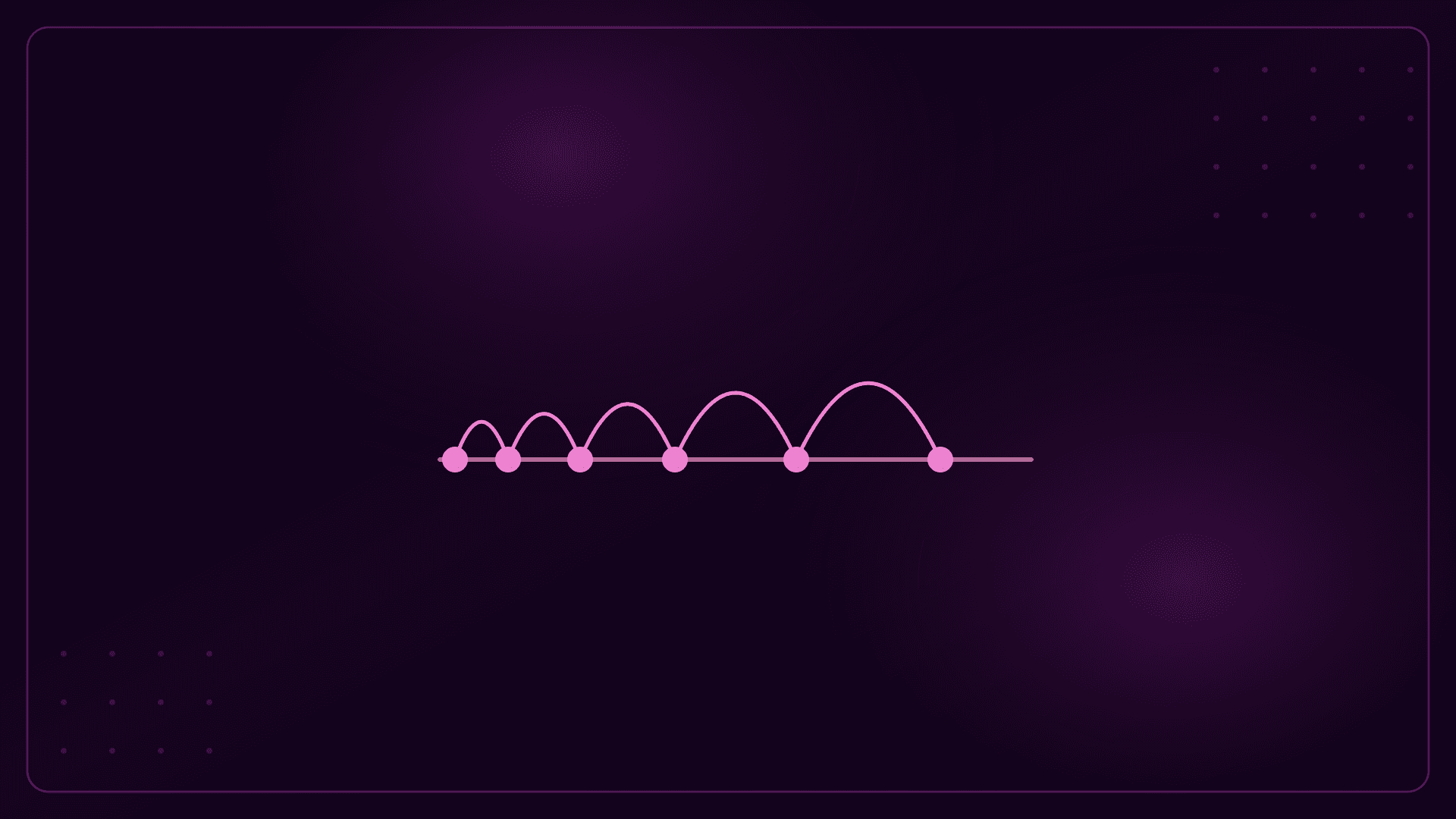
Three to five timed papers per module, spread across the final four to six weeks, outperform a larger number of papers crammed into the final days before finals. The spacing matters as much as the quantity. Each retrieval attempt at the moment of partial forgetting consolidates the material more deeply than retrieval when the content is still fresh from the previous session.
Spacing Papers Across Your Revision Period
For a module with finals in six weeks, a workable schedule sits the first paper at week one of revision, the second at week three, and the third at week five. The gaps allow forgetting to partially set in before the next retrieval attempt, which is exactly the desirable difficulty condition that drives long-term memory consolidation. Cepeda et al. (2006), in a review of spacing effects across 254 studies, found that optimal gap length between study sessions scales with the length of the retention interval.
For most university modules, spacing papers one to two weeks apart during the final month produces stronger retention than running three papers in three consecutive days before the exam. The study routine guide covers how to build a weekly revision schedule that integrates past-paper sittings alongside content review and retrieval practice sessions.
When to Start Using Past Papers
Start past papers when you can attempt at least 60% of the questions from memory without notes. Before that threshold, the paper becomes a reading exercise rather than a retrieval test. Most learning centre guidance at universities recommends beginning past papers four to six weeks before finals, after an initial content review phase. Earlier exposure to the paper format without content coverage produces low-quality practice and can generate misleading confidence signals.
The exception is using old papers early in the semester to understand the question formats and command words used by your department. That format-mapping exercise does not require attempting the paper under timed conditions. It is a one-time survey of what the exam demands structurally, not a retrieval session.
The mark scheme for each question is a compressed version of what your department considers a complete answer. After marking your attempt, read each model answer as a study resource. Note the specific terminology, the depth of explanation expected, and the structure of a full-mark response. That analysis turns the marking step into an additional learning session, not just a scoring exercise.
How to Read Question Patterns Across Papers
Past papers from multiple years contain information beyond individual questions. The recurring formats, command words, and topic distributions reveal how your department examines the module and at what depth. Reading that pattern strategically is different from question-spotting, and the distinction matters.
Spotting Recurring Question Formats
Lay three or four years of papers side by side and look for structural patterns: which question formats appear in the same position every year, which command words recur (analyse, evaluate, compare, calculate), and which topics appear consistently versus occasionally. That map tells you where to concentrate your deepest preparation and what kinds of answer structures your department rewards.
For quantitative modules, pattern analysis across practice papers revision reveals which problem types dominate and which rarely appear. That distribution should guide how you allocate practice time across topics. The university resources hub has subject-specific calculators and worked examples that support the practice side of quantitative revision.
What Pattern-Spotting Cannot Do
Pattern analysis cannot reliably predict which specific questions will appear this year. Examiners rotate topics deliberately, and a question that appeared three consecutive years ago may skip this cycle. Using pattern data to narrow preparation down to a subset of topics and exclude others is the error that produces catastrophic results when an excluded topic appears on the paper.
The safe use of pattern data: allocate more practice time to high-frequency topics, ensure you have strong baseline coverage of lower-frequency topics, and use format patterns to make sure your answer structures match what the mark scheme rewards. That approach extracts the strategic value of revising with past papers without creating the blind-spot risk that pure question-spotting generates.
Using Past Papers Across Subject Types
The timed-mark-redo loop applies across all subject types, but the form each step takes varies by discipline. Essay-based subjects, quantitative subjects, and practical subjects each require specific adjustments to the marking and redo steps.
Essay and humanities subjects
- •Sit the question under time: write the full essay, not a plan
- •Mark against the scheme criteria for argument, evidence, and structure
- •Log: shallow argument, missing evidence, or poor structure separately
- •Redo: write a second answer to the same question cold, one day later
Quantitative and STEM subjects
- •Sit the paper under time: work all problems without notes or formula sheets unless permitted
- •Mark step by step: partial credit maps to where your working broke down
- •Log: conceptual error, calculation slip, or method confusion separately
- •Redo: rework the exact missed problems cold before revisiting the method
For quantitative modules, the redo step is especially productive when you attempt the missed problem using a different route before checking the solution. That constraint forces you to reason rather than replicate, which builds transferable problem-solving fluency rather than memorised procedure.
The active recall guide covers the broader retrieval practice framework that past papers sit within. If you want to build a complete revision system around these techniques, the interleaving guide shows how mixing topics and question types across sessions compounds the benefit of past-paper practice. The memorisation guide covers the content-retention side that supports strong past-paper performance.
If you want to work through past-paper questions with an AI tutor that explains where your reasoning broke down and adjusts to your specific gaps:
Key Takeaways
- Revising with past papers only produces the retrieval benefit when you sit them under timed conditions with all notes closed. Reading papers with notes open rehearses recognition, not recall, and produces roughly 40% one-week retention versus the 61% that retrieval practice delivers (Roediger and Karpicke, 2006).
- Mark every attempt honestly against the official scheme without inflating borderline answers. The score you record after honest marking is the only score that tells you where you actually stand.
- Log each error by type: knowledge gap, technique gap, or timing gap. The category determines your next step. A knowledge gap needs retrieval practice. A technique gap needs format practice. A timing gap needs pace adjustment.
- Redo every missed question cold, at least one day later, before re-reading your notes. That delay creates the partial forgetting that makes retrieval maximally productive for consolidation (Bjork; Cepeda et al., 2006).
- Spread three to five timed papers per module across four to six weeks before finals. Cepeda et al. (2006) showed that spaced retrieval outperforms massed practice on long-term retention even when total study time is equal.
- Use pattern analysis across multiple years of papers to guide preparation depth, not to exclude topics. Examiners rotate deliberately, and any excluded topic can appear on the paper.
- Past papers are the highest-intensity form of retrieval practice available for exam preparation. The timed-mark-redo loop converts each paper from a practice format into a precise diagnostic and a targeted study plan.
Past exam papers are the most widely available, most underused study tool in university. Every module with past papers available is a module where you can test yourself at full exam scale, identify exactly where your knowledge falls short, and target your remaining revision with precision. Reading them is comfortable and ineffective. Sitting them is uncomfortable and produces the gap-level diagnostic that turns the final weeks of revision into a targeted preparation rather than a broad sweep.
For more on building a complete study system, the spaced repetition guide covers how to schedule retrieval sessions across an entire semester. The grade calculators hub has tools to track your current standing in each module so you know which subjects to prioritise when scheduling your past-paper sittings.